Noxubee Refugewildlife
At Sam D. Hamilton Noxubee National Wildlife Refuge, the timing for wildlife comes in 3 separate phases, each its own display, none of them a peak: Cattle egret and heron rookeries active; bluebirds and prothonotary warblers nesting, May; Cattle egret rookery full; cormorants and anhingas on Bluff Lake, July; and Cattle egrets nesting; wood storks on the lakes, August. Its usual window for this year has passed.
- MayCattle egret and heron rookeries active; bluebirds and prothonotary warblers nestingMay
- JulyCattle egret rookery full; cormorants and anhingas on Bluff LakeJuly
- AugustCattle egrets nesting; wood storks on the lakesAugust
Right now at Noxubee Refuge
Right now in Noxubee Refuge · September
- Lake fishing season, March 1 through October (bank fishing in set areas all year) · Mar–Oct
Your guide to the area
Where to watch
- Bluff Lake BoardwalkA 0.15-mile boardwalk over a wetland to an observation platform, with views of waterfowl, egrets and other wading birds in the rookery in spring and summer; no bikes
- Goose OverlookA viewing area on a bluff above the Dickerson Arm of Bluff Lake, reached by a level 150-foot concrete walk
Nearby
- St. Marks Refuge347 mi3 separate phases, from MaySatChance Showers And Thunderstorms
- Sequoyah Refuge384 miMarch – SeptemberSatChance Showers And Thunderstorms
- Harris Neck Refuge452 mibetween early March to August
- Pinckney Island Refuge471 miin May
- Carolina Sandhills Refuge498 mi3 separate phases, from April through OctoberSatSlight Chance Rain Showers then Chance Showers And Thunderstorms
- Attwater Prairie Chicken Refuge506 milate February through early April
The year at Noxubee Refuge
- Feb: Tree blossoms: red maples and elmsFeb
- Lake fishing season, March 1 through October (bank fishing in set areas all year)NowMar–Oct
- Mar: Tree blossoms: redbud, crabapple, wild plum and dogwoodMar
- Mar: Eagles migrate off the refugeMar
- Apr: Red-cockaded woodpeckers start to nestApr
- Jun: Queen Anne's lace and maypops bloomJun
- Jun: White-tailed deer fawns are bornJun
- Jul: Black-eyed Susans and purple coneflowers bloomJul
- Jul: Selected lakes are drainedJul
- Aug: Ironweeds bloomAug
- Aug: Alligators very visibleAug
- Oct: Fall colors start to showOct
- Oct: First osprey and bald eagles usually reportedOct
- Nov: Peak of fall colors; expect a killing frostNov
- Nov: End of the season for flowering plantsNov
- Nov: Woodcock flights arrive from the north; waterfowl numbers buildNov
- Dec: December is the refuge's peak hunting month: hunter orange recommended on trails in hunt areasDec
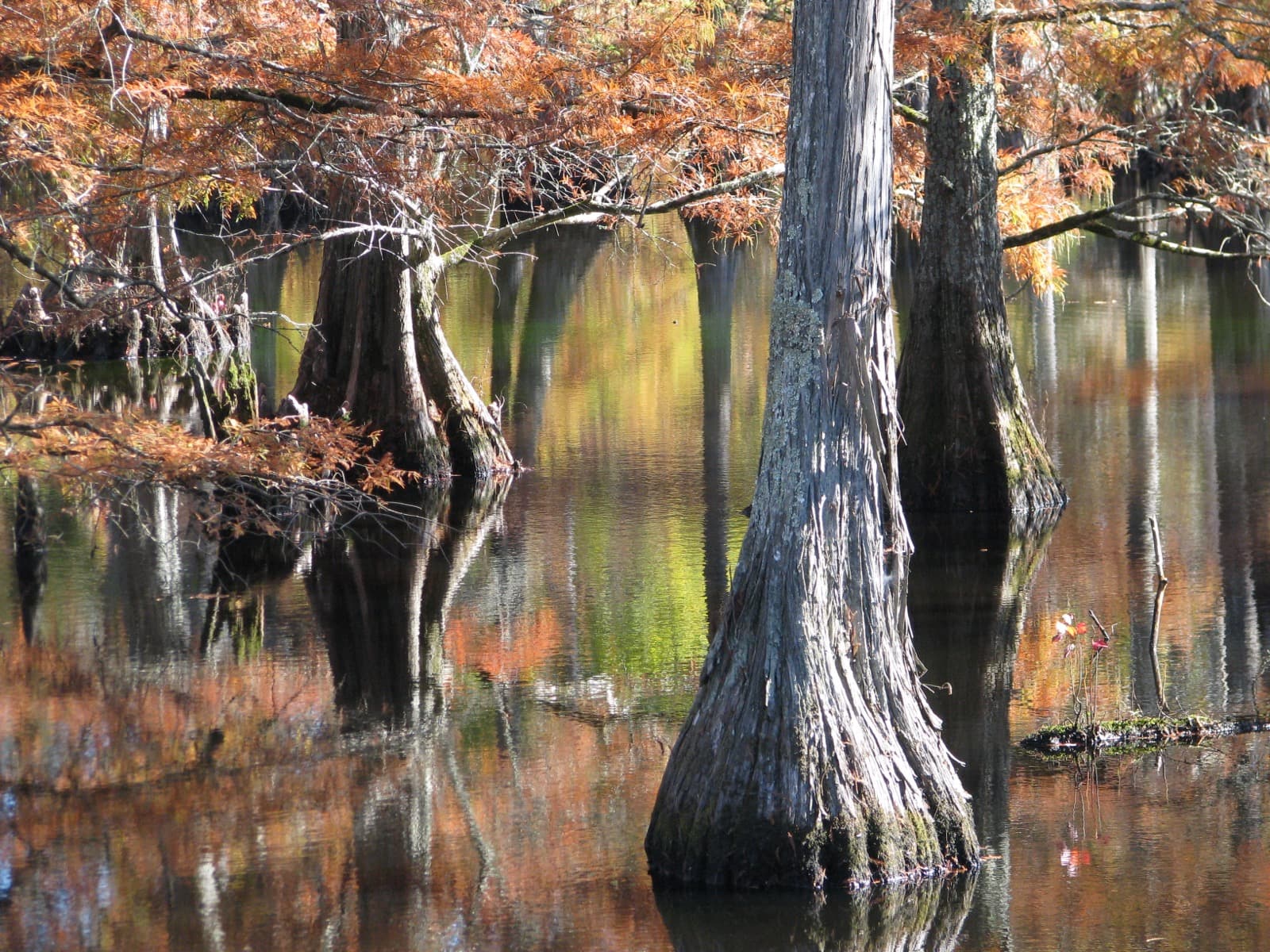
Noxubee Refuge in pictures
Questions people ask
When is the best time to see wildlife at Sam D. Hamilton Noxubee National Wildlife Refuge?
In 3 separate phases: Cattle egret and heron rookeries active; bluebirds and prothonotary warblers nesting, May, Cattle egret rookery full; cormorants and anhingas on Bluff Lake, July and Cattle egrets nesting; wood storks on the lakes, August. They're separate displays, not one long season, and none of them is a peak.
Is it the season at Sam D. Hamilton Noxubee National Wildlife Refuge right now?
Not now: its usual wildlife window for this year has passed. Next time: Cattle egret and heron rookeries active; bluebirds and prothonotary warblers nesting, May.
Where can I see the heron and egret rookery?
From the Bluff Lake Boardwalk. The Fish and Wildlife Service says it crosses a wetland with excellent views of waterfowl, egrets and other wading birds in the rookery in spring and summer, and it ends at an observation platform.Source: U.S. Fish and Wildlife Service, Sam D. Hamilton Noxubee NWR: Photography ↗ (opens in a new tab)
What wildlife can I expect from May to August?
The refuge’s own calendar lists cattle egret and heron rookeries active, bluebirds and prothonotary warblers nesting and alligators active in May; the cattle egret rookery full, with cormorants and anhingas on Bluff Lake, in July; and wood storks on the lakes, cattle egrets nesting and alligators very visible in August.Source: U.S. Fish and Wildlife Service, Sam D. Hamilton Noxubee NWR: Species ↗ (opens in a new tab)
Is the refuge good for wildlife photography?
Yes. The Fish and Wildlife Service says it offers excellent opportunities all year to photograph alligators, waterfowl, warblers and many other species, from five observation platforms.Source: U.S. Fish and Wildlife Service, Sam D. Hamilton Noxubee NWR: Photography ↗ (opens in a new tab)
Is there an easy, level viewpoint?
Goose Overlook is reached by a level, 150-foot concrete walk. Otherwise, trails aren't wheelchair accessible unless marked.Sources: U.S. Fish and Wildlife Service, Sam D. Hamilton Noxubee NWR: Photography ↗ (opens in a new tab), U.S. Fish and Wildlife Service, Sam D. Hamilton Noxubee NWR: Trails ↗ (opens in a new tab)
Where are the best spots in Sam D. Hamilton Noxubee National Wildlife Refuge?
Bluff Lake Boardwalk: a 0.15-mile boardwalk over a wetland to an observation platform, with views of waterfowl, egrets and other wading birds in the rookery in spring and summer; no bikes; Goose Overlook: a viewing area on a bluff above the Dickerson Arm of Bluff Lake, reached by a level 150-foot concrete walk.
What is Sam D. Hamilton Noxubee National Wildlife Refuge like through the year?
Fall colors start to show (Oct), Peak of fall colors; expect a killing frost (Nov), Lake fishing season, March 1 through October (bank fishing in set areas all year) (Mar–Oct), December is the refuge's peak hunting month: hunter orange recommended on trails in hunt areas (Dec), Tree blossoms: red maples and elms (Feb), Tree blossoms: redbud, crabapple, wild plum and dogwood (Mar), Queen Anne's lace and maypops bloom (Jun), Black-eyed Susans and purple coneflowers bloom (Jul), Ironweeds bloom (Aug), End of the season for flowering plants (Nov), Red-cockaded woodpeckers start to nest (Apr), White-tailed deer fawns are born (Jun), Alligators very visible (Aug), Selected lakes are drained (Jul), First osprey and bald eagles usually reported (Oct), Woodcock flights arrive from the north; waterfowl numbers build (Nov) and Eagles migrate off the refuge (Mar).
How we know · Sources (4)
How we know
U.S. Fish and Wildlife Service, Sam D. Hamilton Noxubee NWR: Species (opens in a new tab) (Sep 29) · U.S. Fish and Wildlife Service, Sam D. Hamilton Noxubee NWR: Photography (opens in a new tab) (Sep 29) · U.S. Fish and Wildlife Service, Sam D. Hamilton Noxubee NWR: Trails (opens in a new tab) (Sep 29) · U.S. Fish and Wildlife Service, Sam D. Hamilton Noxubee NWR: Visit Us (opens in a new tab) (Sep 29)