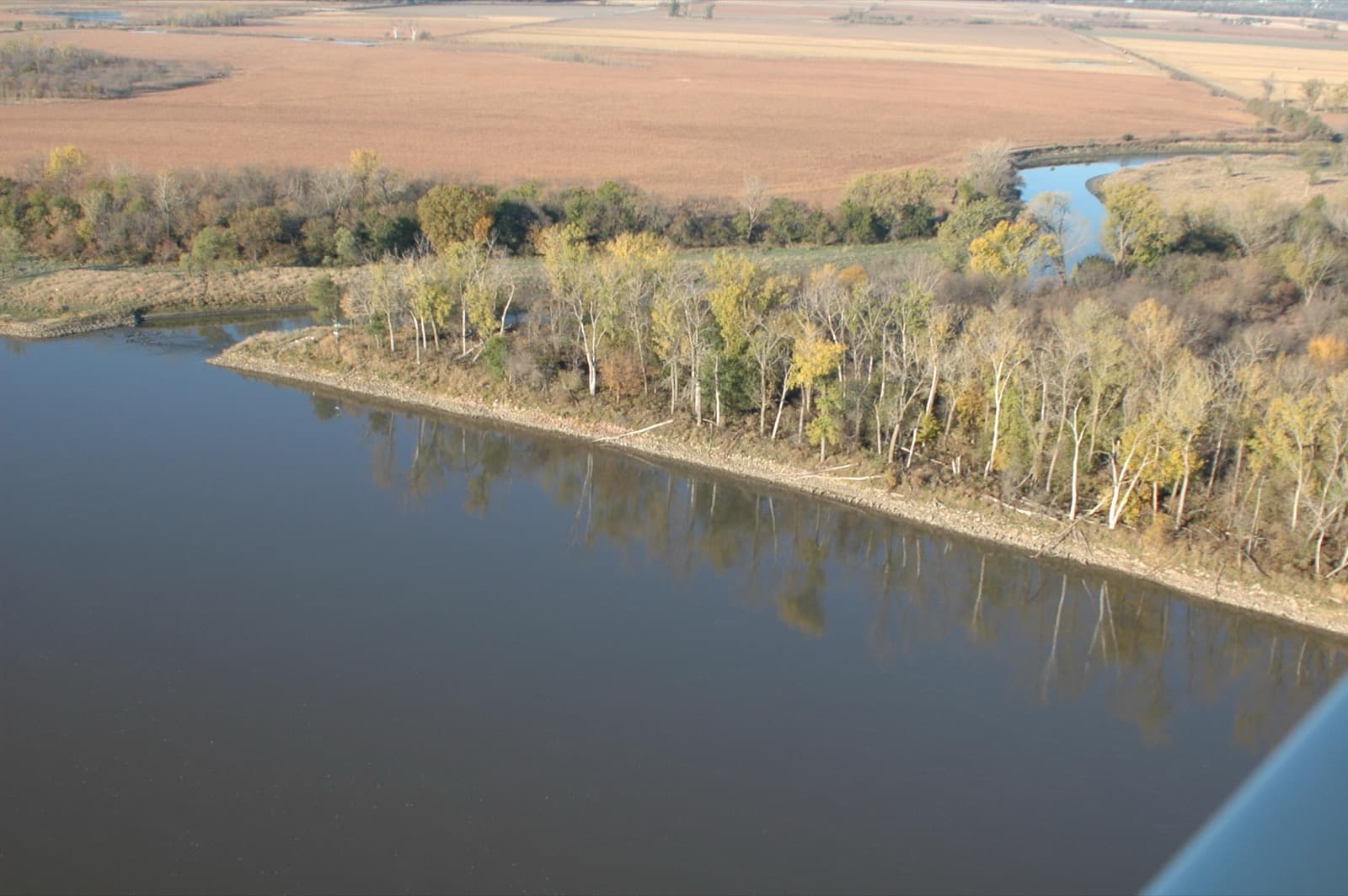
Aerial view of Boyer Chute National Wildlife Refuge (date not given). Photo: USFWS · public domain · resized; cropped to fit. Not current conditions.
Boyer Chute Refugewinter wildlife
At Boyer Chute National Wildlife Refuge, the timing for winter wildlife comes in 3 separate phases, each its own display: Fall waterfowl, late October through early December, the peak months; Bald eagles, first peak, December; and Bald eagles, second peak, late February. Its usual window hasn't started yet this year.
Boyer Chute National Wildlife Refuge through the year
- Feb: Bald eagles peak again in late FebruaryFeb
- Mar: Waterfowl move through, typically early MarchMar
- Seasonal refuge units open, April 15 to October 14NowApr–Oct
- Peak waterfowl use, late October through early DecemberOct–Dec
- Dec: Bald eagle numbers peak in DecemberDec
- October–DecemberFall waterfowllate October through early December, the peak months
- DecemberBald eagles, first peakDecember
- FebruaryBald eagles, second peaklate February
This week at Boyer Chute Refuge
Right now in Boyer Chute Refuge · September
- Seasonal refuge units open, April 15 to October 14 · Apr–Oct
Next usual winter wildlife timingFall waterfowl, late October through early December, the peak months
Where to watch
- North Island TrailA 3.6-mile mowed-grass trail, open all year, that starts just east of the bridge from the main parking lot and heads north across Boyer Island to views of the Missouri River and the restored backwaters; during migration, look for waterfowl and eagles along the river's edge
- South Chute Confluence TrailAn easy 0.65-mile mowed-grass trail with a wooden bridge section from the South Chute Parking Lot, following the edge of the chute to where it meets the Missouri River; open all year
Nearby
- DeSoto Refuge7 miLocal timing: early December, and again in late February and early March · starts in ~2 monthsTuChance Showers And Thunderstorms, rain likelyWeRain Showers, rain likelyThShowers And Thunderstorms Likely, rain likelyFrSunnySaSunnySuSunnyMoSunny
- Loess Bluffs Refuge103 miLocal timing: from mid-October, peaking in mid- to late November · starts soonTuSlight Chance Showers And Thunderstorms, rain likelyWeShowers And Thunderstorms, rain likelyThShowers And Thunderstorms, rain likelyFrChance Rain Showers then Mostly Sunny, rain likelySaPartly SunnySuSunnyMoSunny
- Flint Hills Refuge217 miLocal timing: November, when numbers peak · starts in ~5 weeksTuChance Showers And Thunderstorms, rain likelyWeChance Rain Showers, rain likelyThShowers And Thunderstorms, rain likelyFrChance Showers And Thunderstorms, rain likelySaPartly SunnySuMostly SunnyMoSunny
- Quivira Refuge269 miLocal timing: November · starts in ~5 weeksTuShowers And Thunderstorms, rain likelyWeShowers And Thunderstorms, rain likelyThShowers And Thunderstorms, rain likelyFrSlight Chance Rain Showers then Partly Sunny, rain likelySaPartly SunnySuSunnyMoSunny
Boyer Chute Refuge in pictures
Questions people ask
When is the best time to see winter wildlife at Boyer Chute National Wildlife Refuge?
In 3 separate phases: Fall waterfowl, late October through early December, the peak months, Bald eagles, first peak, December and Bald eagles, second peak, late February. They're separate displays, not one long season.
Is it wildlife season at Boyer Chute National Wildlife Refuge right now?
Not yet: its usual winter wildlife timing is Fall waterfowl, late October through early December, the peak months.
Is there a fee?
No, there is no charge to visit.Source: U.S. Fish and Wildlife Service, Boyer Chute NWR: Visit Us ↗ (opens in a new tab)
When is it open?
The auto tour and trails are open daily from half an hour before sunrise to half an hour after sunset, all year. Some outlying refuge units open only April 15 to October 14.Source: U.S. Fish and Wildlife Service, Boyer Chute NWR: Visit Us ↗ (opens in a new tab)
Where are eagles easiest to find in winter?
The refuge says winter is best for eagles, especially along the river and the mouth of the chute; look for them along the chute and the Missouri River.Sources: U.S. Fish and Wildlife Service, Boyer Chute NWR: Visit Us ↗ (opens in a new tab), U.S. Fish and Wildlife Service, Boyer Chute NWR: Species ↗ (opens in a new tab)
Is there a visitor center?
No. There's no office or visitor contact station on the refuge; kiosks and brochures are at the main entrance and parking lot. For questions, call nearby DeSoto National Wildlife Refuge, which manages it, at 712-388-4800.Source: U.S. Fish and Wildlife Service, Boyer Chute NWR: Visit Us ↗ (opens in a new tab)
Can flooding affect a visit?
Yes. The refuge sits on the Missouri River, flooding is a frequent issue and can limit access, so check the refuge's status before you go.Source: U.S. Fish and Wildlife Service, Boyer Chute NWR: Visit Us ↗ (opens in a new tab)
Are there restrooms?
Yes, at the Main Parking Lot and the North Chute Parking Lot, during the refuge's open hours.Source: U.S. Fish and Wildlife Service, Boyer Chute NWR: Visit Us ↗ (opens in a new tab)
Where are the best spots in Boyer Chute National Wildlife Refuge?
North Island Trail: a 3.6-mile mowed-grass trail, open all year, that starts just east of the bridge from the main parking lot and heads north across Boyer Island to views of the Missouri River and the restored backwaters; during migration, look for waterfowl and eagles along the river's edge; South Chute Confluence Trail: an easy 0.65-mile mowed-grass trail with a wooden bridge section from the South Chute Parking Lot, following the edge of the chute to where it meets the Missouri River; open all year.
What is Boyer Chute National Wildlife Refuge like through the year?
Waterfowl move through, typically early March (Mar), Peak waterfowl use, late October through early December (Oct–Dec), Bald eagle numbers peak in December (Dec), Bald eagles peak again in late February (Feb) and Seasonal refuge units open, April 15 to October 14 (Apr–Oct).
How we know
U.S. Fish and Wildlife Service, Boyer Chute NWR: Species (opens in a new tab) (Sep 29) · U.S. Fish and Wildlife Service, Boyer Chute NWR: Visit Us (opens in a new tab) (Sep 29)