National Key Deer Refugespring migration
Neotropical migrant birds: March and April are peak northbound migration season, per the Fish and Wildlife Service. This year's season is over; the next is in 2027.
Right now in National Key Deer Refuge · September
- Key deer rut (breeding season) begins (September and October) · Sep–Oct
- Peak fall southbound bird migration, with migrating peregrine falcons (September and October) · Sep–Oct
153days to the next spring migration seasonMarch and April, local timing
National Key Deer Refuge through the year
- Wintering white pelicans and wading birds fish in the salt ponds (January and February)Jan–Feb
- Neotropical migrant birds: peak northbound migration (March and April)Mar–Apr
- Bartram's hairstreak butterflies at their peak in the pine rockland (March and April)Mar–Apr
- Key deer: peak fawning season, fawns with spots (May and June)May–Jun
- Key deer rut (breeding season) begins (September and October)NowSep–Oct
- Peak fall southbound bird migration, with migrating peregrine falcons (September and October)NowSep–Oct
Where to watch
- Blue Hole Observation PlatformA former limestone quarry, now a shaded freshwater pond, three miles north of US 1 on Key Deer Boulevard; a short, shaded paved trail leads from the paved parking lot to the platform, accessible to everyone (no bikes on the trail; racks at the trailhead)
- Watson and Mannillo Nature TrailsTwo interpretive trails a quarter mile north of Blue Hole on Key Deer Boulevard: the 800-foot Mannillo Trail ends at a platform over a freshwater wetland, and the Watson Trail is a two-thirds-mile loop through pine rockland, wetland and hardwood hammock; both are in full sun
National Key Deer Refuge in pictures
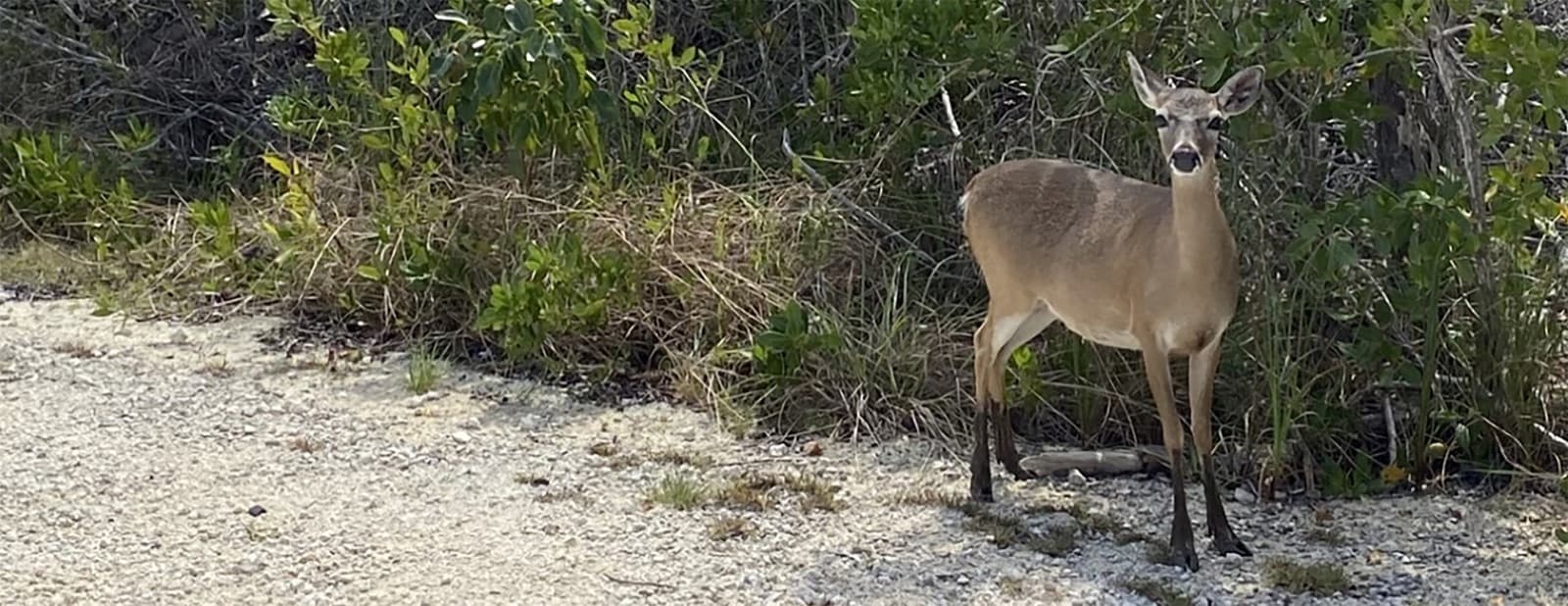
How we know
U.S. Fish and Wildlife Service, National Key Deer Refuge (Seasons of Wildlife) (opens in a new tab) (Sep 29) · U.S. Fish and Wildlife Service, National Key Deer Refuge: Visit Us (opens in a new tab) (Sep 29) · National Weather Service forecast and alerts (opens in a new tab) (Sep 29)
Questions people ask
When is the best time to see spring migration at National Key Deer Refuge?
Neotropical migrant birds: March and April are peak northbound migration season, per the Fish and Wildlife Service: March and April. That's general timing for this place, not a peak date or a forecast.
Is spring migration under way at National Key Deer Refuge right now?
Not now: the spring migration season is over for this year. The next one starts in about 153 days (March and April, local timing).
When are the refuge lands open?
Every day from half an hour before sunrise to half an hour after sunset. The Nature Center on Big Pine Key (30587 Overseas Highway, by the island's only traffic light) is open Wednesday to Saturday, 10 a.m. to 3 p.m., and is the best place to start.Sources: U.S. Fish and Wildlife Service, National Key Deer Refuge: Visit Us ↗ (opens in a new tab), U.S. Fish and Wildlife Service, National Key Deer Refuge (Seasons of Wildlife) ↗ (opens in a new tab)
Can I bring my dog or my bike?
Dogs are welcome on a leash only. Bikes are allowed on most rustic trails and fire roads, but not at Blue Hole, the Nature Trails or Long Beach. No motorized vehicles of any kind are allowed on refuge lands or trails.Source: U.S. Fish and Wildlife Service, National Key Deer Refuge: Visit Us ↗ (opens in a new tab)
Where and when will I see Key deer, and can I feed them?
They roam freely across refuge land and nearby neighborhoods; early morning and toward sunset are the best times. Please don't feed them, and drive carefully from Big Pine and No Name Keys west to Lower Sugarloaf Key, pulling fully off the road to watch wildlife.Sources: U.S. Fish and Wildlife Service, National Key Deer Refuge: Visit Us ↗ (opens in a new tab), U.S. Fish and Wildlife Service, National Key Deer Refuge (Seasons of Wildlife) ↗ (opens in a new tab)
What should I bring?
Water and sun protection. Parts of trails can be under water in the rainy season, mosquitoes can be a nuisance at times, and on the rustic trails you should know poisonwood, a native plant that irritates skin like poison ivy.Source: U.S. Fish and Wildlife Service, National Key Deer Refuge: Visit Us ↗ (opens in a new tab)
Where are the best spots in National Key Deer Refuge?
Blue Hole Observation Platform: a former limestone quarry, now a shaded freshwater pond, three miles north of US 1 on Key Deer Boulevard; a short, shaded paved trail leads from the paved parking lot to the platform, accessible to everyone (no bikes on the trail; racks at the trailhead); Watson and Mannillo Nature Trails: two interpretive trails a quarter mile north of Blue Hole on Key Deer Boulevard: the 800-foot Mannillo Trail ends at a platform over a freshwater wetland, and the Watson Trail is a two-thirds-mile loop through pine rockland, wetland and hardwood hammock; both are in full sun.
What is National Key Deer Refuge like through the year?
Neotropical migrant birds: peak northbound migration (March and April) (Mar–Apr), Bartram's hairstreak butterflies at their peak in the pine rockland (March and April) (Mar–Apr), Key deer: peak fawning season, fawns with spots (May and June) (May–Jun), Key deer rut (breeding season) begins (September and October) (Sep–Oct), Peak fall southbound bird migration, with migrating peregrine falcons (September and October) (Sep–Oct) and Wintering white pelicans and wading birds fish in the salt ponds (January and February) (Jan–Feb).