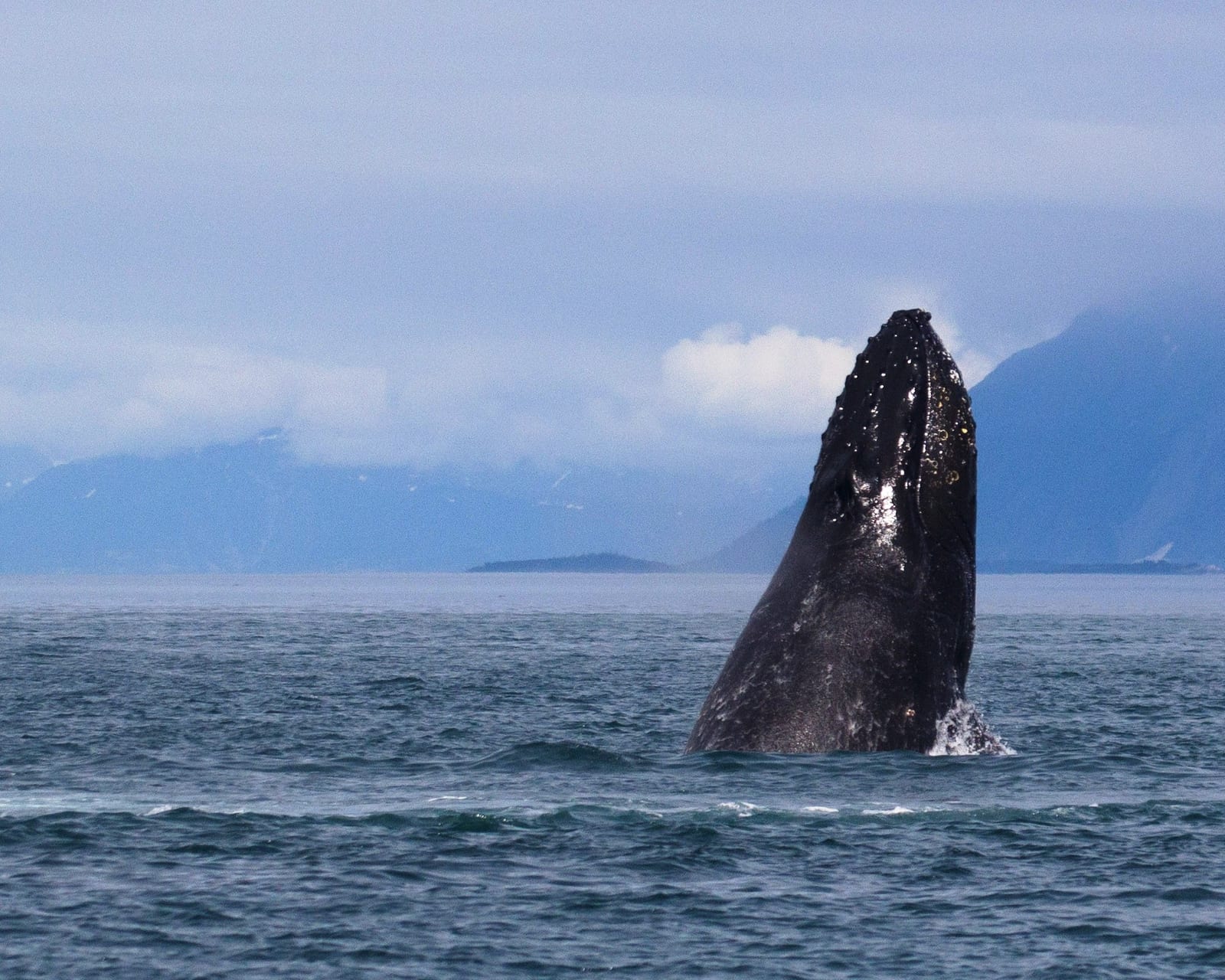
Photo: NPS · Public domain, cropped and resized
Glacier Baywildlife
National parkAt Glacier Bay National Park and Preserve, humpback whales are typically most numerous in July and August, per the National Park Service. Its usual window for this year has passed.
Checked against 5 official sources · How we check →
About Glacier Bay
- What it is
- A national park in Alaska
- What you'll see
- Humpback whales · most numerous in July and August
- Before you go
- Permits: A permit is needed for private boats June 1 through August 31 north of Point Gustavus and Point Carolus.
- Boats: Boats must stay at least a quarter nautical mile from humpback whales in park waters.
Your guide to the area
Places on this map (2)
Where to watch
Bartlett Cove shoreline
Best spot
From the public use dock, walk the shore south of Bartlett Cove and listen for the breathing of humpback whales, feeding sea otters and bald eagles
Point Gustavus
Best spot
An extended shoreline hike, six miles one way from the docks, that takes a full day
Around Glacier Bay
Next season here: Humpback whales, in July and August.
The year at Glacier Bay
- Humpback whales most numerousJuly and August
- Jul: Flowers on the beach meadowsmid-summer
- Salmon run up the Bartlett River, drawing harbor sealsthe latter part of the summer
Questions people ask
When is the best time to see wildlife at Glacier Bay National Park and Preserve?
Most numerous: in July and August. Humpback whales are typically most numerous in July and August, per the National Park Service.
Is it the season at Glacier Bay National Park and Preserve right now?
Not now: its usual wildlife window for this year has passed. Next time: in July and August, local timing.
When are humpback whales most numerous in Glacier Bay?
In July and August: numbers typically rise in mid-June, are somewhat lower in April, May and September, and are lowest from October through March.Source: National Park Service, Humpback Whale Research & Monitoring ↗ (opens in a new tab)
Can I look for Glacier Bay's whales from shore?
Yes: the park suggests walking the shoreline south of Bartlett Cove and listening for the breathing of humpback whales. A full-day hike reaches Point Gustavus, six miles one way.Source: National Park Service, Hiking ↗ (opens in a new tab)
Does my private boat need a permit in Glacier Bay in summer?
Yes: from June 1 through August 31, private boaters need a permit to enter park waters north of Point Gustavus and Point Carolus.Source: National Park Service, Private Boating in Glacier Bay ↗ (opens in a new tab)
How close can a boat get to a humpback whale in Glacier Bay?
No closer than a quarter nautical mile: vessels may not operate within ¼ nautical mile of a humpback whale in park waters.Source: National Park Service, Whale Waters Update for Glacier Bay Effective October 1, 2026 ↗ (opens in a new tab)
When did Glacier Bay become a national monument?
On February 26, 1925.Source: National Park Service, History & Culture ↗ (opens in a new tab)
Where are the best spots in Glacier Bay National Park and Preserve?
The best spots are Bartlett Cove shoreline and Point Gustavus. Bartlett Cove shoreline: from the public use dock, walk the shore south of Bartlett Cove and listen for the breathing of humpback whales, feeding sea otters and bald eagles. Point Gustavus: an extended shoreline hike, six miles one way from the docks, that takes a full day.
What is Glacier Bay National Park and Preserve like through the year?
Glacier Bay National Park and Preserve has something to see in 3 months of the year. Humpback whales most numerous: Jul–Aug. Flowers on the beach meadows: Jul. Salmon run up the Bartlett River, drawing harbor seals: Aug–Sep.
How we know · Sources (5)
How we know
National Park Service, Humpback Whale Research & Monitoring (opens in a new tab) (Oct 3) · National Park Service, Hiking (opens in a new tab) (Oct 3) · National Park Service, Private Boating in Glacier Bay (opens in a new tab) (Oct 3) · National Park Service, Whale Waters Update for Glacier Bay Effective October 1, 2026 (opens in a new tab) (Oct 3) · National Park Service, History & Culture (opens in a new tab) (Oct 3) National Park Service sources: no claim to original U.S. Government works.