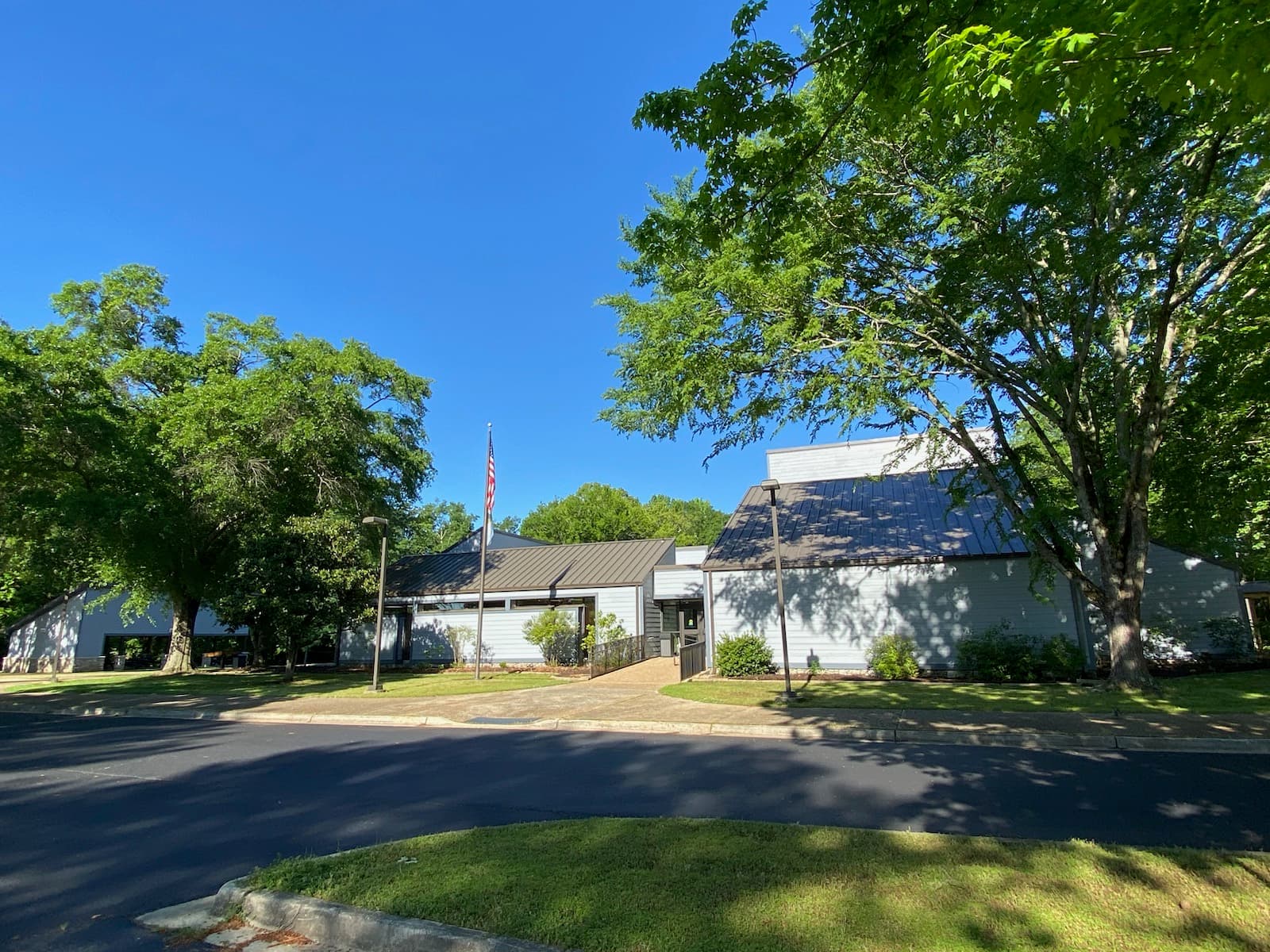
The Wheeler National Wildlife Refuge visitor center building (circa 2024). Photo: U.S. Fish and Wildlife Service · public domain · resized; cropped to fit. Not current conditions.
Wheeler Refugewinter wildlife
At Wheeler National Wildlife Refuge, the timing for winter wildlife comes in 3 separate phases, each its own display: Blue-winged teal migration at its peak, September; Fall songbird migration at its peak, October; and Waterfowl and sandhill crane numbers at their peak, late December to the first half of January. No official report yet this season.
Wheeler National Wildlife Refuge through the year
- Feb: Waterfowl numbers drop fast as birds head northFeb
- Mar: Blue-winged teal and shorebirds begin migratingMar
- Apr: Wildflowers at their peakApr
- Apr: Teal migration at its peak; warblers, vireos and other songbirds migratingApr
- May: The last migrant songbirds move throughMay
- Sep: Blue-winged teal migration at its peakNowSep
- Oct: Fall songbird migration at its peakOct
- Nov: Large numbers of great blue herons gatherNov
- Visitor center open seven days a weekNov–Feb
- Sandhill cranes: arriving from late November, numbers peak in early January (best seen from the Observation Building)Nov–Jan
- Waterfowl and crane numbers peak: late December into the first half of JanuaryDec–Jan
- SeptemberBlue-winged teal migration at its peakSeptember
- OctoberFall songbird migration at its peakOctober
- December–JanuaryWaterfowl and sandhill crane numbers at their peaklate December to the first half of January
This week at Wheeler Refuge
Next 7 days
Sat, Oct 3: Showers And Thunderstorms, high 85°F, low 68°F · 75% chance of rain
Sun, Oct 4: Showers And Thunderstorms Likely, high 79°F, low 62°F · 72% chance of rain
- Rain likely · up to 75% chanceSaturday, Saturday Night, Sunday
Updated Tue, Sep 29, 12:27 PM CDT, source: National Weather Service.
Today here · Tue, Sep 29
Sun: rises 6:42 a.m., sets 6:36 p.m.; civil twilight ends 7:01 p.m.
Moon tonight: waning gibbous, 86% lit (at 10 p.m.).
Sun and moon: our calculation, flat horizon. How these work
Where to watch
- Wildlife Observation BuildingReached by a 200-yard trail behind the visitor center, it overlooks a waterfowl pond where hundreds of ducks and geese and thousands of sandhill cranes feed in winter; the trail and the building's first floor are wheelchair accessible
- Flint Creek TrailA 1.28-mile double loop of boardwalk and dirt through oak-hickory forest, where warblers are sometimes seen and heard in spring and fall migration; from the Flint Creek Day Use Area on the north side of Hwy 67, less than a quarter mile west of the visitor center entrance; no bikes
Nearby
- Tennessee Refuge140 miLocal timing: early January · starts in ~3 monthsTuSunnyWeSunnyThMostly Sunny, rain likelyFrRain Showers Likely, rain likelySaRain Showers Likely, rain likelySuRain Showers Likely, rain likelyMoSlight Chance Rain Showers, rain likely
- Mingo Refuge245 mi3 separate phases, from September and October
- St. Marks Refuge345 miLocal timing: between Thanksgiving and Christmas · starts in ~7 weeksTuSunnyWeSunny then Slight Chance Showers And Thunderstorms, rain likelyThMostly Sunny then Slight Chance Showers And Thunderstorms, rain likelyFrChance Showers And Thunderstorms, rain likelySaChance Showers And Thunderstorms, rain likelySuChance Showers And Thunderstorms, rain likelyMoShowers And Thunderstorms Likely, rain likely
- Savannah Refuge377 miLocal timing: especially in December and January · starts in ~2 monthsTuMostly SunnyWeMostly SunnyThSunnyFrChance Rain Showers, rain likelySaChance Showers And Thunderstorms, rain likelySuSlight Chance Rain Showers then Chance Showers And Thunderstorms, rain likelyMoShowers And Thunderstorms Likely, rain likely
Wheeler Refuge in pictures
Questions people ask
When is the best time to see winter wildlife at Wheeler National Wildlife Refuge?
In 3 separate phases: Blue-winged teal migration at its peak, September, Fall songbird migration at its peak, October and Waterfowl and sandhill crane numbers at their peak, late December to the first half of January. They're separate displays, not one long season.
Is it wildlife season at Wheeler National Wildlife Refuge right now?
There's no official report yet this season.
When is the visitor center open in winter?
From November to February it's open every day, 9 am to 5 pm, except Thanksgiving, Christmas and New Year's Day, when the buildings and grounds are closed.Source: U.S. Fish and Wildlife Service, Wheeler NWR: Visit Us ↗ (opens in a new tab)
Where is the best place to see the cranes?
The Wildlife Observation Building, a short walk behind the visitor center: the refuge calls it the best place to watch the cranes feeding in the crop fields.Sources: U.S. Fish and Wildlife Service, Wheeler NWR: Species (Seasons of Wildlife) ↗ (opens in a new tab), U.S. Fish and Wildlife Service, Wheeler NWR: Trails ↗ (opens in a new tab)
Can I see whooping cranes?
Possibly. Whooping cranes have wintered on the refuge every year since 2006, and in recent years they have often been around the visitor center and the Wildlife Observation Building.Source: U.S. Fish and Wildlife Service, Wheeler NWR: Species (Seasons of Wildlife) ↗ (opens in a new tab)
Is the Observation Building wheelchair accessible?
Yes: the 200-yard trail to it and its first floor are wheelchair accessible.Source: U.S. Fish and Wildlife Service, Wheeler NWR: Trails ↗ (opens in a new tab)
Where are the best spots in Wheeler National Wildlife Refuge?
Wildlife Observation Building: reached by a 200-yard trail behind the visitor center, it overlooks a waterfowl pond where hundreds of ducks and geese and thousands of sandhill cranes feed in winter; the trail and the building's first floor are wheelchair accessible; Flint Creek Trail: a 1.28-mile double loop of boardwalk and dirt through oak-hickory forest, where warblers are sometimes seen and heard in spring and fall migration; from the Flint Creek Day Use Area on the north side of Hwy 67, less than a quarter mile west of the visitor center entrance; no bikes.
What is Wheeler National Wildlife Refuge like through the year?
Wildflowers at their peak (Apr), Teal migration at its peak; warblers, vireos and other songbirds migrating (Apr), Blue-winged teal migration at its peak (Sep), Fall songbird migration at its peak (Oct), Sandhill cranes: arriving from late November, numbers peak in early January (best seen from the Observation Building) (Nov–Jan), Visitor center open seven days a week (Nov–Feb), Blue-winged teal and shorebirds begin migrating (Mar), The last migrant songbirds move through (May), Waterfowl and crane numbers peak: late December into the first half of January (Dec–Jan), Large numbers of great blue herons gather (Nov) and Waterfowl numbers drop fast as birds head north (Feb).
How we know
National Weather Service forecast and alerts (opens in a new tab) (Sep 29) · U.S. Fish and Wildlife Service, Wheeler NWR: Species (Seasons of Wildlife) (opens in a new tab) (Sep 28) · U.S. Fish and Wildlife Service, Wheeler NWR: Visit Us (opens in a new tab) (Sep 28) · U.S. Fish and Wildlife Service, Wheeler NWR: Trails (opens in a new tab) (Sep 28)