Illinois
When to catch Emiquon Refugeat its best
Emiquon Refuge through the year: spring migration (2 separate phases, from typically late February to early March), wildlife by season (2 separate phases, from Late May to early June) and winter wildlife (usually: migration typically peaks in November). Each has its own page with spots, sources and the latest reports.
RIGHT NOW · SEP 30
- Latest reportNo dated report this season; the posters below show each usual window.
- This weekend (NWS)Sat sunny, 70°F · Sun sunny, 71°F
- Park alertsCheck the managing agency before you go
When are you going?
Fall at Emiquon Refuge
Good in fall
- Ducks from October through late November, with the migration typically peaking in November
From each place's own sources; no peak claimed.
Next peak here after fall
“migration typically peaks in November” · U.S. Fish and Wildlife Service ↗
Winter at Emiquon Refuge
- USUAL PEAK · WINTER WILDLIFEEmiquon RefugeMigration typically peaks in NovemberIllinois
“migration typically peaks in November” · U.S. Fish and Wildlife Service ↗
Also good in winter
- Snow geese descend on the refuge as spring migration begins, typically late February to early March
From each place's own sources; no peak claimed.
Spring at Emiquon Refuge
Also good in spring
- Snow geese descend on the refuge as spring migration begins, typically late February to early March
From each place's own sources; no peak claimed.
Next peak here after spring
“migration typically peaks in November” · U.S. Fish and Wildlife Service ↗
Summer at Emiquon Refuge
Good in summer
- Chance of white-faced ibis, late May to early June
From each place's own sources; no peak claimed.
Nearby in summer
Next peak here after summer
“migration typically peaks in November” · U.S. Fish and Wildlife Service ↗
Where to go at Emiquon Refuge
- Spring
- Winter
Places on this map, as a list
Best spots
Spring migration
- North and South Globes from Dickson Mounds RoadRoadside pull-offs on Dickson Mounds Road (IL-9), which runs between the two Globe units. In spring and fall, Illinois River floodwaters fill the Globes and migrating waterfowl rest there; in low water the South Globe levee tops make a 4-mile loop open to walkingU.S. Fish and Wildlife Service ↗
- Spoon River Access Area and Bellrose Wetland platformAn information kiosk with refuge brochures and maps, a viewing and picnic platform on the bank of the Spoon River, and a short primitive trail along the river to the observation platform on the Bellrose WetlandU.S. Fish and Wildlife Service ↗
Wildlife by season
- North and South Globes from Dickson Mounds RoadRoadside pull-offs on Dickson Mounds Road (IL-9), which runs between the two Globe units. In spring and fall, Illinois River floodwaters fill the Globes and migrating waterfowl rest there; in low water the South Globe levee tops make a 4-mile loop open to walkingU.S. Fish and Wildlife Service ↗
- Spoon River Access Area and Bellrose Wetland platformAn information kiosk with refuge brochures and maps, a viewing and picnic platform on the bank of the Spoon River, and a short primitive trail along the river to the observation platform on the Bellrose WetlandU.S. Fish and Wildlife Service ↗
Winter wildlife
- North and South Globes from Dickson Mounds RoadRoadside pull-offs on Dickson Mounds Road (IL-9), which runs between the two Globe units. In spring and fall, Illinois River floodwaters fill the Globes and migrating waterfowl rest there; in low water the South Globe levee tops make a 4-mile loop open to walkingU.S. Fish and Wildlife Service ↗
- Spoon River Access Area and Bellrose Wetland platformAn information kiosk with refuge brochures and maps, a viewing and picnic platform on the bank of the Spoon River, and a short primitive trail along the river to the observation platform on the Bellrose WetlandU.S. Fish and Wildlife Service ↗
Next 7 days at Emiquon Refuge
- TodayChance Rain Showers77° / 69°32% rain
- ThuRain Showers77° / 59°92% rain
- FriRain Showers then Mostly Sunny69° / 51°76% rain
- SatSunny70° / 51°3% rain
- SunSunny71° / 46°3% rain
- MonSunny66° / 44°–
- TueSunny68° / 50°2% rain
Today: sunrise 6:56 a.m., sunset 6:46 p.m., light until 7:13 p.m. · moon waning gibbous, 78% lit (our calculation)
Nearby, and when they peak
- USUAL PEAK · WINTER WILDLIFEMeredosia RefugeMigration typically peaks in November42 mi
“migration typically peaks in November” · U.S. Fish and Wildlife Service ↗
- USUAL PEAK · WINTER WILDLIFEChautauqua RefugeMigration typically peaks in November6 mi
“Migration typically peaks in November” · U.S. Fish and Wildlife Service ↗
- More winter wildlife:Clarence Cannon Refuge
Towns nearby
- Galesburg, IL45 mi
- Bloomington, IL60 mi
- Decatur, IL69 mi
- Quincy, IL73 mi
- Champaign, IL97 mi
- O'Fallon, MO112 mi
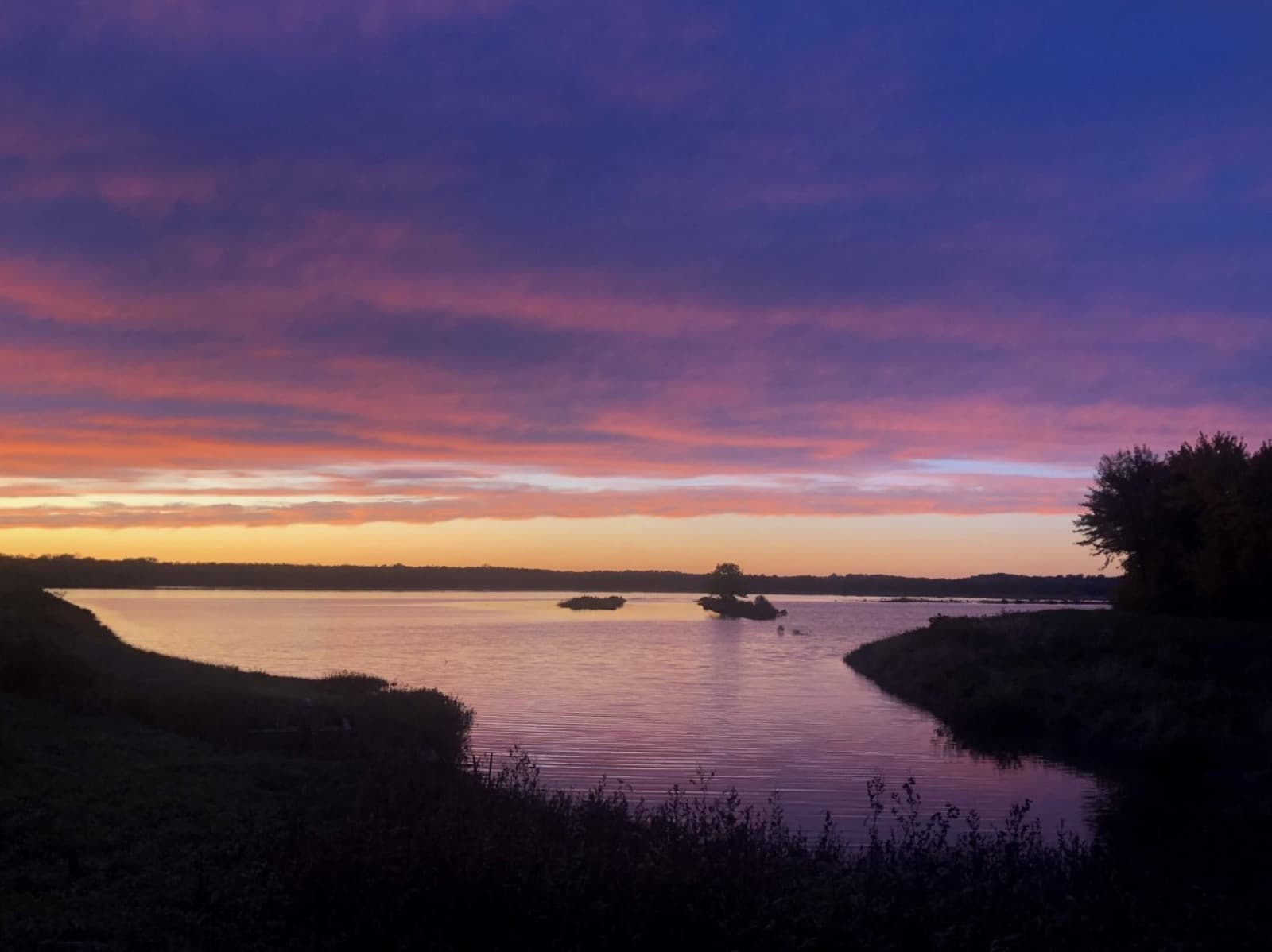
Emiquon Refuge in pictures
Questions people ask
How big are the snow goose flocks?
Often more than 100,000 birds, moving as one over the openings in the ice.Source: U.S. Fish and Wildlife Service, Emiquon NWR: Species ↗ (opens in a new tab)
What else turns up in spring?
From mid-March, as the ice opens, teal, pintails, shovelers, canvasbacks, redheads and mergansers; later, American coots, and in the tall marsh plants you might even spot a sora, bittern or rail.Source: U.S. Fish and Wildlife Service, Emiquon NWR: Species ↗ (opens in a new tab)
Are there walking trails?
Not long ones: water levels swing too much for formal trails. When the water is low, the levees are open on foot, including the 4-mile loop on the South Globe levee tops. Nearby Chautauqua refuge has hiking trails.Source: U.S. Fish and Wildlife Service, Emiquon NWR: Visit Us ↗ (opens in a new tab)
How do I get there from Havana?
Cross the Illinois River bridge on Route 136 west, and half a mile past the bridge turn north onto Route 78/97.Source: U.S. Fish and Wildlife Service, Emiquon NWR: Visit Us ↗ (opens in a new tab)
How we know
- Sep 30Park ServiceSeasons of wildlife: late-February snow geese, April-May warblers, summer ibis and shorebirds, October-November ducks with a November migration peakSource (opens U.S. Fish and Wildlife Service, Emiquon NWR: Species in a new tab)