Emiquon Refugewinter wildlife
The Fish and Wildlife Service says fall waterfowl migration at Emiquon typically peaks in November: usually migration typically peaks in November. Its usual window hasn't started yet this year.
Right now at Emiquon Refuge
Right now in Emiquon Refuge · September
- Sandpipers, plovers and dowitchers, July through September · Jul–Sep
- Roadside birdwatching all year · Jan–Dec
Your guide to the area
Where to watch
- North and South Globes from Dickson Mounds RoadRoadside pull-offs on Dickson Mounds Road (IL-9), which runs between the two Globe units. In spring and fall, Illinois River floodwaters fill the Globes and migrating waterfowl rest there; in low water the South Globe levee tops make a 4-mile loop open to walking
- Spoon River Access Area and Bellrose Wetland platformAn information kiosk with refuge brochures and maps, a viewing and picnic platform on the bank of the Spoon River, and a short primitive trail along the river to the observation platform on the Bellrose Wetland
Nearby
- Chautauqua Refuge6 miMigration typically peaks in November
- Meredosia Refuge42 mimigration typically peaks in November
- Two Rivers Refuge99 miusually begin to arrive in October
- Mingo Refuge232 mi3 separate phases, from September and October
- Necedah Refuge258 mi2 separate phases, from September through November; the last few cranes, ducks and swans depart by mid-NovemberSatMostly Sunny
- Loess Bluffs Refuge271 mifrom mid-October, peaking in mid- to late NovemberSatPartly Sunny
The year at Emiquon Refuge
- Roadside birdwatching all yearNowJan–Dec
- Snow geese descend on the refuge as spring migration begins, typically late February to early MarchFeb–Mar
- Warblers migrating through, April and MayApr–May
- Chance of white-faced ibis, late May to early JuneMay–Jun
- Sandpipers, plovers and dowitchers, July through SeptemberNowJul–Sep
- Ducks from October through late November, with the migration typically peaking in NovemberOct–Nov
- Parts of the refuge closed as a waterfowl sanctuary, October 16 to January 31Oct–Jan
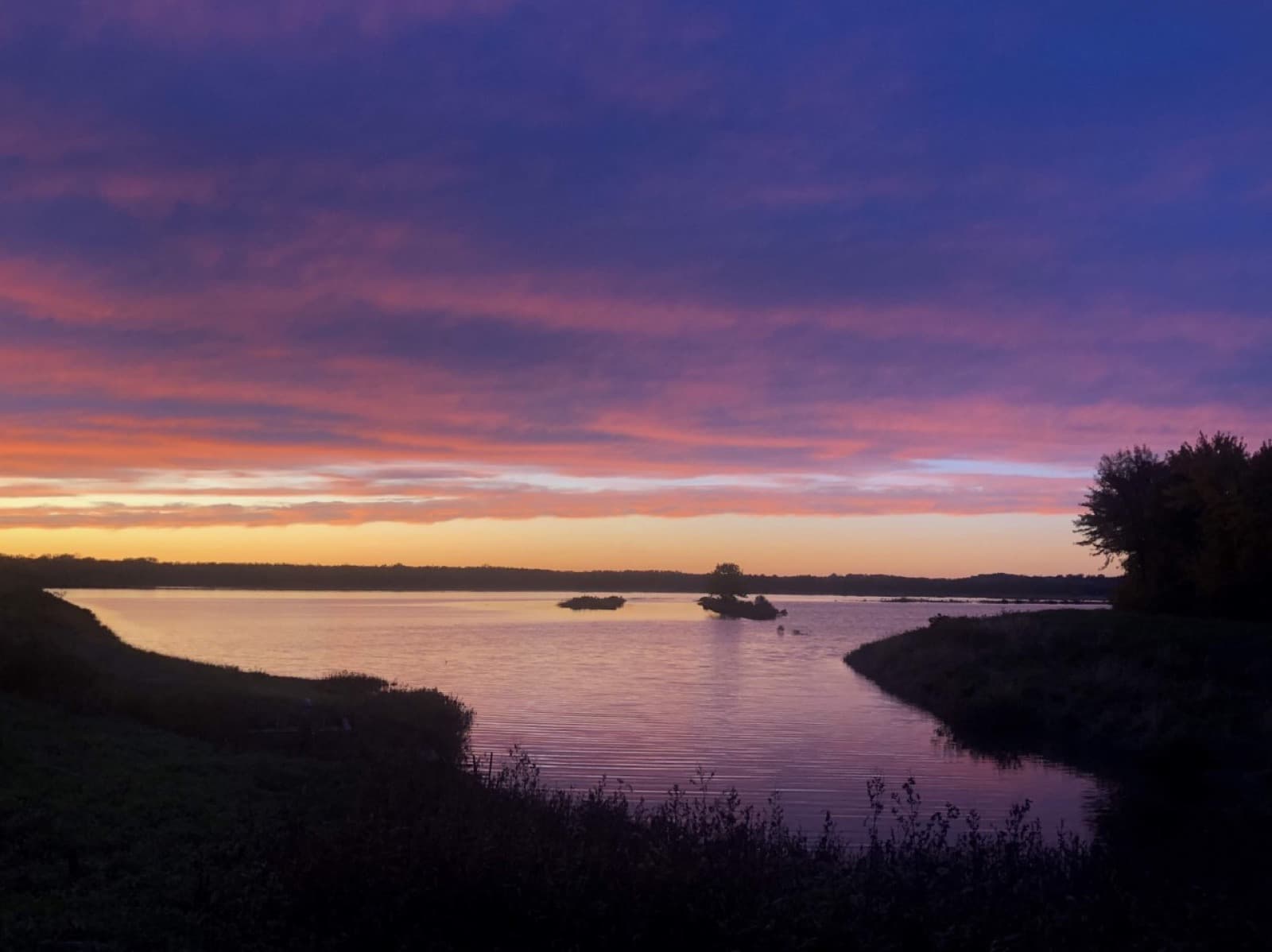
Emiquon Refuge in pictures
Questions people ask
When is the best time to see winter wildlife at Emiquon National Wildlife Refuge?
The Fish and Wildlife Service says fall waterfowl migration at Emiquon typically peaks in November: migration typically peaks in November. That's the usual peak in the source's own words, not a forecast.
Is it wildlife season at Emiquon National Wildlife Refuge right now?
Not yet: its usual winter wildlife timing is migration typically peaks in November, usually.
Is any of the refuge closed in fall and winter?
Yes. Parts of the refuge close as a waterfowl sanctuary from October 16 to January 31, and parts close during hunting season. The refuge's regulations document includes a map.Source: U.S. Fish and Wildlife Service, Emiquon NWR: Visit Us ↗ (opens in a new tab)
How many ducks use the area?
Waterfowl surveys across the wider Emiquon area average a one-day high of 71,450 ducks, with historic highs of 1.5 million. Twenty-eight kinds of waterfowl use the refuge, and by December most have gone south.Source: U.S. Fish and Wildlife Service, Emiquon NWR: Species ↗ (opens in a new tab)
Where are the eagles in winter?
Almost anywhere on the refuge, and especially along Highway 97/78.Source: U.S. Fish and Wildlife Service, Emiquon NWR: Visit Us ↗ (opens in a new tab)
Are there restrooms?
Not on the refuge. The nearby Dickson Mounds Museum (10956 N. Dickson Mounds Rd., Lewistown) has restrooms during its business hours.Source: U.S. Fish and Wildlife Service, Emiquon NWR: Visit Us ↗ (opens in a new tab)
Is there a fee?
No, there's no charge to visit.Source: U.S. Fish and Wildlife Service, Emiquon NWR: Visit Us ↗ (opens in a new tab)
Where are the best spots in Emiquon National Wildlife Refuge?
North and South Globes from Dickson Mounds Road: roadside pull-offs on Dickson Mounds Road (IL-9), which runs between the two Globe units. In spring and fall, Illinois River floodwaters fill the Globes and migrating waterfowl rest there; in low water the South Globe levee tops make a 4-mile loop open to walking; Spoon River Access Area and Bellrose Wetland platform: an information kiosk with refuge brochures and maps, a viewing and picnic platform on the bank of the Spoon River, and a short primitive trail along the river to the observation platform on the Bellrose Wetland.
Are there closures or permits to know about in Emiquon National Wildlife Refuge?
Parts of the refuge closed as a waterfowl sanctuary, October 16 to January 31 (Oct–Jan).
What is Emiquon National Wildlife Refuge like through the year?
Snow geese descend on the refuge as spring migration begins, typically late February to early March (Feb–Mar), Warblers migrating through, April and May (Apr–May), Chance of white-faced ibis, late May to early June (May–Jun), Sandpipers, plovers and dowitchers, July through September (Jul–Sep), Ducks from October through late November, with the migration typically peaking in November (Oct–Nov), Parts of the refuge closed as a waterfowl sanctuary, October 16 to January 31 (Oct–Jan) and Roadside birdwatching all year (Jan–Dec).