Missouri
When to catch Loess Bluffs Refugeat its best
Loess Bluffs Refuge through the year: spring migration (local timing: from mid-February, peaking in mid-March), wildlife by season (local timing: June - August are good times) and winter wildlife (local timing: from mid-October, peaking in mid- to late November). Each has its own page with spots, sources and the latest reports.
RIGHT NOW · SEP 30
- Latest reportNo dated report this season; the posters below show each usual window.
- This weekend (NWS)Sat sunny, 70°F · Sun sunny, 71°F
- Park alertsCheck the managing agency before you go
When are you going?
Fall at Loess Bluffs Refuge
Good in fall
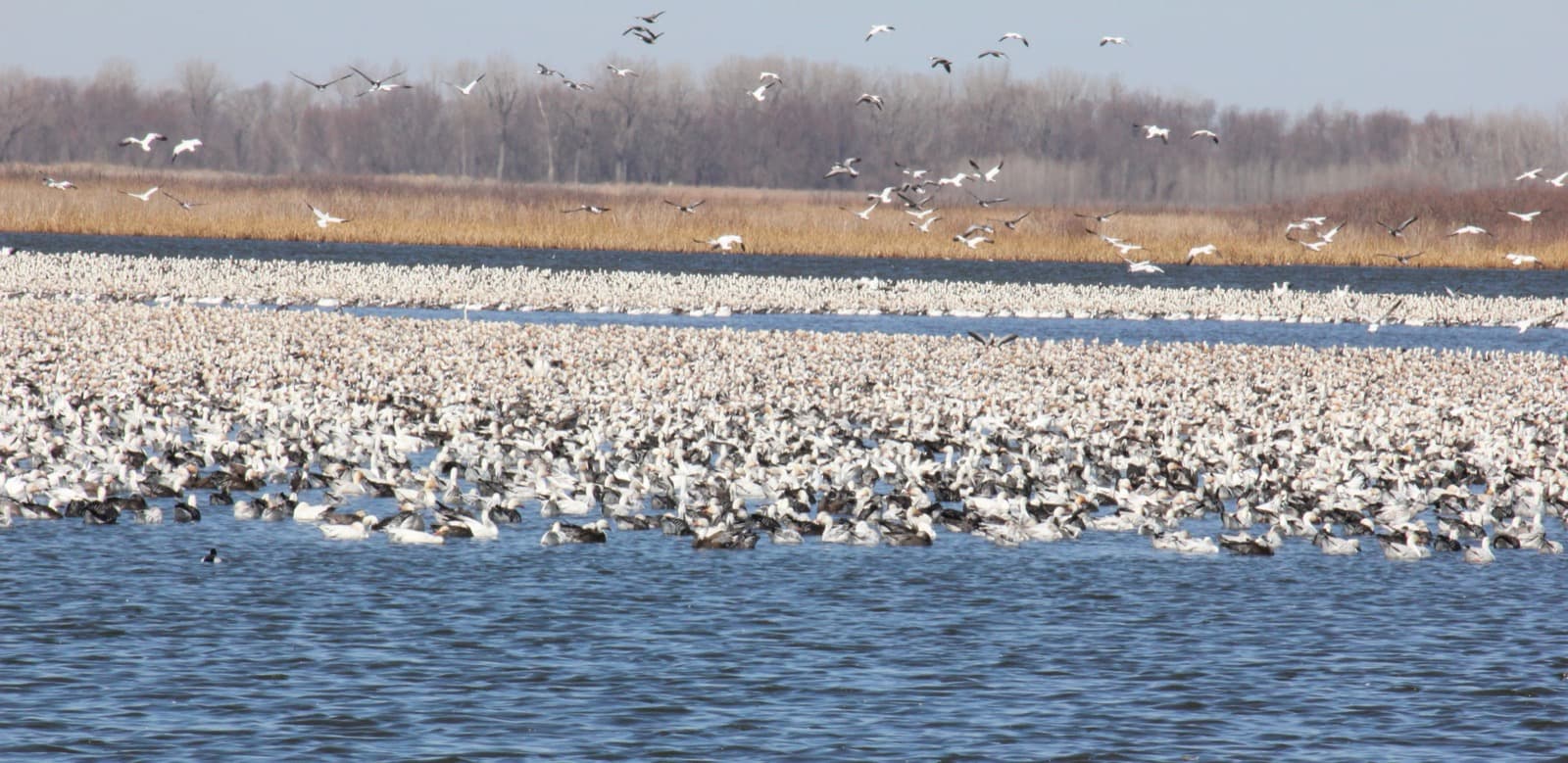
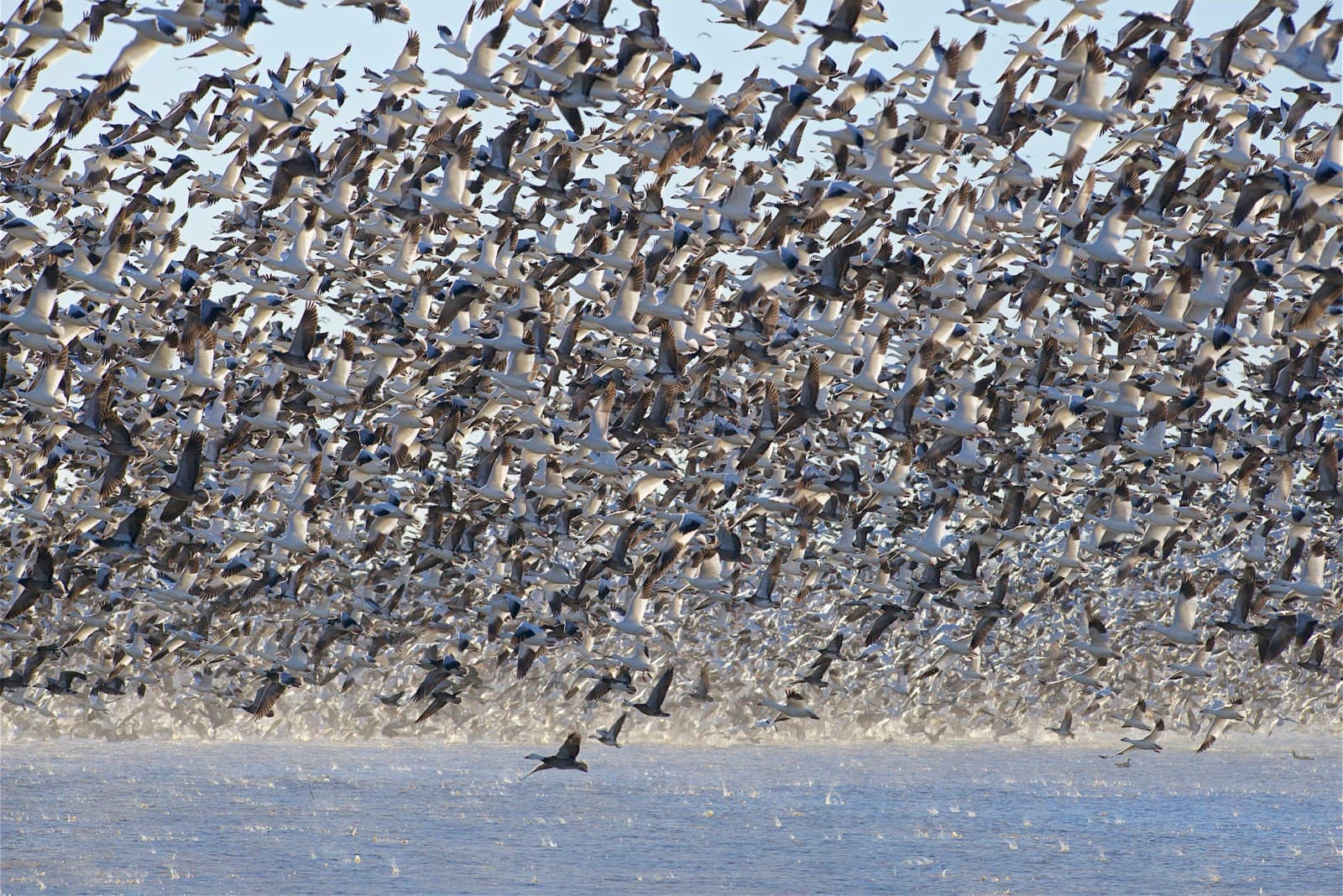
- Fall snow geese (peak in mid to late November)
From each place's own sources; no peak claimed.
Winter at Loess Bluffs Refuge
- SEASON · WINTER WILDLIFELoess Bluffs RefugeFrom mid-October, peaking in mid- to late NovemberMissouri
“from mid-October, peaking in mid- to late November” · U.S. Fish and Wildlife Service ↗
Also good in winter
- Bald eagles, best in December and January (migration peak usually by December 1)
From each place's own sources; no peak claimed.
Spring at Loess Bluffs Refuge
- SEASON · SPRING MIGRATIONLoess Bluffs RefugeFrom mid-February, peaking in mid-MarchMissouri
“from mid-February, peaking in mid-March” · U.S. Fish and Wildlife Service ↗
Also good in spring
- Spring snow goose migration (arrive mid-February, peak mid-March)
From each place's own sources; no peak claimed.
Summer at Loess Bluffs Refuge
- SEASON · WILDLIFE BY SEASONLoess Bluffs RefugeJune - August are good timesMissouri
“June - August are good times” · U.S. Fish and Wildlife Service ↗
Also good in summer
- Wildlife with young
From each place's own sources; no peak claimed.
Best spots
Spring migration
- 10-mile auto tourStarts at the observation deck by the main entrance and loops 10 miles past wetlands, grasslands and forest, with spotting scopes along the drive; open daily from 30 minutes before sunrise to 30 minutes after sunsetU.S. Fish and Wildlife Service ↗
- Loess Bluff TrailA moderately hard 0.8-mile trail from the visitor contact station through forest to the top of the bluffs, for a panoramic view of the refuge; the climb is 200 stone steps laid by hand by the Civilian Conservation CorpsU.S. Fish and Wildlife Service ↗
Wildlife by season
- 10-mile auto tourStarts at the observation deck by the main entrance and loops 10 miles past wetlands, grasslands and forest, with spotting scopes along the drive; open daily from 30 minutes before sunrise to 30 minutes after sunsetU.S. Fish and Wildlife Service ↗
- Callow TrailAn easy, accessible 0.6-mile paved out-and-back trail from the headquarters parking lot, relatively flat, skirting the edge of the loess hill woodlands to the foothillsU.S. Fish and Wildlife Service ↗
Winter wildlife
- 10-mile auto tourStarts at the observation deck by the main entrance and loops past wetlands, grasslands and forest, with spotting scopes along the drive; open daily from 30 minutes before sunrise to 30 minutes after sunsetU.S. Fish and Wildlife Service ↗
- Eagle Overlook TrailAn easy 1.2-mile out-and-back walk from the south end of the auto tour, along the levee between Pelican Pool and Eagle Pool to a viewing towerU.S. Fish and Wildlife Service ↗
Next 7 days at Loess Bluffs Refuge
- TodayShowers And Thunderstorms74° / 66°94% rain
- ThuChance Showers And Thunderstorms then Showers And Thunderstorms71° / 53°77% rain
- FriSunny68° / 49°2% rain
- SatSunny70° / 54°1% rain
- SunSunny71° / 49°1% rain
- MonSunny68° / 52°–
- TueMostly Sunny72° / 58°4% rain
Today: sunrise 7:17 a.m., sunset 7:06 p.m., light until 7:33 p.m. · moon waning gibbous, 78% lit (our calculation)
Nearby, and when they peak
- SEASON · WINTER WILDLIFEFlint Hills RefugeNovember, when numbers peak128 mi
“November, when numbers peak” · U.S. Fish and Wildlife Service ↗
- More winter wildlife:DeSoto Refuge
Towns nearby
- St. Joseph, MO30 mi
- Kansas City, MO75 mi
- Gardner, KS89 mi
- Omaha, NE93 mi
- Manhattan, KS95 mi
- Des Moines, IA134 mi
Loess Bluffs Refuge in pictures
Questions people ask
Are there spotting scopes?
Yes, at the visitor contact station, on the hiking trails and along the auto tour drive.Source: U.S. Fish and Wildlife Service, Loess Bluffs National Wildlife Refuge: Visit Us ↗ (opens in a new tab)
When is it busiest?
Friday through Sunday are the busiest days.Source: U.S. Fish and Wildlife Service, Loess Bluffs National Wildlife Refuge: Visit Us ↗ (opens in a new tab)
Is spring bigger than fall?
More snow geese use the refuge in spring, sometimes millions at a time; at the peak the wetland turns from blue to white.Source: U.S. Fish and Wildlife Service, Loess Bluffs National Wildlife Refuge: Species ↗ (opens in a new tab)
Why does the refuge lower its water in spring?
To uncover food for birds passing through. In a Fish and Wildlife Service story, a former refuge manager explains that staff draw the wetlands down in spring so mudflats are exposed, where migrating ducks and shorebirds feed on small clams and other invertebrates.Source: U.S. Fish and Wildlife Service, Story: Wildlife Corridors ↗ (opens in a new tab)
How we know
- Sep 28Park ServiceFall snow geese from mid-October, peak mid to late November; spring peak mid-March; bald eagle migration peak usually by December 1Source (opens U.S. Fish and Wildlife Service, Loess Bluffs National Wildlife Refuge: Species in a new tab)
- Sep 28Park ServiceBest months for waterfowl (October-December) and bald eagles (December-January); auto tour, trails, hours, restrooms, directionsSource (opens U.S. Fish and Wildlife Service, Loess Bluffs National Wildlife Refuge: Visit Us in a new tab)