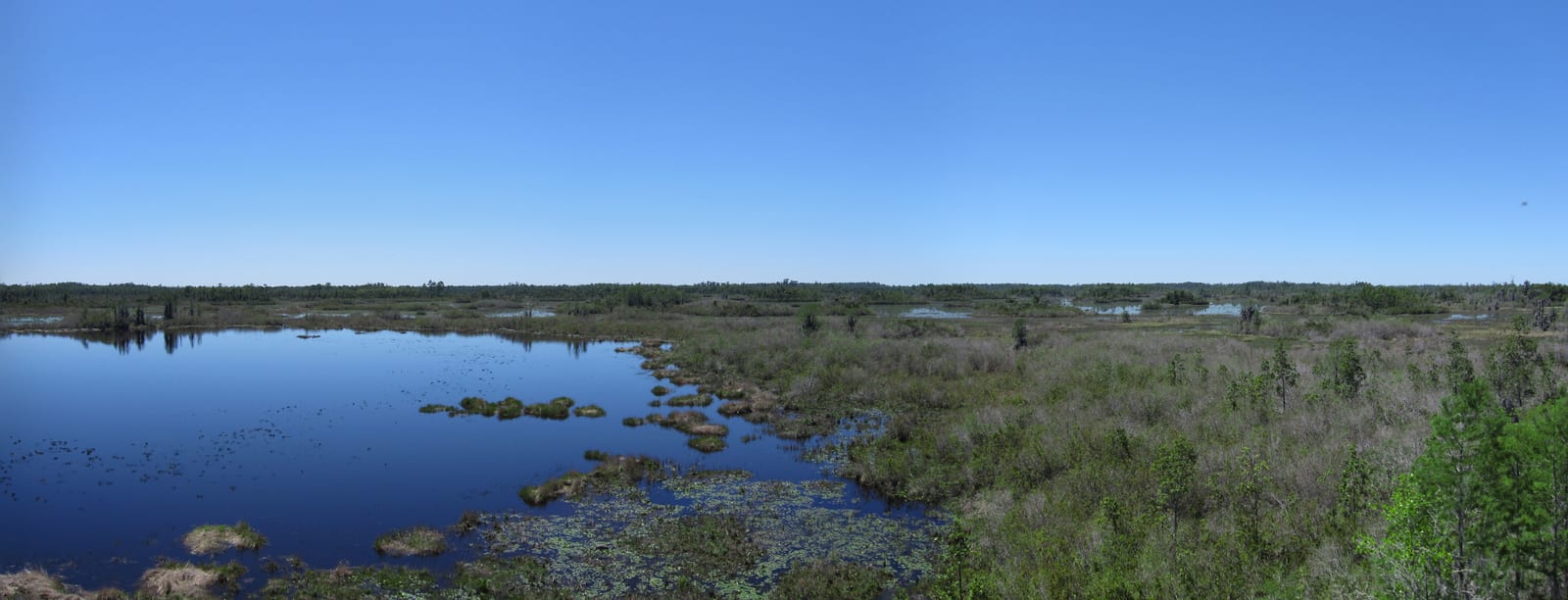
Photo: Chris M Morris · CC BY 2.0, cropped and resized
Okefenokeewildlife
Wildlife refugeAt Okefenokee National Wildlife Refuge, Gopher tortoises dig burrows under or near the entrance road, where they graze in spring and summer, per the Fish and Wildlife Service: a season, not a peak. Its usual window for this year has passed.
Updated
Sources for this timing ↓About Okefenokee
- What it is
- A wildlife refuge in Georgia
- A little history
- In 1937, as a refuge and breeding ground for migratory birds and other wildlife. It protects the Okefenokee Swamp, the headwaters of the Suwannee and St. Marys rivers.
- What you'll see
- Swamp wildlife through the seasons · spring and summer
Right now at Okefenokee
Right now in Okefenokee · October
- Fall colors across the swamp · fall
Your guide to the area
- OkefenokeeLocal timing: spring and summerThis page
- Harris Neck RefugeAt one spot: between early March to August79 mi
Where to watch
- Owl's Roost Observation TowerAt the end of the 0.7-mile Chesser Island Boardwalk: a wide view over the swamp, good for watching and photographing birds and other wildlife
- Swamp Island DriveA 7-mile self-guided drive from the Richard S. Bolt Visitor Center parking lot; watch for alligators, red-cockaded woodpeckers, brown-headed nuthatches and wild turkeys
Worth the drive
- Harris Neck RefugeWildlife refuge79 mibetween early March to AugustSatChance Showers And Thunderstorms
- St. Marks RefugeWildlife refuge128 miMaySatChance Showers And Thunderstorms
- Pinckney Island RefugeWildlife refuge131 miin MaySatChance Showers And Thunderstorms
- Carolina Sandhills RefugeWildlife refuge282 miApril through OctoberSatChance Showers And Thunderstorms
- National Key Deer RefugeWildlife refuge422 miMay and JuneSatChance Showers And Thunderstorms
- Noxubee RefugeWildlife refuge428 miMaySatSlight Chance Rain Showers then Slight Chance Showers And Thunderstorms
The year at Okefenokee
- Gopher tortoises graze by their burrows along the entrance roadspring and summer
- Spring wildflowersspring
- Fall colors across the swampNowfall
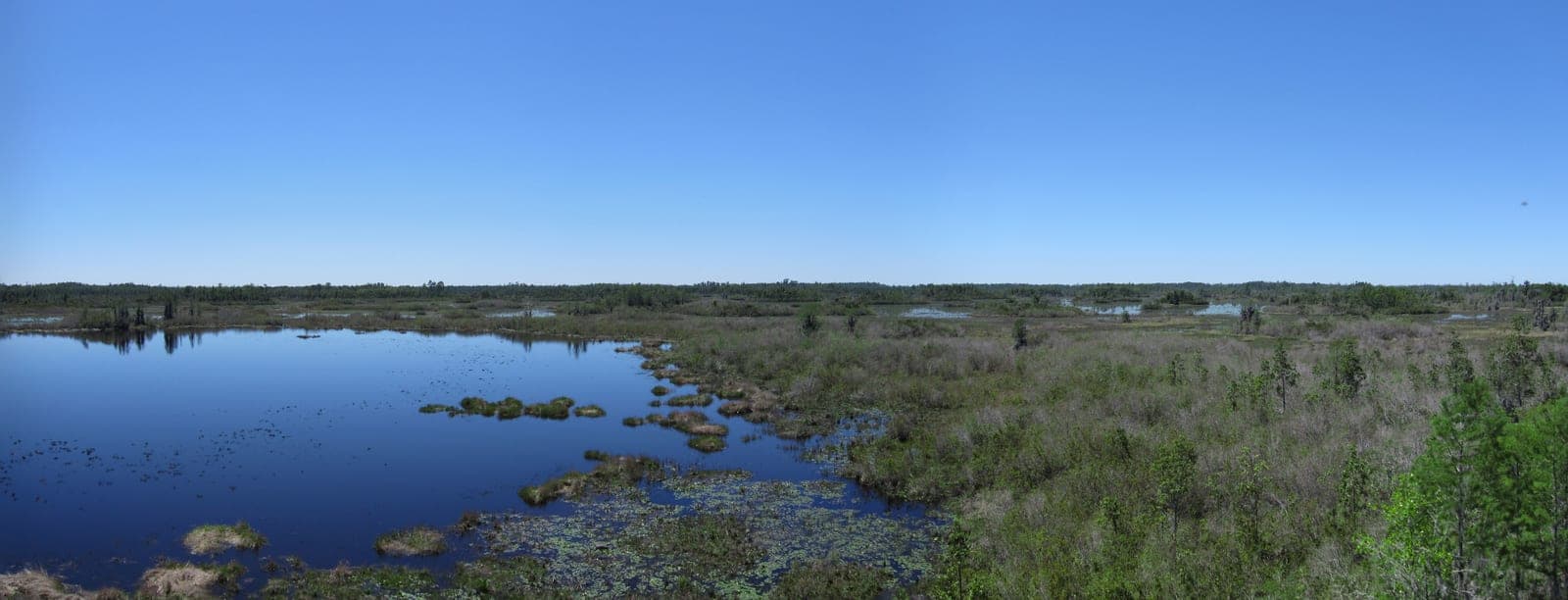
Okefenokee in pictures
Questions people ask
When is the best time to see wildlife at Okefenokee National Wildlife Refuge?
Gopher tortoises dig burrows under or near the entrance road, where they graze in spring and summer, per the Fish and Wildlife Service: a season, not a peak: spring and summer. That's general timing for this place, not a peak date or a forecast.
Is it the season at Okefenokee National Wildlife Refuge right now?
Not now: its usual wildlife window for this year has passed. Next time: spring and summer, local timing.
Where's the best view over the swamp?
The Owl's Roost Observation Tower, at the end of the 0.7-mile Chesser Island Boardwalk: a wide view of the swamp and a good place to watch and photograph birds and other wildlife.Source: U.S. Fish and Wildlife Service, Wildlife watching at Okefenokee National Wildlife Refuge ↗ (opens in a new tab)
What can I see from Swamp Island Drive?
Watch for American alligators, red-cockaded woodpeckers, brown-headed nuthatches, gray and fox squirrels, nine-banded armadillos and wild turkeys along the 7-mile self-guided drive.Source: U.S. Fish and Wildlife Service, Wildlife watching at Okefenokee National Wildlife Refuge ↗ (opens in a new tab)
How much of the refuge can I explore?
About 5 miles of walking and bicycling trails and over 120 miles of paddling trails. Stay on the designated roads, trails and water routes at all times.Sources: U.S. Fish and Wildlife Service, Wildlife watching at Okefenokee National Wildlife Refuge ↗ (opens in a new tab), U.S. Fish and Wildlife Service, Photography at Okefenokee National Wildlife Refuge ↗ (opens in a new tab)
When was the Okefenokee refuge established?
In 1937, as a refuge and breeding ground for migratory birds and other wildlife. It protects the Okefenokee Swamp, the headwaters of the Suwannee and St. Marys rivers.Source: U.S. Fish and Wildlife Service, Okefenokee National Wildlife Refuge ↗ (opens in a new tab)
What makes the swamp special?
It's world renowned for its amphibians, which are indicators of global health, and more than 600 plant species have been found on the refuge.Source: U.S. Fish and Wildlife Service, Okefenokee National Wildlife Refuge ↗ (opens in a new tab)
Where are the best spots in Okefenokee National Wildlife Refuge?
Owl's Roost Observation Tower: at the end of the 0.7-mile Chesser Island Boardwalk: a wide view over the swamp, good for watching and photographing birds and other wildlife; Swamp Island Drive: a 7-mile self-guided drive from the Richard S. Bolt Visitor Center parking lot; watch for alligators, red-cockaded woodpeckers, brown-headed nuthatches and wild turkeys.
What is Okefenokee National Wildlife Refuge like through the year?
Gopher tortoises graze by their burrows along the entrance road (Mar–Aug), Spring wildflowers (Mar–May) and Fall colors across the swamp (Sep–Nov).
How we know · Sources (3)
How we know
U.S. Fish and Wildlife Service, Wildlife watching at Okefenokee National Wildlife Refuge (opens in a new tab) (Oct 2) · U.S. Fish and Wildlife Service, Photography at Okefenokee National Wildlife Refuge (opens in a new tab) (Oct 2) · U.S. Fish and Wildlife Service, Okefenokee National Wildlife Refuge (opens in a new tab) (Oct 2)