Chautauqua Refugewinter wildlife
Fall waterfowl migration typically peaks in November at Chautauqua, per the Fish and Wildlife Service: usually Migration typically peaks in November. Its usual window hasn't started yet this year.
Right now at Chautauqua Refuge
Right now in Chautauqua Refuge · September
- Sandpipers, plovers and dowitchers on the mudflats, July through September · Jul–Sep
- All refuge land and water open, February 1 to October 15 · Feb–Oct
Your guide to the area
Where to watch
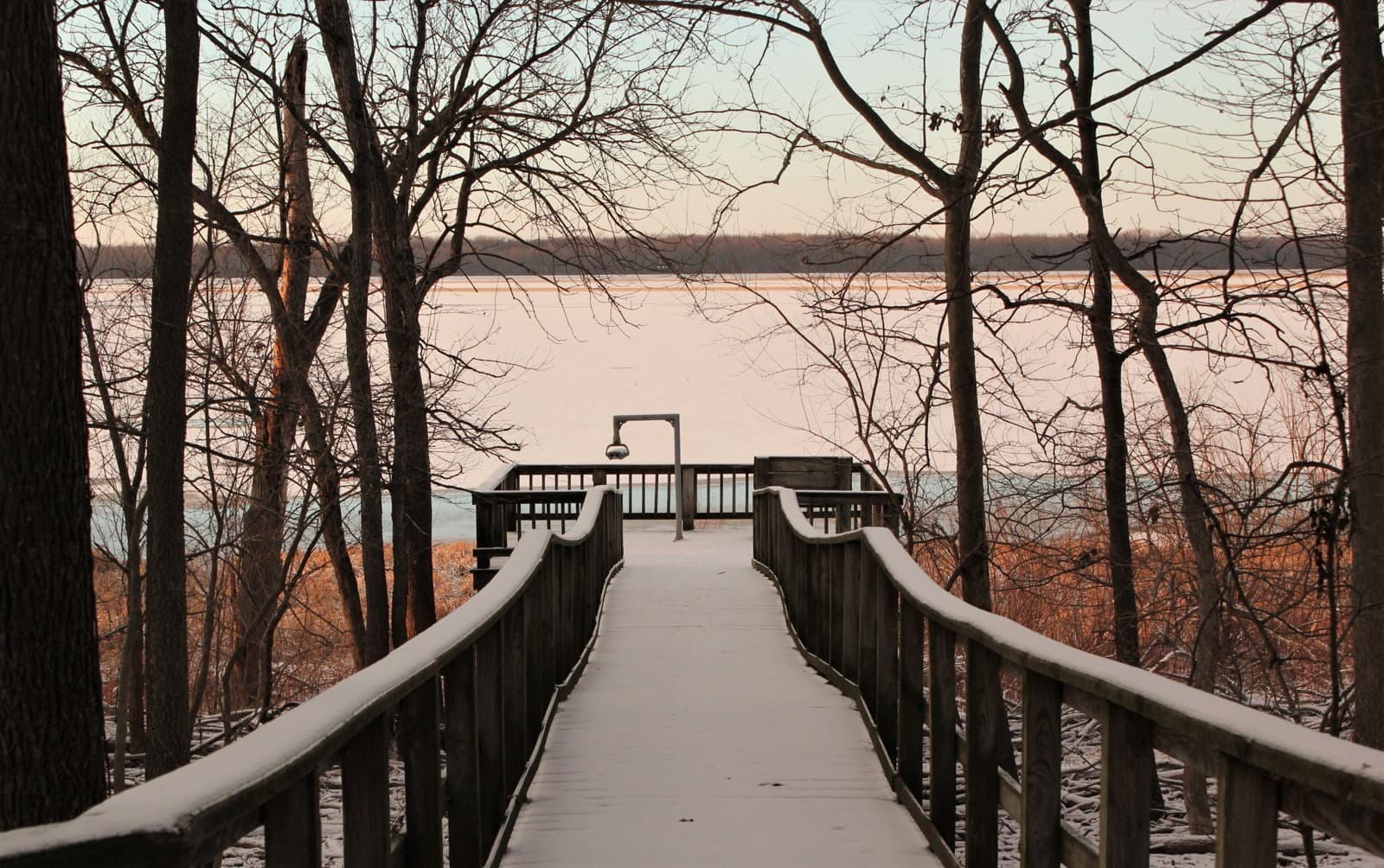
- Eagle Bluff Observation DeckA 0.04-mile accessible gravel-and-boardwalk path from the Eagle Bluff parking area, on top of the bluff, to a large platform with a viewing scope over the South Pool; restrooms and picnic tables are at this access point, open all year. Most GPS units send you here, off North Buzzville Road
- Chautauqua Nature TrailA half-mile accessible loop of gravel and raised boardwalk from the refuge headquarters, with three platforms (benches and scopes) over the South Pool and a life-size eagle nest at ground level; open all year
Nearby
- Emiquon Refuge6 mimigration typically peaks in November
- Meredosia Refuge47 mimigration typically peaks in November
- Two Rivers Refuge103 miusually begin to arrive in October
- Mingo Refuge235 mi3 separate phases, from September and October
- Necedah Refuge255 mi2 separate phases, from September through November; the last few cranes, ducks and swans depart by mid-NovemberSatMostly Sunny
- Loess Bluffs Refuge277 mifrom mid-October, peaking in mid- to late NovemberSatPartly Sunny
The year at Chautauqua Refuge
- All refuge land and water open, February 1 to October 15NowFeb–Oct
- Snow geese arrive as spring migration begins, typically late February to early MarchFeb–Mar
- Migrating warblers, April and MayApr–May
- White-faced ibis may be spotted, late May to early JuneMay–Jun
- Sandpipers, plovers and dowitchers on the mudflats, July through SeptemberNowJul–Sep
- Dabbling and diving ducks, October through late November (migration typically peaks in November)Oct–Nov
- Waterfowl sanctuary: parts of the refuge closed October 16 to January 31 (east-bluff trails stay open)Oct–Jan
Chautauqua Refuge in pictures
Questions people ask
When is the best time to see winter wildlife at Chautauqua National Wildlife Refuge?
Fall waterfowl migration typically peaks in November at Chautauqua, per the Fish and Wildlife Service: Migration typically peaks in November. That's the usual peak in the source's own words, not a forecast.
Is it wildlife season at Chautauqua National Wildlife Refuge right now?
Not yet: its usual winter wildlife timing is Migration typically peaks in November, usually.
Can I still visit when the waterfowl sanctuary closes?
Yes. From October 16 to January 31 parts of the refuge close as a sanctuary for waterfowl, but the trails and viewing platforms along the east bluff stay open all year, and bank fishing is allowed on the east shore.Source: U.S. Fish and Wildlife Service, Chautauqua NWR: Visit Us ↗ (opens in a new tab)
How many ducks might I see?
In spring and fall migration, the refuge says you're likely to look down on more than 100,000 ducks feeding in the seasonal wetlands; 28 kinds of waterfowl use the refuge. By December most have moved south.Sources: U.S. Fish and Wildlife Service, Chautauqua NWR: Visit Us ↗ (opens in a new tab), U.S. Fish and Wildlife Service, Chautauqua NWR: Species ↗ (opens in a new tab)
Are there eagles in winter?
Resident bald eagles can turn up any time of year, and in winter migrating eagles stop over too; you may see hundreds from the viewing platforms.Source: U.S. Fish and Wildlife Service, Chautauqua NWR: Visit Us ↗ (opens in a new tab)
When is the best light?
Sunrise and sunset: the views are at their best and wildlife is most active.Source: U.S. Fish and Wildlife Service, Chautauqua NWR: Visit Us ↗ (opens in a new tab)
Is there a fee?
No, there's no charge to visit.Source: U.S. Fish and Wildlife Service, Chautauqua NWR: Visit Us ↗ (opens in a new tab)
Where are the best spots in Chautauqua National Wildlife Refuge?
Eagle Bluff Observation Deck: a 0.04-mile accessible gravel-and-boardwalk path from the Eagle Bluff parking area, on top of the bluff, to a large platform with a viewing scope over the South Pool; restrooms and picnic tables are at this access point, open all year. Most GPS units send you here, off North Buzzville Road; Chautauqua Nature Trail: a half-mile accessible loop of gravel and raised boardwalk from the refuge headquarters, with three platforms (benches and scopes) over the South Pool and a life-size eagle nest at ground level; open all year.
Are there closures or permits to know about in Chautauqua National Wildlife Refuge?
Waterfowl sanctuary: parts of the refuge closed October 16 to January 31 (east-bluff trails stay open) (Oct–Jan).
What is Chautauqua National Wildlife Refuge like through the year?
Snow geese arrive as spring migration begins, typically late February to early March (Feb–Mar), Migrating warblers, April and May (Apr–May), White-faced ibis may be spotted, late May to early June (May–Jun), Sandpipers, plovers and dowitchers on the mudflats, July through September (Jul–Sep), Dabbling and diving ducks, October through late November (migration typically peaks in November) (Oct–Nov), Waterfowl sanctuary: parts of the refuge closed October 16 to January 31 (east-bluff trails stay open) (Oct–Jan) and All refuge land and water open, February 1 to October 15 (Feb–Oct).