Necedah Refugewinter wildlife
At Necedah National Wildlife Refuge, the timing for winter wildlife comes in 2 separate phases, each its own display, neither a peak: Fall waterfowl migration, September through November; the last few cranes, ducks and swans depart by mid-November; and Owls courting and nesting; bald eagles preparing to nest, January through March. No official report yet this season.
- September–NovemberFall waterfowl migrationSeptember through November; the last few cranes, ducks and swans depart by mid-November
- January–MarchOwls courting and nesting; bald eagles preparing to nestJanuary through March
Next 7 days at Necedah Refuge
- TodayChance Rain Showers71° / 59°41% rain
- ThuChance Rain Showers68° / 45°41% rain
- FriMostly Sunny65° / 40°6% rain
- SatMostly Sunny66° / 44°8% rain
- SunMostly Sunny65° / 38°5% rain
- MonSunny62° / 41°1% rain
Today: sunrise 6:58 a.m., sunset 6:45 p.m., light until 7:14 p.m. · moon waning gibbous, 78% lit (our calculation)
Your guide to the area
Where to watch
- Ducks Unlimited OverlookAn observation deck along Headquarters Road over an active wetland, with parking, a kiosk and a spotting scope aimed especially at the eagle nest across the wetland; waterfowl and wading birds from March into November
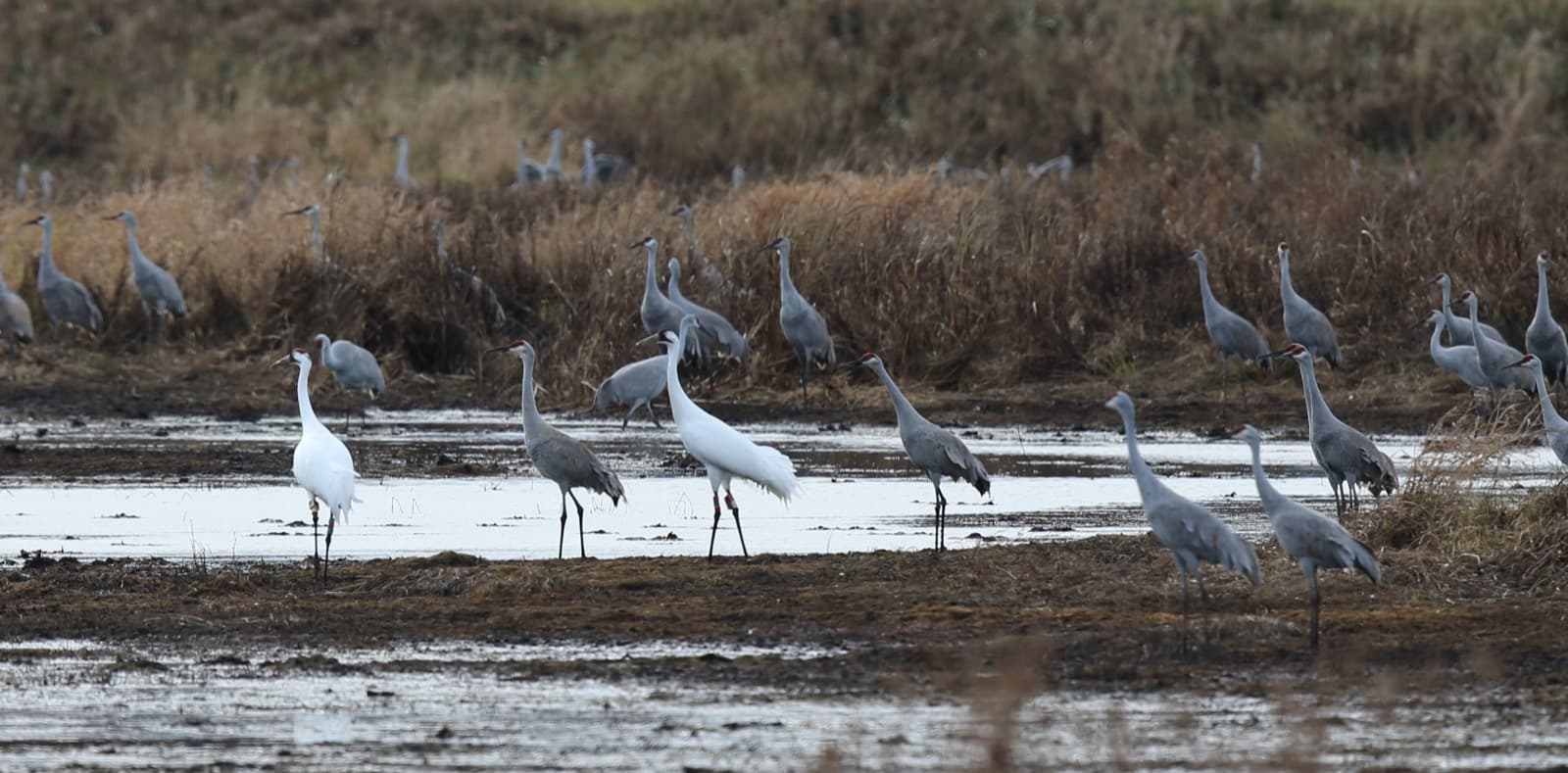
- Goose and Sprague PoolsDrive slowly between the two impounded wetlands for waterfowl viewing and stop at the floating fishing and viewing platform; listen for loons, whooping and sandhill cranes and trumpeter swans
Nearby
- Minnesota Valley Refuge160 miDecember - MarchSatMostly Sunny
- Sherburne Refuge199 mi3 separate phases, from September and October are the best months for fall migratory birdsSatChance Rain Showers
- Litchfield Wetland District226 mi2 separate phases, from fall (July-November)
- Rice Lake Refuge229 mi2 separate phases, from September and October are the best months for fall migratory birds
- Seney Refuge253 miSept. and Oct. are the best months for fall migratory birdsSatWidespread Frost then Mostly Sunny
- Chautauqua Refuge255 miMigration typically peaks in November
The year at Necedah Refuge
- Owls court and nest; bald eagles prepare to nestJan–Mar
- Karner caterpillars hatch as the lupine begins to growMar–May
- Mar: Waterfowl begin to return in mid-March, while ice still covers the wetlandsMar
- Mar: Cranes begin to return in mid-MarchMar
- Apr: Purple wild lupine in bloomApr
- Visitor center on its longer summer schedule, Monday to Friday, May to NovemberNowMay–Nov
- Karner blue butterflies on the flowers, late May to late July and into early AugustMay–Aug
- May: Warblers arrive with MayMay
- Warm-season flowers and grasses start to bloomJun–Aug
- Fawns, turkey poults and flightless crane colts out with their parentsJun–Aug
- Egrets appear as fall migration startsJun–Aug
- Fall waterfowl migration peaks (September to November); the last cranes, ducks and swans leave by mid-NovemberNowSep–Nov
- Juncos return for the winter; turkey vultures head southNowSep–Nov
- The monarch 'super generation' migrates to MexicoNowSep–Nov
- Oct: Fall color peaksOct
- Oct: National Wildlife Refuge Week celebrationOct
- Visitor center winter schedule: Tuesday to Thursday, 9 a.m.–3 p.m.Dec–Apr
- Goose Pool open to fishing, December 15 to March 15Dec–Mar
Necedah Refuge in pictures
Questions people ask
When is the best time to see winter wildlife at Necedah National Wildlife Refuge?
In 2 separate phases, each at its own spot: Fall waterfowl migration, September through November; the last few cranes, ducks and swans depart by mid-November and Owls courting and nesting; bald eagles preparing to nest, January through March. They're separate displays, not one long season, and neither is a peak.
Is it wildlife season at Necedah National Wildlife Refuge right now?
There's no official report yet this season.
Is the visitor center open over the holidays?
No. It closes on federal holidays, from the day before Thanksgiving through the day after, and from Christmas Eve through New Year's Day. In winter (December to April) it's open Tuesday to Thursday, 9 a.m. to 3 p.m.; refuge lands and trails are open dawn to dusk every day.Source: U.S. Fish and Wildlife Service, Necedah NWR: Visit Us ↗ (opens in a new tab)
Can I borrow snowshoes?
Yes, free at the visitor center (9:00 a.m. to 3:30 p.m.) when there are at least 3 inches of snow. The trails stay open in winter.Source: U.S. Fish and Wildlife Service, Necedah NWR: Visit Us ↗ (opens in a new tab)
Can I fish in winter?
Yes. Harvey's Pond is open all year, and Goose Pool is open December 15 through March 15 (and again June 1 through September 15).Source: U.S. Fish and Wildlife Service, Necedah NWR: Visit Us ↗ (opens in a new tab)
When should I go to the observation tower?
At sunrise or sunset. Early birds can watch the wetland wake up and take off during spring and fall migrations.Source: U.S. Fish and Wildlife Service, Necedah NWR: Visit Us ↗ (opens in a new tab)
Where are the best spots in Necedah National Wildlife Refuge?
Ducks Unlimited Overlook: an observation deck along Headquarters Road over an active wetland, with parking, a kiosk and a spotting scope aimed especially at the eagle nest across the wetland; waterfowl and wading birds from March into November; Goose and Sprague Pools: drive slowly between the two impounded wetlands for waterfowl viewing and stop at the floating fishing and viewing platform; listen for loons, whooping and sandhill cranes and trumpeter swans.
When is the festival in Necedah National Wildlife Refuge?
National Wildlife Refuge Week celebration, usually in Oct.
What is Necedah National Wildlife Refuge like through the year?
Waterfowl begin to return in mid-March, while ice still covers the wetlands (Mar), Cranes begin to return in mid-March (Mar), Warblers arrive with May (May), Karner blue butterflies on the flowers, late May to late July and into early August (May–Aug), Fall waterfowl migration peaks (September to November); the last cranes, ducks and swans leave by mid-November (Sep–Nov), Visitor center on its longer summer schedule, Monday to Friday, May to November (May–Nov), Fall color peaks (Oct), Juncos return for the winter; turkey vultures head south (Sep–Nov), National Wildlife Refuge Week celebration (Oct), Purple wild lupine in bloom (Apr), Warm-season flowers and grasses start to bloom (Jun–Aug), Karner caterpillars hatch as the lupine begins to grow (Mar–May), Fawns, turkey poults and flightless crane colts out with their parents (Jun–Aug), The monarch 'super generation' migrates to Mexico (Sep–Nov), Owls court and nest; bald eagles prepare to nest (Jan–Mar), Egrets appear as fall migration starts (Jun–Aug), Visitor center winter schedule: Tuesday to Thursday, 9 a.m.–3 p.m. (Dec–Apr) and Goose Pool open to fishing, December 15 to March 15 (Dec–Mar).