Tualatin River Refugewinter wildlife
Wildlife refugeAt Tualatin River National Wildlife Refuge, an average of 20,000 waterfowl during mid-winter, and over 50,000 in a single day in some years, per the Fish and Wildlife Service (a season, not a peak). Its usual window for this year has passed.
Updated
Sources for this timing ↓About Tualatin River Refuge
- What it is
- A wildlife refuge in Oregon
- A little history
- It was designated and established in 1992.
- What you'll see
- Midwinter waterfowl · mid-winter
- Before you go
- Are all the trails open in winter? No: the River Trail is open year-round, but the Wetland Trail is open only May 1 through September 30, closed the rest of the year to protect wintering waterfowl.Is there a fee, and when is it open? It's free; trails are open dawn to dusk, and the visitor center Tuesday to Sunday, 10am to 4pm. Trails are for walkers only: no bikes, jogging or pets except service animals.
Your guide to the area
- Winter
Places on this map, as a list
Where to watch
Wetland Observation Platform
Best spot
Between the visitor center and the office building, over the permanent ponds: waterfowl, wading birds and other wildlife
River Trail (year-round)
Best spot
Two miles out and back through oak and forest, ending at a wetland overlook platform; open all year
Nearby
Ducks, geese and cranes in WashingtonWildlife refuge
31 mi · Sat: Sunny
Season: September through DecemberU.S. Fish and Wildlife Service ↗
Winter waterfowl in OregonWildlife refuge
42 mi
Season: During the winterU.S. Fish and Wildlife Service ↗
Wintering white-cheeked geese in OregonWildlife refuge
56 mi
Best viewing: Late October to early AprilU.S. Fish and Wildlife Service ↗
Worth the drive · more than 60 miles
Swans and Roosevelt elk in OregonWildlife refuge
71 mi
Season: In the winterU.S. Fish and Wildlife Service ↗
Geese and ducks in WashingtonWildlife refuge
117 mi · Sat: Patchy Fog then Partly Sunny
Season: December and JanuaryU.S. Fish and Wildlife Service ↗
The year at Tualatin River Refuge
- Migrating songbirds arrive to breed and nestspring
- Broods of wood ducks and hooded mergansers on the wetlandssummer
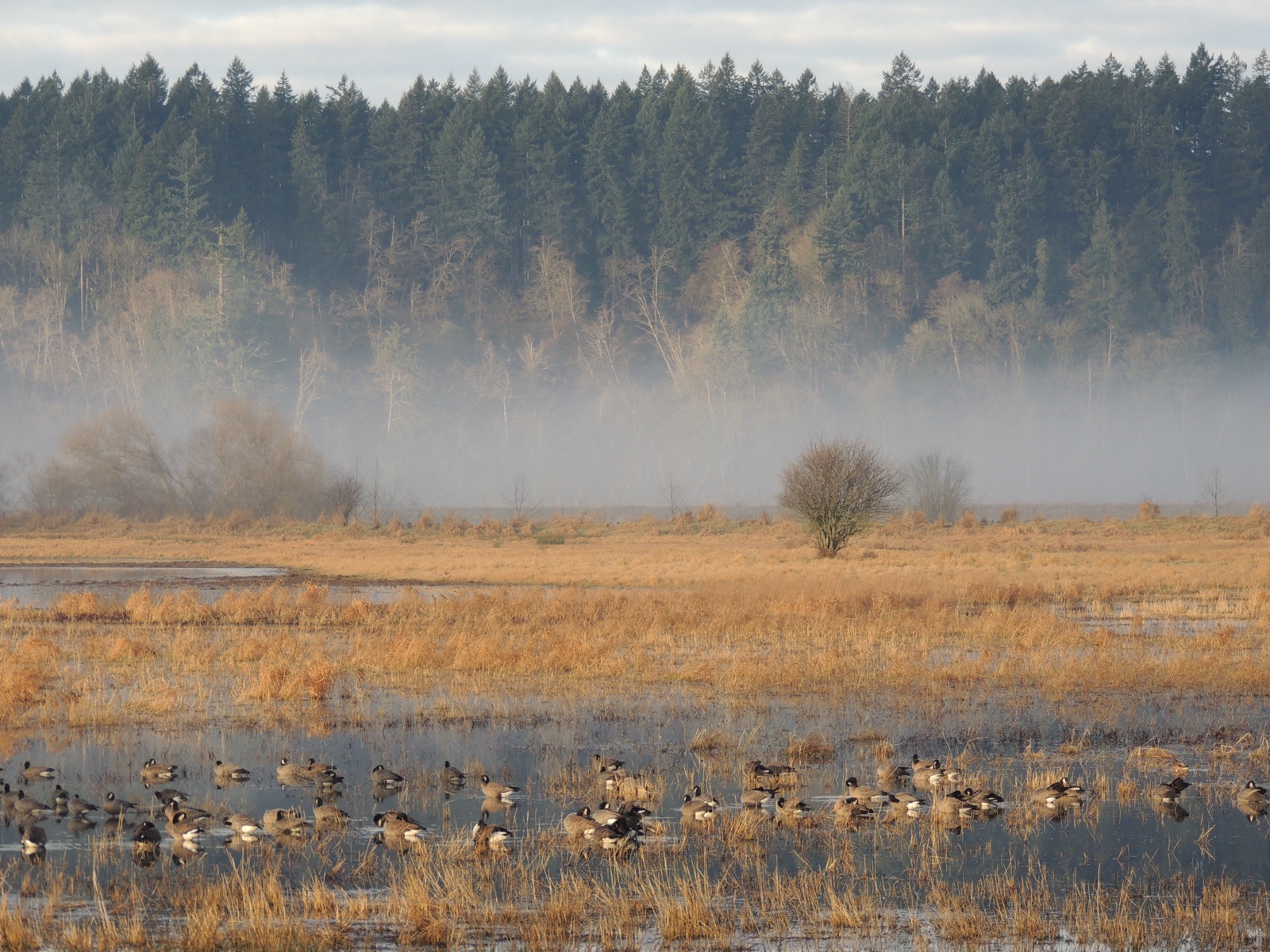
- Cackling Canada geese, northern pintail and mallards blanket the refugewinter
Questions people ask
When is the best time to see wildlife at Tualatin River National Wildlife Refuge?
An average of 20,000 waterfowl during mid-winter, and over 50,000 in a single day in some years, per the Fish and Wildlife Service (a season, not a peak): mid-winter. That's general timing for this place, not a peak date or a forecast.
Is it wildlife season at Tualatin River National Wildlife Refuge right now?
Not now: its usual winter wildlife window for this year has passed. Next time: mid-winter, local timing.
How many ducks and geese winter at Tualatin River?
An average of 20,000 waterfowl in mid-winter, and in some years over 50,000 in a single day; bald eagles become regular visitors then, hunting them.Source: U.S. Fish and Wildlife Service, Tualatin River National Wildlife Refuge ↗ (opens in a new tab)
Are all the trails open in winter?
No: the River Trail is open year-round, but the Wetland Trail is open only May 1 through September 30, closed the rest of the year to protect wintering waterfowl.Source: U.S. Fish and Wildlife Service, Tualatin River National Wildlife Refuge ↗ (opens in a new tab)
Is there a fee, and when is it open?
It's free; trails are open dawn to dusk, and the visitor center Tuesday to Sunday, 10am to 4pm. Trails are for walkers only: no bikes, jogging or pets except service animals.Source: U.S. Fish and Wildlife Service, Tualatin River National Wildlife Refuge ↗ (opens in a new tab)
When was the refuge set up?
It was designated and established in 1992.Source: U.S. Fish and Wildlife Service, Tualatin River National Wildlife Refuge ↗ (opens in a new tab)
Where are the best spots in Tualatin River National Wildlife Refuge?
Wetland Observation Platform: between the visitor center and the office building, over the permanent ponds: waterfowl, wading birds and other wildlife; River Trail (year-round): two miles out and back through oak and forest, ending at a wetland overlook platform; open all year.
What is Tualatin River National Wildlife Refuge like through the year?
Cackling Canada geese, northern pintail and mallards blanket the refuge (Dec–Feb), Migrating songbirds arrive to breed and nest (Mar–May) and Broods of wood ducks and hooded mergansers on the wetlands (Jun–Aug).
How we know · Sources (4)
How we know
U.S. Fish and Wildlife Service, Tualatin River National Wildlife Refuge (opens in a new tab) (Oct 2) · U.S. Fish and Wildlife Service, Tualatin River National Wildlife Refuge (opens in a new tab) (Oct 2) · U.S. Fish and Wildlife Service, Tualatin River National Wildlife Refuge (opens in a new tab) (Oct 2) · U.S. Fish and Wildlife Service, Wetland Observation Platform (opens in a new tab) (Oct 2)