Nisqually Refugewinter wildlife
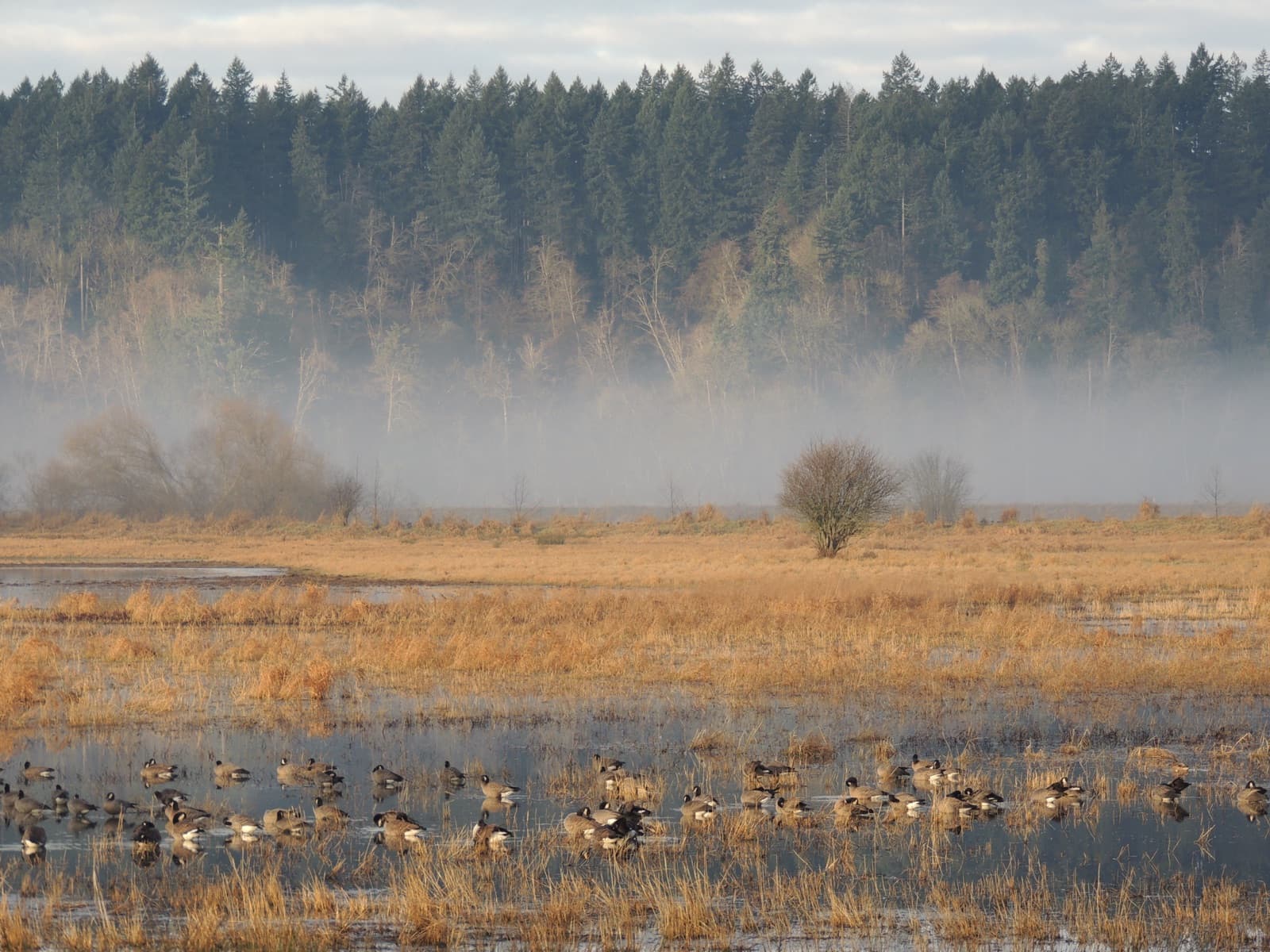
Wintering geese and ducks: in December 4,000–6,000 in the wetlands, pastures and estuary is not unusual, and by January overwintering waterfowl are abundant, per the Fish and Wildlife Service (Dec 1–Jan 31). No official report yet this season.
Right now in Nisqually Refuge · September
- Chinook salmon moving up the Nisqually River to spawn, June to September · Jun–Sep
63days to the next winter wildlife seasonDec 1–Jan 31, local timing
Billy Frank Jr. Nisqually National Wildlife Refuge through the year
- Feb: Sea ducks and black brant in the Nisqually Reach: February is the best timeFeb
- About 5,000 western sandpipers and dunlin on the delta mudflats, late April and early MayApr–May
- Chinook salmon moving up the Nisqually River to spawn, June to SeptemberNowJun–Sep
- Research Natural Area closed to all boats, October 1 to March 31 (trails stay open)Oct–Mar
- Wintering geese and ducks, December and JanuaryDec–Jan
Where to watch
- Road to Twin Barns Trail0.67 mi of packed gravel to the Twin Barns, with freshwater wetland on the west side for winter waterfowl; no benches
- Nisqually Estuary Boardwalk1.05 mi elevated boardwalk over salt marsh, mudflats and a tidal river, with covered shelters and viewing scopes at both ends; what you see depends on the tide, and it can be windy
Nisqually Refuge in pictures
How we know
U.S. Fish and Wildlife Service, Billy Frank Jr. Nisqually NWR: Species (opens in a new tab) (Sep 28) · U.S. Fish and Wildlife Service, Billy Frank Jr. Nisqually NWR: Visit Us (opens in a new tab) (Sep 28) · U.S. Fish and Wildlife Service, Billy Frank Jr. Nisqually NWR: Rules and Policies (opens in a new tab) (Sep 28) · U.S. Fish and Wildlife Service, Billy Frank Jr. Nisqually NWR: Trails (opens in a new tab) (Sep 28) · National Weather Service forecast and alerts (opens in a new tab) (Sep 28)
Questions people ask
When is the best time to see winter wildlife at Billy Frank Jr. Nisqually National Wildlife Refuge?
Wintering geese and ducks: in December 4,000–6,000 in the wetlands, pastures and estuary is not unusual, and by January overwintering waterfowl are abundant, per the Fish and Wildlife Service: Dec 1–Jan 31. That's general timing for this place, not a peak date or a forecast.
Is it wildlife season at Billy Frank Jr. Nisqually National Wildlife Refuge right now?
Not now: the winter wildlife season is over for this year. The next one starts in about 63 days (Dec 1–Jan 31, local timing).
Is there a fee?
Yes: $3 a day covers four adults, and children under 16 get in free. Cash or check only, paid at the kiosk near the Norm Dicks Visitor Center. America the Beautiful passes are accepted; the Washington Discover Pass is not.Source: U.S. Fish and Wildlife Service, Billy Frank Jr. Nisqually NWR: Visit Us ↗ (opens in a new tab)
When is it open?
The entrance road, parking areas and trails are open sunrise to sunset every day, and the gate closes automatically. The Norm Dicks Visitor Center is open Wednesday to Sunday, 9 a.m. to 4 p.m.Sources: U.S. Fish and Wildlife Service, Billy Frank Jr. Nisqually NWR: Visit Us ↗ (opens in a new tab), U.S. Fish and Wildlife Service, Billy Frank Jr. Nisqually NWR: Rules and Policies ↗ (opens in a new tab)
Can I bring my dog?
No. Pets are not allowed anywhere on the refuge, including the entrance road and parking areas, and can't be left in vehicles. Trained service animals are welcome on a leash.Source: U.S. Fish and Wildlife Service, Billy Frank Jr. Nisqually NWR: Rules and Policies ↗ (opens in a new tab)
Are there restrooms?
Across from the Norm Dicks Visitor Center, with portable toilets next to the Twin Barns.Source: U.S. Fish and Wildlife Service, Billy Frank Jr. Nisqually NWR: Visit Us ↗ (opens in a new tab)
Does the tide matter?
Yes. Tides of 10 feet or less expose mud, good for herons, shorebirds and dabbling ducks; tides over 13 feet bring lots of water around the Estuary Boardwalk, good for diving birds.Source: U.S. Fish and Wildlife Service, Billy Frank Jr. Nisqually NWR: Visit Us ↗ (opens in a new tab)
Where are the best spots in Billy Frank Jr. Nisqually National Wildlife Refuge?
Road to Twin Barns Trail: 0.67 mi of packed gravel to the Twin Barns, with freshwater wetland on the west side for winter waterfowl; no benches; Nisqually Estuary Boardwalk: 1.05 mi elevated boardwalk over salt marsh, mudflats and a tidal river, with covered shelters and viewing scopes at both ends; what you see depends on the tide, and it can be windy.
Are there closures or permits to know about in Billy Frank Jr. Nisqually National Wildlife Refuge?
Research Natural Area closed to all boats, October 1 to March 31 (trails stay open) (Oct–Mar).
What is Billy Frank Jr. Nisqually National Wildlife Refuge like through the year?
Wintering geese and ducks, December and January (Dec–Jan), Sea ducks and black brant in the Nisqually Reach: February is the best time (Feb), About 5,000 western sandpipers and dunlin on the delta mudflats, late April and early May (Apr–May), Chinook salmon moving up the Nisqually River to spawn, June to September (Jun–Sep) and Research Natural Area closed to all boats, October 1 to March 31 (trails stay open) (Oct–Mar).