Malheur Refugespring migration
Spring waterfowl: the greatest variety is on the refuge from late winter through the end of May, per the Fish and Wildlife Service. This year's season is over; the next is in 2027.
Right now in Malheur Refuge · September
- Lesser and greater sandhill cranes feed in the grain fields (fall, September–November) · Sep–Nov
- Visitor center open 8 a.m.–4 p.m., April 1 to September 30 (limited hours in March) · Apr–Sep
- Historic Sod House Ranch open for birding (August 15 – October 1) · Aug–Sep
144days to the next spring migration seasonlate winter through the end of May, local timing
Malheur National Wildlife Refuge through the year
- Spring waterfowl: greatest variety, late winter through the end of MayFeb–May
- Visitor center open 8 a.m.–4 p.m., April 1 to September 30 (limited hours in March)NowApr–Sep
- Mosquitoes can be ruthless (summer, June–August)Jun–Aug
- Jul: Southbound shorebirds start arriving (July)Jul
- Historic Sod House Ranch open for birding (August 15 – October 1)NowAug–Sep
- Lesser and greater sandhill cranes feed in the grain fields (fall, September–November)NowSep–Nov
- Tundra swans may gather at Knox, Benson and Marshall ponds (October and November)Oct–Nov
Where to watch
- Overlook Trail at Refuge HeadquartersA short (0.11-mile) walk up from headquarters through sagebrush to a 1930s lookout tower with the refuge's best view of Malheur Lake, which is itself closed to the public; headquarters is 32 miles south of Burns (26 miles on Highway 205, then 6 miles east on Sodhouse Lane)
- Buena Vista Overlook TrailA 0.33-mile walk (or a drive) to an overlook of Steens Mountain and the Blitzen Valley, noted by the refuge as an excellent birding hike; Buena Vista Ponds is one of its best birding sites, and there are restrooms at the overlook
Malheur Refuge in pictures
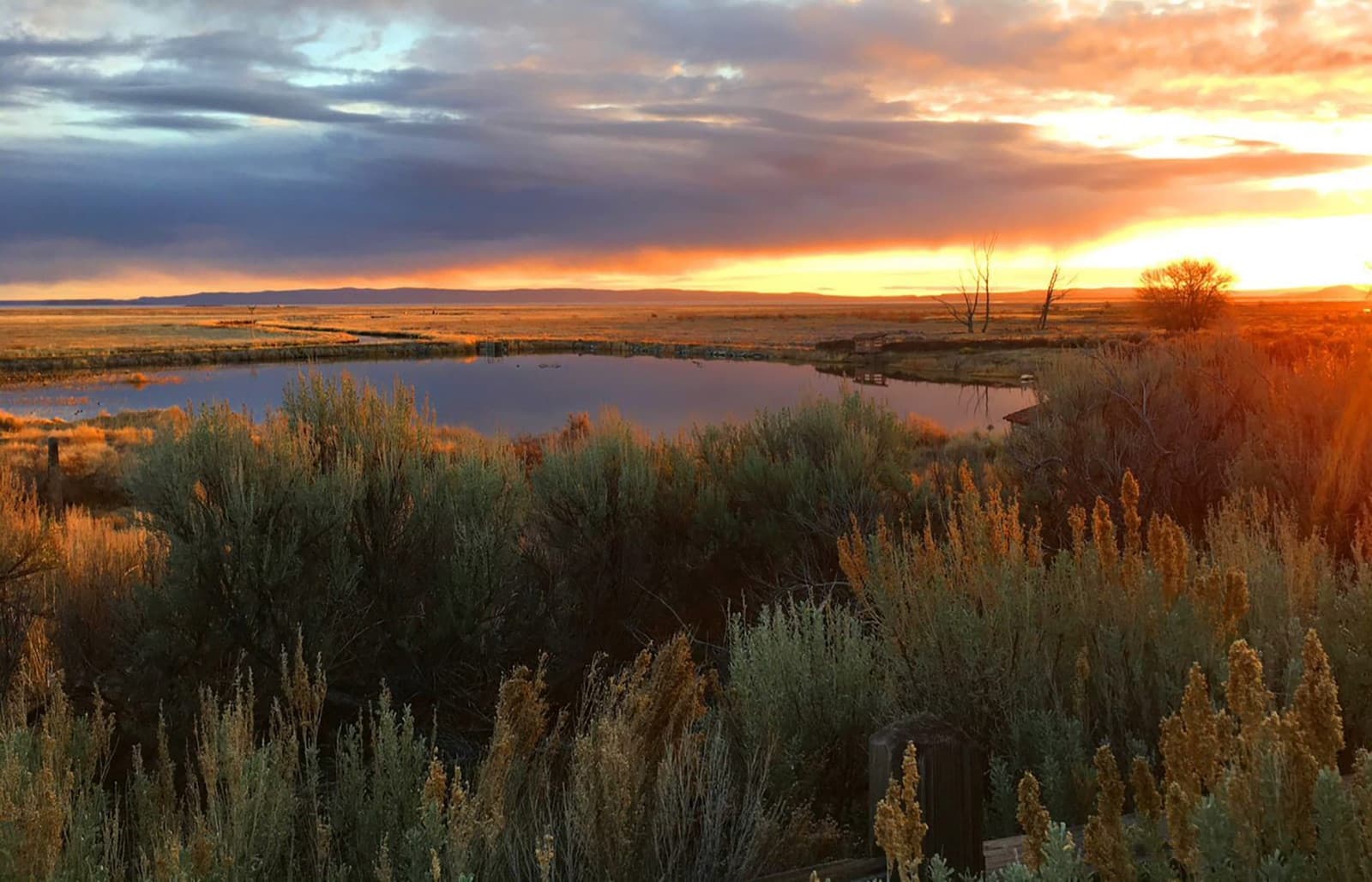
How we know
U.S. Fish and Wildlife Service, Malheur NWR: Species (Seasons of Wildlife) (opens in a new tab) (Sep 29) · U.S. Fish and Wildlife Service, Malheur NWR: Auto tour (birding: when to go and best sites) (opens in a new tab) (Sep 29) · U.S. Fish and Wildlife Service, Malheur National Wildlife Refuge (opens in a new tab) (Sep 29) · U.S. Fish and Wildlife Service, Malheur NWR: Visit Us (opens in a new tab) (Sep 29) · U.S. Fish and Wildlife Service, Malheur NWR: Trails (opens in a new tab) (Sep 29) · National Weather Service forecast and alerts (opens in a new tab) (Sep 29)
Questions people ask
When is the best time to see spring migration at Malheur National Wildlife Refuge?
Spring waterfowl: the greatest variety is on the refuge from late winter through the end of May, per the Fish and Wildlife Service: late winter through the end of May. That's general timing for this place, not a peak date or a forecast.
Is spring migration under way at Malheur National Wildlife Refuge right now?
Not now: the spring migration season is over for this year. The next one starts in about 144 days (late winter through the end of May, local timing).
Is there a fee, and when is the refuge open?
No fee: the refuge is always free and open every day from sunrise to sunset. Early morning and late evening are the best times to watch wildlife.Sources: U.S. Fish and Wildlife Service, Malheur National Wildlife Refuge ↗ (opens in a new tab), U.S. Fish and Wildlife Service, Malheur NWR: Species (Seasons of Wildlife) ↗ (opens in a new tab)
Can I walk anywhere on the refuge?
No. To protect wildlife, all areas are closed unless posted open at designated trails, sites or facilities, and Malheur Lake itself is closed to the public. Birding is allowed only on designated roads, trails and sites shown on the refuge map. Pets must be on a leash.Sources: U.S. Fish and Wildlife Service, Malheur NWR: Visit Us ↗ (opens in a new tab), U.S. Fish and Wildlife Service, Malheur NWR: Auto tour (birding: when to go and best sites) ↗ (opens in a new tab), U.S. Fish and Wildlife Service, Malheur NWR: Trails ↗ (opens in a new tab)
What are the roads like, and can I get fuel there?
Refuge roads are gravel, with few pullouts along the 42-mile auto tour route and limited turnarounds for larger vehicles. The refuge has no lodging or fuel, so arrive with a full tank and a vehicle in good condition. Roads can close when conditions are hazardous, mostly in fall and winter; call (541) 493-2612 for current road conditions.Source: U.S. Fish and Wildlife Service, Malheur NWR: Visit Us ↗ (opens in a new tab)
When is the visitor center open?
From April 1 to September 30, 8 a.m. to 4 p.m.; in March it has limited hours (call ahead), and it is closed from October 1 to the end of February. The George Benson Memorial Museum at headquarters is open daily from sunrise to sunset.Source: U.S. Fish and Wildlife Service, Malheur NWR: Visit Us ↗ (opens in a new tab)
What should I be ready for?
The refuge sits in high desert at 4,100 feet, where lightning storms, heat and cold can arrive quickly. Carry drinking water, expect weak cell signal in places, and bring binoculars or a spotting scope: your car makes a good viewing blind.Sources: U.S. Fish and Wildlife Service, Malheur NWR: Visit Us ↗ (opens in a new tab), U.S. Fish and Wildlife Service, Malheur NWR: Species (Seasons of Wildlife) ↗ (opens in a new tab)
Where are the best spots in Malheur National Wildlife Refuge?
Overlook Trail at Refuge Headquarters: a short (0.11-mile) walk up from headquarters through sagebrush to a 1930s lookout tower with the refuge's best view of Malheur Lake, which is itself closed to the public; headquarters is 32 miles south of Burns (26 miles on Highway 205, then 6 miles east on Sodhouse Lane); Buena Vista Overlook Trail: a 0.33-mile walk (or a drive) to an overlook of Steens Mountain and the Blitzen Valley, noted by the refuge as an excellent birding hike; Buena Vista Ponds is one of its best birding sites, and there are restrooms at the overlook.
What is Malheur National Wildlife Refuge like through the year?
Spring waterfowl: greatest variety, late winter through the end of May (Feb–May), Southbound shorebirds start arriving (July) (Jul), Lesser and greater sandhill cranes feed in the grain fields (fall, September–November) (Sep–Nov), Tundra swans may gather at Knox, Benson and Marshall ponds (October and November) (Oct–Nov), Visitor center open 8 a.m.–4 p.m., April 1 to September 30 (limited hours in March) (Apr–Sep), Historic Sod House Ranch open for birding (August 15 – October 1) (Aug–Sep) and Mosquitoes can be ruthless (summer, June–August) (Jun–Aug).