Necedah Refugewildflowers
Warm-season flowers and grasses start to bloom from June through August, per the Fish and Wildlife Service's seasons of wildlife. Its usual window for this year has passed.
Right now at Necedah Refuge
Right now in Necedah Refuge · September
- Fall waterfowl migration peaks (September to November); the last cranes, ducks and swans leave by mid-November · Sep–Nov
- Visitor center on its longer summer schedule, Monday to Friday, May to November · May–Nov
- Juncos return for the winter; turkey vultures head south · Sep–Nov
- The monarch 'super generation' migrates to Mexico · Sep–Nov
Next 7 days at Necedah Refuge
- TodayChance Rain Showers71° / 59°41% rain
- ThuChance Rain Showers68° / 45°41% rain
- FriMostly Sunny65° / 40°6% rain
- SatMostly Sunny66° / 44°8% rain
- SunMostly Sunny65° / 38°5% rain
- MonSunny62° / 41°1% rain
Today: sunrise 6:58 a.m., sunset 6:45 p.m., light until 7:14 p.m. · moon waning gibbous, 78% lit (our calculation)
Your guide to the area
Best spots around Necedah National Wildlife Refuge
- Boghaunter TrailThree loops west of Rynearson Pool 2 (Meadow Beauty 0.8 mile, Boardwalk 1.75 miles, Tamarack 3.6 miles) through a mosaic of wetlands, sedge meadows, prairies and shrub edges, with an overlook deck and a photo blind; open all year
- Visitor Center TrailAccessible trails at the visitor center: the 0.25-mile Muskrat Loop boardwalk and the 0.75-mile Karner Loop through forest and savanna, past native plantings, rain gardens and a butterfly garden
Nearby
- Minnesota Valley Refuge160 misummerSatMostly Sunny
- Sherburne Refuge199 miApril to JuneSatChance Rain Showers
- Midewin Prairie214 mi3 separate phases, from blooms in June
- Indiana Dunes230 miMost years, the wildflowers peak from late April through mid-MaySatSlight Chance Rain Showers then Mostly Sunny
- Pictured Rocks236 mianytime between mid-April and early JuneSatAreas Of Frost then Mostly Sunny
- Cuyahoga Valley479 milate March to mid-MaySatSlight Chance Rain Showers
The year at Necedah Refuge
- Owls court and nest; bald eagles prepare to nestJan–Mar
- Karner caterpillars hatch as the lupine begins to growMar–May
- Mar: Waterfowl begin to return in mid-March, while ice still covers the wetlandsMar
- Mar: Cranes begin to return in mid-MarchMar
- Apr: Purple wild lupine in bloomApr
- Visitor center on its longer summer schedule, Monday to Friday, May to NovemberNowMay–Nov
- Karner blue butterflies on the flowers, late May to late July and into early AugustMay–Aug
- May: Warblers arrive with MayMay
- Warm-season flowers and grasses start to bloomJun–Aug
- Fawns, turkey poults and flightless crane colts out with their parentsJun–Aug
- Egrets appear as fall migration startsJun–Aug
- Fall waterfowl migration peaks (September to November); the last cranes, ducks and swans leave by mid-NovemberNowSep–Nov
- Juncos return for the winter; turkey vultures head southNowSep–Nov
- The monarch 'super generation' migrates to MexicoNowSep–Nov
- Oct: Fall color peaksOct
- Oct: National Wildlife Refuge Week celebrationOct
- Visitor center winter schedule: Tuesday to Thursday, 9 a.m.–3 p.m.Dec–Apr
- Goose Pool open to fishing, December 15 to March 15Dec–Mar
Necedah Refuge in pictures
Questions people ask
When is peak wildflowers in Necedah National Wildlife Refuge in 2027?
Warm-season flowers and grasses start to bloom from June through August, per the Fish and Wildlife Service's seasons of wildlife: June through August. That's general timing for this place, not a peak date or a forecast.
Is it blooming in Necedah National Wildlife Refuge right now?
Not now: its usual wildflowers window for this year has passed. Next time: June through August, local timing.
What is meadow-beauty?
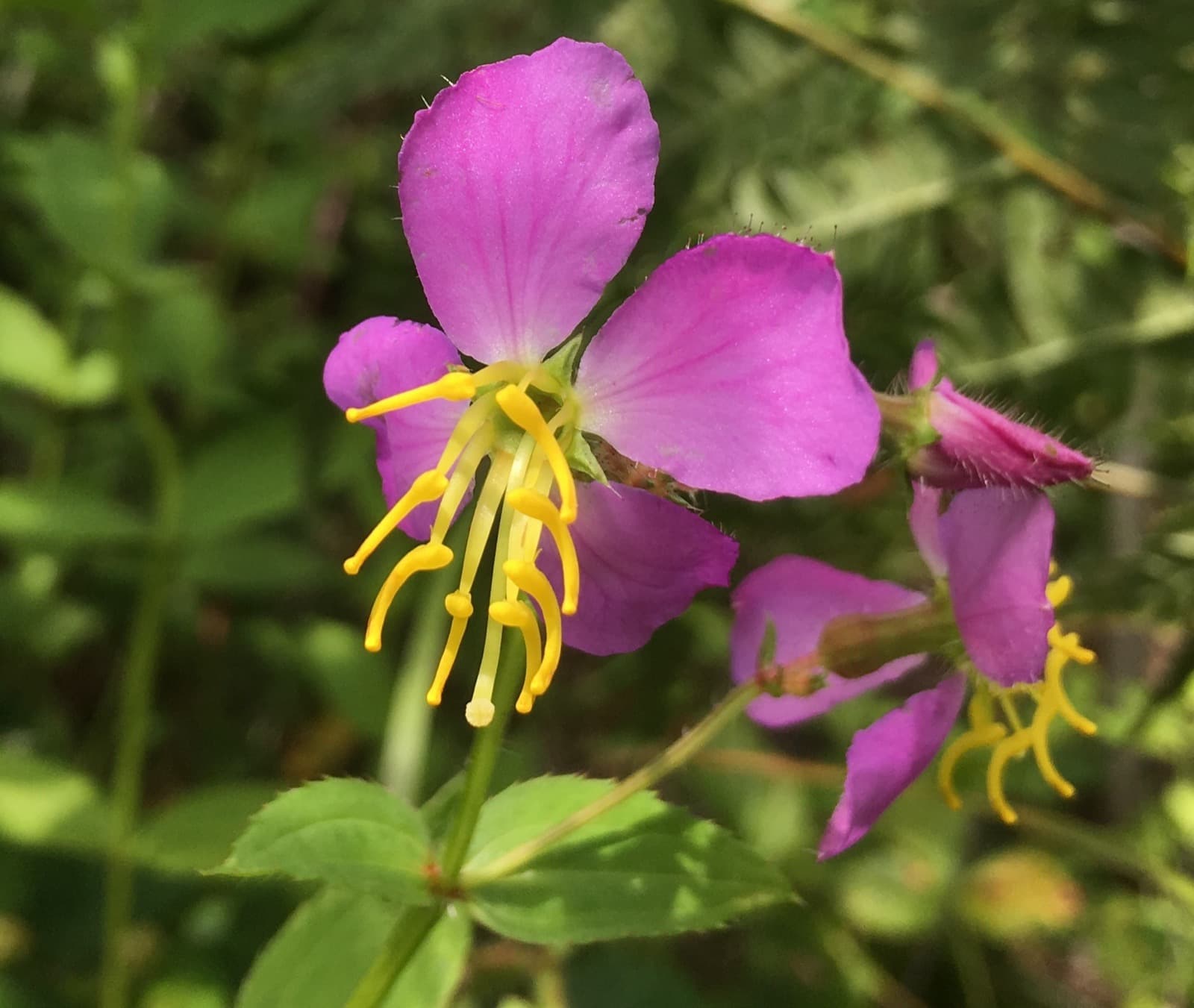
A small plant, rarely two feet tall, with vivid pink petals and yellow anthers: a tropical plant that has been here since Wisconsin's climate was more tropical, a relic of that past.Source: U.S. Fish and Wildlife Service, Necedah NWR: Species (Seasons of Wildlife) ↗ (opens in a new tab)
Is there a blind for flower and butterfly photos?
Yes: wooden photo blinds on Lupine Loop and the Boghaunter Trail, open all year and big enough for two people and two tripods. Bring a chair or stool, and latch the door when you leave.Source: U.S. Fish and Wildlife Service, Necedah NWR: Visit Us ↗ (opens in a new tab)
Can I borrow a field guide?
Yes: binoculars, field guides, scavenger hunts and activity backpacks are free to borrow at the visitor center between 9:00 a.m. and 3:30 p.m.Source: U.S. Fish and Wildlife Service, Necedah NWR: Visit Us ↗ (opens in a new tab)
Where are the best spots in Necedah National Wildlife Refuge?
Boghaunter Trail: three loops west of Rynearson Pool 2 (Meadow Beauty 0.8 mile, Boardwalk 1.75 miles, Tamarack 3.6 miles) through a mosaic of wetlands, sedge meadows, prairies and shrub edges, with an overlook deck and a photo blind; open all year; Visitor Center Trail: accessible trails at the visitor center: the 0.25-mile Muskrat Loop boardwalk and the 0.75-mile Karner Loop through forest and savanna, past native plantings, rain gardens and a butterfly garden.
When is the festival in Necedah National Wildlife Refuge?
National Wildlife Refuge Week celebration, usually in Oct.
What is Necedah National Wildlife Refuge like through the year?
Waterfowl begin to return in mid-March, while ice still covers the wetlands (Mar), Cranes begin to return in mid-March (Mar), Warblers arrive with May (May), Karner blue butterflies on the flowers, late May to late July and into early August (May–Aug), Fall waterfowl migration peaks (September to November); the last cranes, ducks and swans leave by mid-November (Sep–Nov), Visitor center on its longer summer schedule, Monday to Friday, May to November (May–Nov), Fall color peaks (Oct), Juncos return for the winter; turkey vultures head south (Sep–Nov), National Wildlife Refuge Week celebration (Oct), Purple wild lupine in bloom (Apr), Warm-season flowers and grasses start to bloom (Jun–Aug), Karner caterpillars hatch as the lupine begins to grow (Mar–May), Fawns, turkey poults and flightless crane colts out with their parents (Jun–Aug), The monarch 'super generation' migrates to Mexico (Sep–Nov), Owls court and nest; bald eagles prepare to nest (Jan–Mar), Egrets appear as fall migration starts (Jun–Aug), Visitor center winter schedule: Tuesday to Thursday, 9 a.m.–3 p.m. (Dec–Apr) and Goose Pool open to fishing, December 15 to March 15 (Dec–Mar).