Blackwater Refugewinter wildlife
In January geese, swans and ducks share the marsh, and in February the wintering waterfowl feed hard before the long flight north, per the Fish and Wildlife Service (Jan 1–Feb 28). This year's season is over; the next is in 2027.
Right now in Blackwater Refuge · September
- Biting insects on the trails, mid-April to late September · Apr–Sep
95days to the next winter wildlife seasonJan 1–Feb 28, local timing
Blackwater National Wildlife Refuge through the year
- Mar: Most migratory waterfowl leave for the northMar
- Biting insects on the trails, mid-April to late SeptemberNowApr–Sep
- Peak shorebird migration, late April and early MayApr–May
- Jul: Marsh hibiscus begins to bloom, end of JulyJul
- Autumn colors peak (sometime October–December)Oct–Dec
- Bald eagle numbers rise as migrants arrive from the northOct–Dec
- Nov: Tundra swans arrive from northwest Canada, usually in early NovemberNov
Where to watch
- Wildlife Drive3.6 miles, with a vehicle pass; in January bald and golden eagles are sometimes easy to spot along it. Park in a pull-off or on the right before you step out
- Visitor CenterA prime spot to watch bald eagles soar overhead and hunt the nearby marsh, with an upstairs observation area; free, open Tuesday to Sunday, 10 am to 4 pm
Blackwater Refuge in pictures
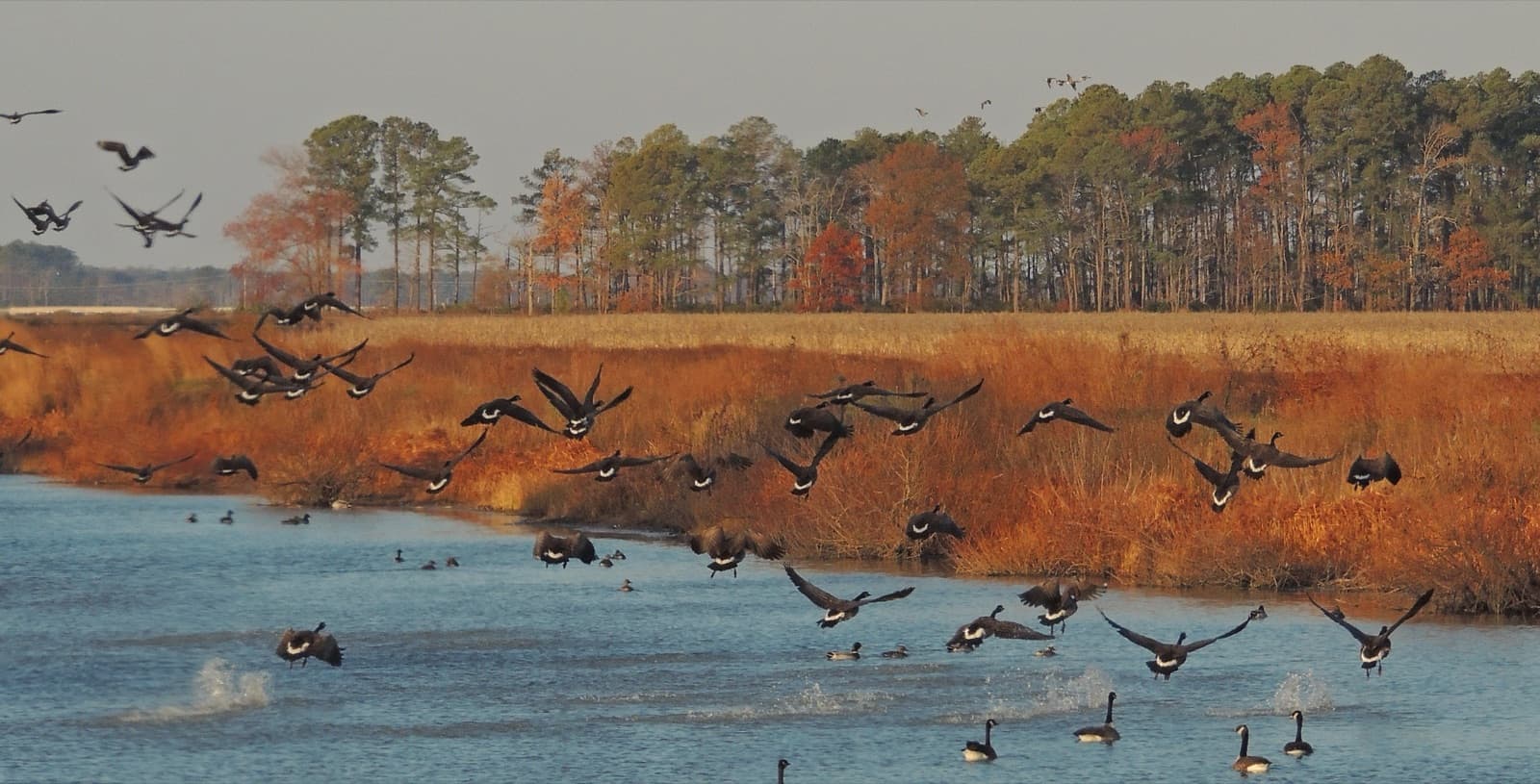
How we know
U.S. Fish and Wildlife Service, Blackwater NWR seasons of wildlife (opens in a new tab) (Sep 28) · U.S. Fish and Wildlife Service, Blackwater NWR visit (opens in a new tab) (Sep 28) · National Weather Service forecast and alerts (opens in a new tab) (Sep 28)
Questions people ask
When is the best time to see winter wildlife at Blackwater National Wildlife Refuge?
In January geese, swans and ducks share the marsh, and in February the wintering waterfowl feed hard before the long flight north, per the Fish and Wildlife Service: Jan 1–Feb 28. That's general timing for this place, not a peak date or a forecast.
Is it wildlife season at Blackwater National Wildlife Refuge right now?
Not now: the winter wildlife season is over for this year. The next one starts in about 95 days (Jan 1–Feb 28, local timing).
What does the Wildlife Drive cost?
A daily vehicle pass is $3 ($1 on foot or by bike), paid by cash or check at the self-pay kiosk where the drive starts, or online at Recreation.gov. The visitor center and every public area outside the drive are free.Source: U.S. Fish and Wildlife Service, Blackwater NWR visit ↗ (opens in a new tab)
When is the best time to go in midwinter?
During a thaw: the refuge's wildlife calendar says midwinter viewing is best then.Source: U.S. Fish and Wildlife Service, Blackwater NWR seasons of wildlife ↗ (opens in a new tab)
Is the Wildlife Drive ever closed in winter?
As of September 2026, most of the drive is closed for deer management hunts on October 22 and 23 and December 4, 2026, and January 8, 2027. On those days the Pool 5 loop at the west end stays open free of charge, and some trails also close now and then during deer hunts.Source: U.S. Fish and Wildlife Service, Blackwater NWR visit ↗ (opens in a new tab)
Are all the trails open in winter?
Not always: the Marsh Edge Trail may close from midwinter to midsummer so nesting eagles and herons aren't disturbed. Trails are open daily from dawn to dusk.Source: U.S. Fish and Wildlife Service, Blackwater NWR visit ↗ (opens in a new tab)
When is the visitor center open?
Tuesday to Sunday, 10 am to 4 pm; it's closed Mondays and federal holidays. The outdoor public areas are open every day of the year, dawn to dusk.Source: U.S. Fish and Wildlife Service, Blackwater NWR visit ↗ (opens in a new tab)
Where are the best spots in Blackwater National Wildlife Refuge?
Wildlife Drive: 3.6 miles, with a vehicle pass; in January bald and golden eagles are sometimes easy to spot along it. Park in a pull-off or on the right before you step out; Visitor Center: a prime spot to watch bald eagles soar overhead and hunt the nearby marsh, with an upstairs observation area; free, open Tuesday to Sunday, 10 am to 4 pm.
What is Blackwater National Wildlife Refuge like through the year?
Peak shorebird migration, late April and early May (Apr–May), Marsh hibiscus begins to bloom, end of July (Jul), Autumn colors peak (sometime October–December) (Oct–Dec), Bald eagle numbers rise as migrants arrive from the north (Oct–Dec), Tundra swans arrive from northwest Canada, usually in early November (Nov), Most migratory waterfowl leave for the north (Mar) and Biting insects on the trails, mid-April to late September (Apr–Sep).