Aransas Refugewinter wildlife
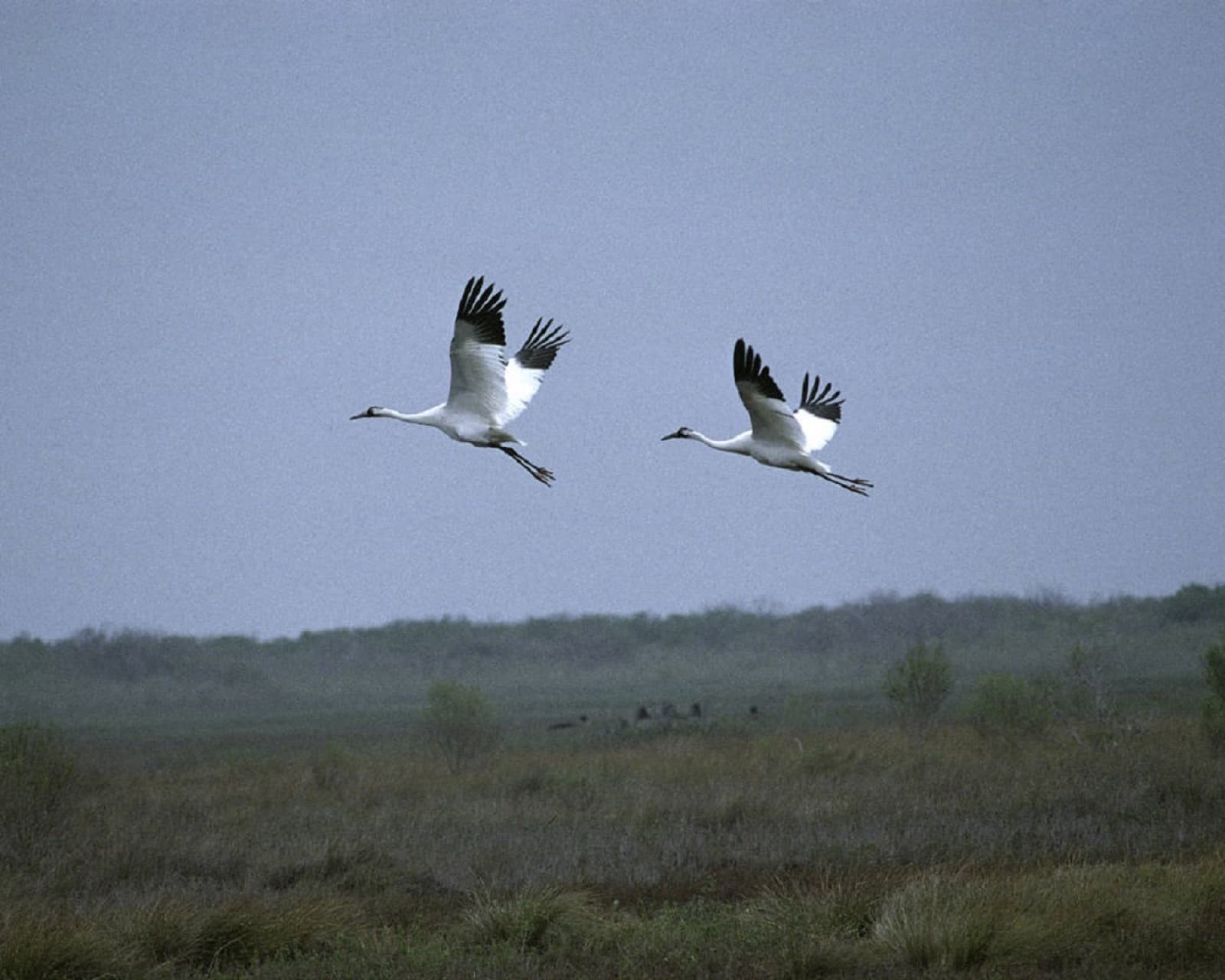
Whooping cranes typically arrive in late October and leave by mid-April, per the Fish and Wildlife Service. No official report yet this season.
Right now in Aransas Refuge · September
- Wade fishing from Mustang Lake is allowed April 15 to October 14 only (pier and boardwalk fishing on San Antonio Bay is year-round) · Apr–Oct
21days to the next winter wildlife seasontypically arriving in late October and departing by mid-April, local timing
Aransas National Wildlife Refuge through the year
- Wade fishing from Mustang Lake is allowed April 15 to October 14 only (pier and boardwalk fishing on San Antonio Bay is year-round)NowApr–Oct
- Whooping cranes: usually here from late October until mid-AprilOct–Apr
- Prescribed-burn season, fall and early winter (October to early January): burns renew the cranes' winter feeding areas, and whooping cranes are often seen feeding on a burn within a day or twoOct–Jan
Where to watch
- Heron Flats TrailA 1.4-mile trail (not a loop) past freshwater sloughs, shell ridges, oak woods and tidal flats; with luck, a whooping crane family feeding in the marshy salt flats
- Observation Towers and BoardwalkTwo towers, 20 and 40 feet, both fully accessible by gently sloping ramps, for crane watching over San Antonio Bay and Mustang Lake; a boardwalk crosses the tidal flat to the Big Tree Observation Deck, and there are restrooms here
Aransas Refuge in pictures
How we know
U.S. Fish and Wildlife Service, Aransas NWR: Birding (opens in a new tab) (Sep 28) · U.S. Fish and Wildlife Service, Aransas NWR: Visit Us (opens in a new tab) (Sep 28) · U.S. Fish and Wildlife Service, Aransas National Wildlife Refuge (opens in a new tab) (Sep 28) · U.S. Fish and Wildlife Service, Aransas NWR: Rules and Policies (opens in a new tab) (Sep 28) · U.S. Fish and Wildlife Service, Aransas NWR Visitor Information and Map (August 2024) (opens in a new tab) (Sep 28) · U.S. Fish and Wildlife Service, Aransas NWR: What We Do (opens in a new tab) (Sep 28) · U.S. Fish and Wildlife Service, Aransas NWR: Fishing (opens in a new tab) (Sep 28) · National Weather Service forecast and alerts (opens in a new tab) (Sep 28)
Questions people ask
When is the best time to see winter wildlife at Aransas National Wildlife Refuge?
Whooping cranes typically arrive in late October and leave by mid-April, per the Fish and Wildlife Service: typically arriving in late October and departing by mid-April. That's general timing for this place, not a peak date or a forecast.
Is it wildlife season at Aransas National Wildlife Refuge right now?
Not now: the winter wildlife season is over for this year. The next one starts in about 21 days (typically arriving in late October and departing by mid-April, local timing).
Is there an entrance fee?
Yes. Everyone registers and pays daily: $3 for one adult in a vehicle, $5 for two or more adults, and free for anyone 17 and under. You can pay on Recreation.gov, or at the kiosk in front of the visitor center when it's closed.Sources: U.S. Fish and Wildlife Service, Aransas NWR: Visit Us ↗ (opens in a new tab), U.S. Fish and Wildlife Service, Aransas National Wildlife Refuge ↗ (opens in a new tab)
When is the refuge open?
The auto tour and trails are open daily from sunrise to sunset, and the gates close and lock 30 minutes after sunset. As of September 2026 the visitor center is open Tuesday to Saturday, 9 a.m. to 4 p.m., and closed Sundays, Mondays and federal holidays.Sources: U.S. Fish and Wildlife Service, Aransas NWR: Visit Us ↗ (opens in a new tab), U.S. Fish and Wildlife Service, Aransas National Wildlife Refuge ↗ (opens in a new tab)
Can I bring my dog?
Yes, on a short leash (4 to 6 feet) at all times. Don't let pets drink from or go into the water: alligators and venomous snakes live here.Source: U.S. Fish and Wildlife Service, Aransas NWR: Rules and Policies ↗ (opens in a new tab)
Are there restrooms and trash cans?
Restrooms are at the visitor center (outside it after hours), the picnic area and the observation towers. There are no trash cans on the refuge, so pack out everything you bring.Sources: U.S. Fish and Wildlife Service, Aransas NWR: Visit Us ↗ (opens in a new tab), U.S. Fish and Wildlife Service, Aransas National Wildlife Refuge ↗ (opens in a new tab)
Can I bike here?
Only on the auto tour loop; bikes aren't allowed on trails, boardwalks, observation platforms or towers.Source: U.S. Fish and Wildlife Service, Aransas NWR: Rules and Policies ↗ (opens in a new tab)
Where are the best spots in Aransas National Wildlife Refuge?
Heron Flats Trail: a 1.4-mile trail (not a loop) past freshwater sloughs, shell ridges, oak woods and tidal flats; with luck, a whooping crane family feeding in the marshy salt flats; Observation Towers and Boardwalk: two towers, 20 and 40 feet, both fully accessible by gently sloping ramps, for crane watching over San Antonio Bay and Mustang Lake; a boardwalk crosses the tidal flat to the Big Tree Observation Deck, and there are restrooms here.
What is Aransas National Wildlife Refuge like through the year?
Whooping cranes: usually here from late October until mid-April (Oct–Apr), Prescribed-burn season, fall and early winter (October to early January): burns renew the cranes' winter feeding areas, and whooping cranes are often seen feeding on a burn within a day or two (Oct–Jan) and Wade fishing from Mustang Lake is allowed April 15 to October 14 only (pier and boardwalk fishing on San Antonio Bay is year-round) (Apr–Oct).