When do flowering dogwoodsturn?
When do flowering dogwoods change color?
New England sees flowering dogwoods at their most colorful first, around Sep 29–Oct 5; the Southern Appalachians last, around Oct 27–Nov 2, 4 weeks later (USA-NPN, 2020–2025).
One tree, several regions
- New England1st of 10 to color · most Sep 29–Oct 5
- The Southern Appalachians1st of 10 to color · most Oct 27–Nov 2
- The Mid-Atlantic1st of 10 to color · most Oct 20–26
Sep 1 to Nov 30; darker = more flowering dogwoods half colored.
Flowering dogwoods this fall
- The Mid-Atlantic behind: 2% vs 26% (49 obs.)
How to recognize it
Leaves. Large, simple leaves in opposite pairs, usually 2 to 6 inches long.
Leaf drawing: ours, simplified.
Source: US Forest Service, Fire Effects Information System: flowering dogwood ↗ (opens in a new tab)
Look-alikes How to tell them apart (US Forest Service)
Leaves alike (simple, opposite, 2 to 6 inches), so check the fruit and the setting: flowering dogwood is a small understory tree of moist woods with red fruit, poisonous to people; redosier dogwood is a many-stemmed shrub of wet shores, marshes and floodplains with white to blue berries.
Sources: US Forest Service, Fire Effects Information System: flowering dogwood ↗ (opens in a new tab), US Forest Service, Fire Effects Information System: redosier dogwood ↗ (opens in a new tab)
Where it grows
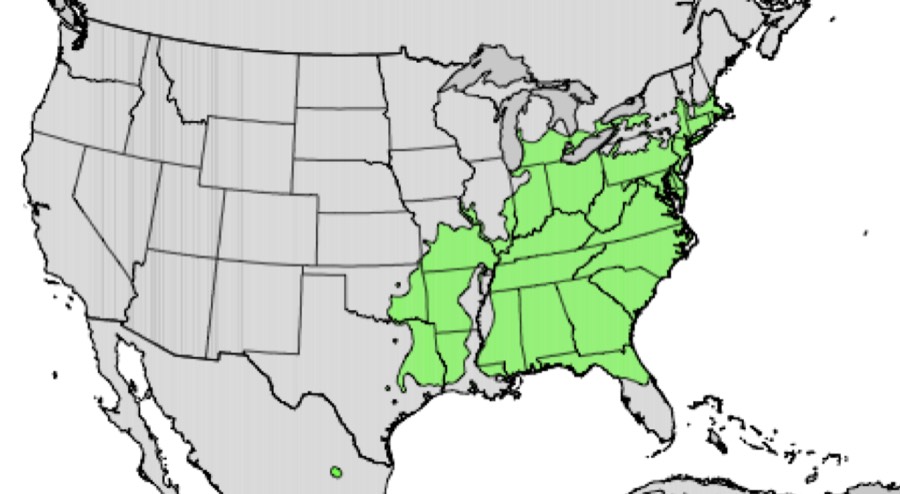
Sources: USDA Forest Service, Fire Effects Information System: Little's range maps ↗ (opens in a new tab), US Forest Service, Fire Effects Information System: flowering dogwood ↗ (opens in a new tab)
The flowering dogwood, in short
- Size
- A shrub or small tree with a broad, rounded crown, commonly 16 to 49 feet tall. In the South it can reach 40 feet with an 18-inch trunk; in the North it is more often a many-branched shrub 10 to 13 feet tall.
- Where it grows best
- Moist deciduous woods, floodplains, slopes, bluffs and ravines, as an understory tree in many hardwood and conifer forests across eastern North America; it often does poorly on dry upland slopes and ridges.
- Shade
- Very shade tolerant; it can live for a long time under a forest canopy.
- Wildlife
- Valuable to wildlife. Thrushes, veeries, cardinals, bluebirds, woodpeckers and many other birds eat the fruit, which matters most to American robins; in the Missouri Ozarks it is important food for wild turkeys from September to February. Chipmunks, foxes, squirrels, black bears and deer eat the berries too.
- People and uses
- Grown as an ornamental since 1731 for its showy flowers and fall leaves. Some Native American peoples made a scarlet dye from its roots. The bright red fruits are poisonous to people.
Source: US Forest Service, Fire Effects Information System: flowering dogwood ↗ (opens in a new tab)
Where to see flowering dogwoods in fall
- Blue Ridge Parkway · North CarolinaUsually Oct 1–31
- Great Smoky Mountains · TennesseeUsually Oct 1–Nov 10
- Iroquois Refuge · New YorkOct 1–10
- Allegheny National Forest · PennsylvaniaOct 8–14
- Shenandoah · VirginiaUsually Oct 8–21
- Assabet River Refuge · MassachusettsUsually Oct 11–20
- Cherokee National Forest · TennesseeUsually Oct 11–Nov 10
- Erie Refuge · PennsylvaniaUsually Oct 11–20
- Fort River Division · MassachusettsUsually Oct 11–20
- George Washington and Jefferson · VirginiaUsually Oct 11–31
- Natchez Trace Parkway · TennesseeOct 11–31
- Parker River Refuge · MassachusettsOct 11–31
States: Massachusetts · North Carolina · Tennessee · Virginia · Maryland · New York · Pennsylvania
Questions people ask
When do flowering dogwoods turn?
It depends on the region. In a typical fall they are most colorful first in New England (week of Sep 29) and last in the Southern Appalachians (week of Oct 27), from USA-NPN volunteer observations.
Do flowering dogwoods turn early or late compared with other trees?
In New England, first of 10 trees to start coloring; In the Southern Appalachians, first of 10 trees to start coloring; In the Mid-Atlantic, first of 10 trees to start coloring.
Are flowering dogwoods ahead or behind this fall?
In the Mid-Atlantic, for Sep 15–21: 2% of observations with half the leaves colored, against 26% in a typical year (behind).