10 trees and shrubs, the weeks each one colors, and how to tell them apart. From volunteer observers across Vermont, New Hampshire, Maine, Massachusetts, Connecticut and Rhode Island; updated Sep 27.
Which trees change color first in New England?
In a typical fall across New England, flowering dogwood turns first: by the week of Sep 1–7, at least a quarter of volunteer observations show half or more of the leaves colored. Northern red oak and white oak come last, around Oct 20–26. Based on USA National Phenology Network observations, 2020–2025.
Each strip runs 13 weeks, Sep 1 to Nov 30, in the color the tree turns: the stronger the week, the more observations with half or more of the leaves colored. The leaf marks its week of most color; the outlined week is this week; dashed means too few observations.
All the numbers
Percent half or more colored, week by week
New England, falls 2020–2025
Share of volunteer observations with half or more of the leaves colored, by species and week, New England, 2020–2025
Species
Sep 1
Sep 8
Sep 15
Sep 22
Sep 29
Oct 6
Oct 13
Oct 20
Oct 27
Nov 3
Nov 10
Nov 17
Nov 24
Flowering dogwood
27
39
47
71
73
70
65
57
19
8
5
3
1
Red maple
1
3
6
15
29
46
49
41
26
24
33
28
24
Yellow birch
2
2
1
14
26
56
41
35
13
0
Sugar maple
0
0
3
13
19
43
60
48
20
14
10
15
9
Northern bayberry
1
0
6
13
15
30
27
44
61
59
80
75
American beech
1
0
0
3
5
24
42
46
24
36
24
16
Paper birch
0
1
1
2
6
18
29
41
33
20
10
3
1
Black cherry
0
1
0
2
1
8
29
47
24
43
26
10
Northern red oak
0
0
0
0
0
5
13
42
61
45
35
37
30
White oak
2
0
0
0
2
3
19
46
57
37
17
6
5
under 5%
5–14%
15–29%
30–44%
45% or more
this week
Read it down the columns: the species at the top turn first. Numbers are the percent of observations with half or more of the leaves colored that week, from 194–546 volunteer sites a week across 6 states; a blank means fewer than 30 observations. Street and garden trees (ginkgo, apple, Norway maple) are left out. Data: USA National Phenology Network (CC BY 4.0).
Leaves. Large, simple leaves in opposite pairs, usually 2 to 6 inches long.
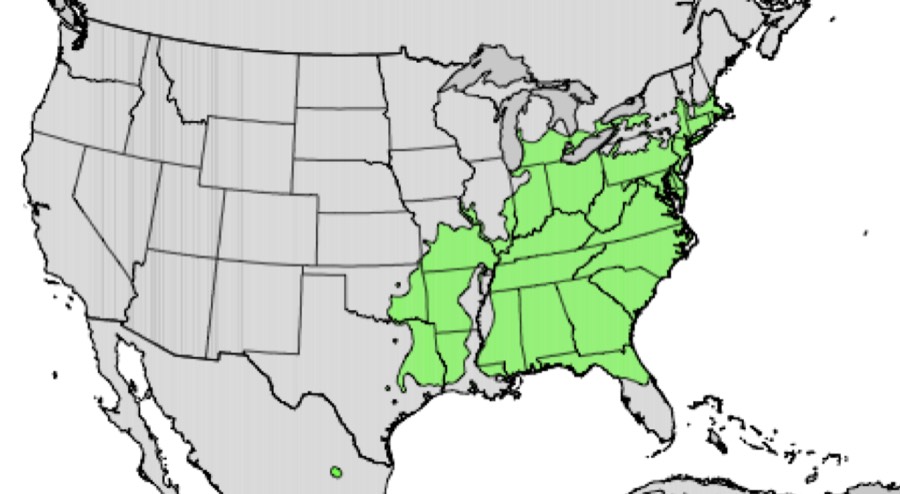
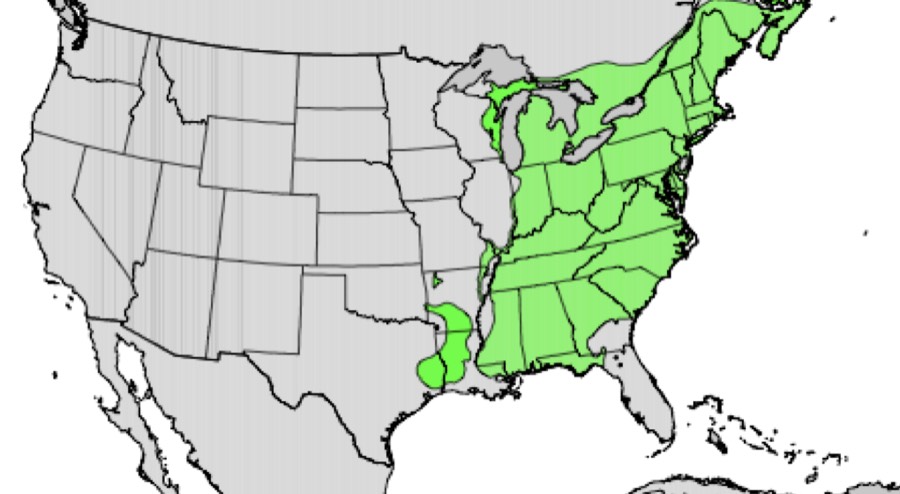
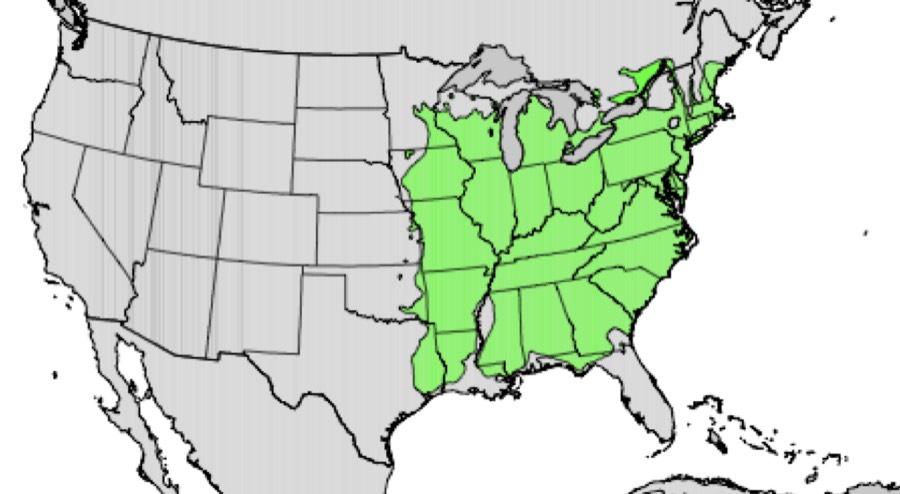
Where it grows. From central Florida north to southwestern Maine, and west to central Michigan, Missouri and eastern Texas.
Size. A shrub or small tree with a broad, rounded crown, commonly 16 to 49 feet tall. In the South it can reach 40 feet with an 18-inch trunk; in the North it is more often a many-branched shrub 10 to 13 feet tall.
In New England. Coloring from about Sep 1–7; most color Sep 29–Oct 5 (73% of observations half or more colored).
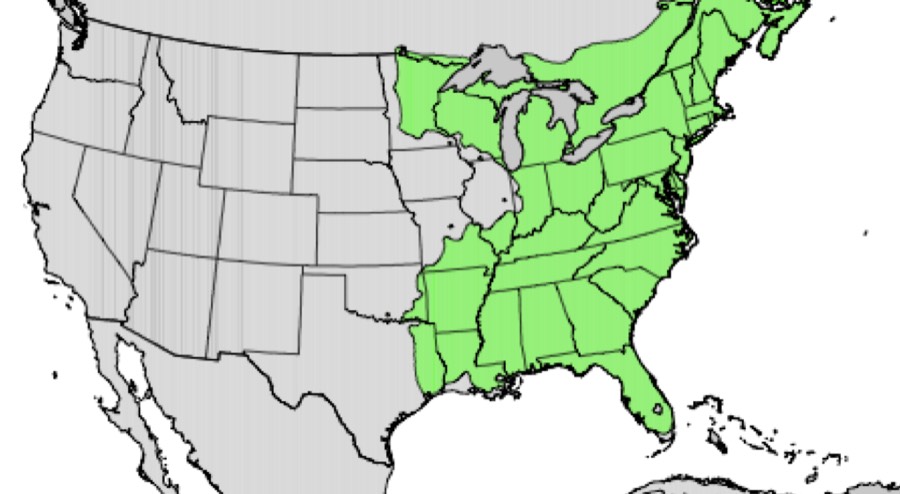
Where it grows. One of the most widely distributed trees in eastern North America: from Newfoundland and Nova Scotia west to Minnesota, and south to Texas and southern Florida.
Size. Usually 30 to 90 feet tall, with a trunk up to 4 feet across. Outlives most of the quick trees that move into open, disturbed ground, but usually drops out as a forest grows old. It can bear seed as young as 4.
In New England. Coloring from about Sep 29–Oct 5; most color Oct 13–19 (49% of observations half or more colored). This fall, Sep 15–21: 11%, against a typical 6%.
Where it grows. From Newfoundland and Maine west to Minnesota, and south in the mountains to South Carolina, northeastern Georgia and eastern Tennessee.
Size. Usually 60 to 75 feet tall with a trunk up to 2 feet across, sometimes 100 feet and 4 feet across. Slow growing; about 150 years on average, more than 300 at most.
In New England. Coloring from about Sep 29–Oct 5; most color Oct 6–12 (56% of observations half or more colored).
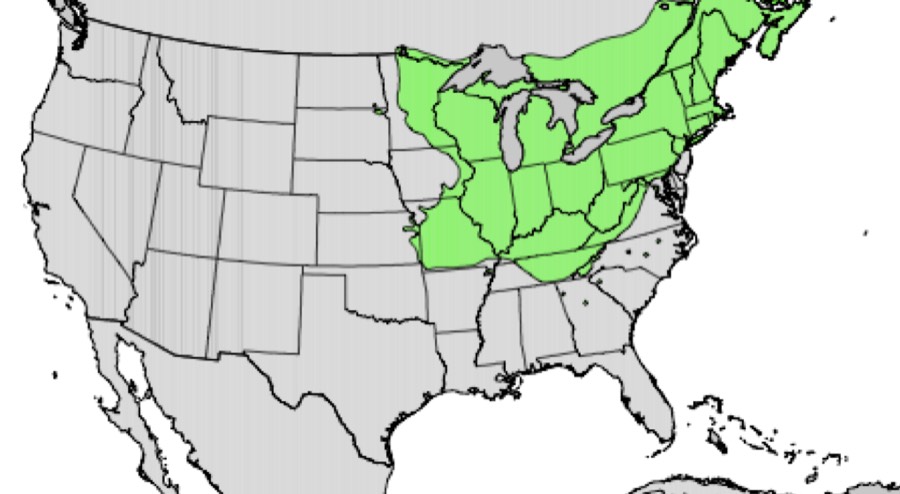
Where it grows. From Nova Scotia and New Brunswick west to Manitoba, south to northeastern Texas and Georgia, and up the Appalachians into New England.
Size. Usually 90 to 120 feet tall with a trunk 30 to 36 inches across; the biggest pass 130 feet and 5 feet across. Long-lived: trees can reach 300 to 400 years.
In New England. Coloring from about Oct 6–12; most color Oct 13–19 (60% of observations half or more colored). This fall, Sep 15–21: 0%, against a typical 3%.
Leaves. Leaves about 3 inches long and 1 inch wide, crowded toward the ends of the branches.
Where it grows. From Ontario east to Nova Scotia and south to Ohio and North Carolina.
Size. A stiff-branched shrub, typically 5 to 7 feet tall and up to 15, much shorter on dunes and poor soil; it spreads in clones from underground stems.
In New England. Coloring from about Oct 6–12; most color Nov 10–16 (80% of observations half or more colored).
Leaves. Yellow-green through the growing season; the interlocking leaves on stout branches make a dense crown.
Where it grows. From Nova Scotia and Maine west to eastern Wisconsin, and south to eastern Texas and northern Florida.
Size. Normally 65 to 80 feet tall, sometimes up to 130 feet, with stout branches and a dense crown. Can live more than 300 years; it starts bearing nuts at about 40 and can produce big crops by 60.
In New England. Coloring from about Oct 13–19; most color Oct 20–26 (46% of observations half or more colored). This fall, Sep 15–21: 4%, against a typical 0%.
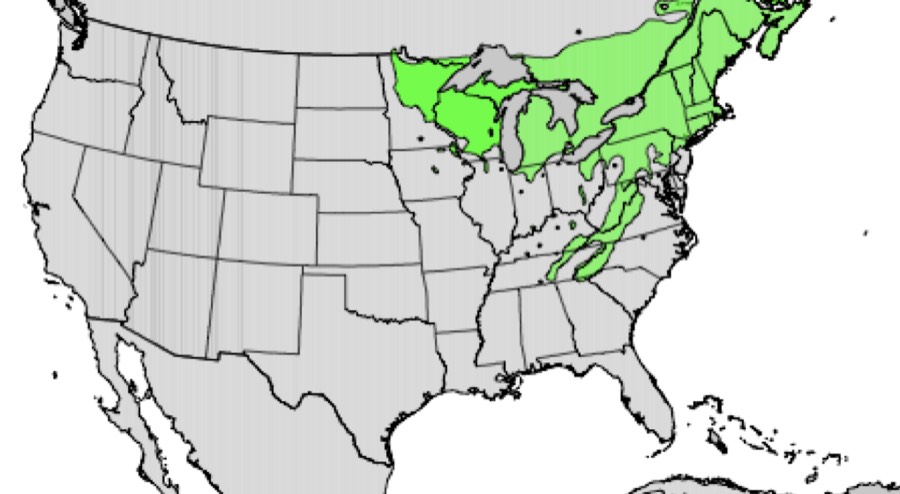
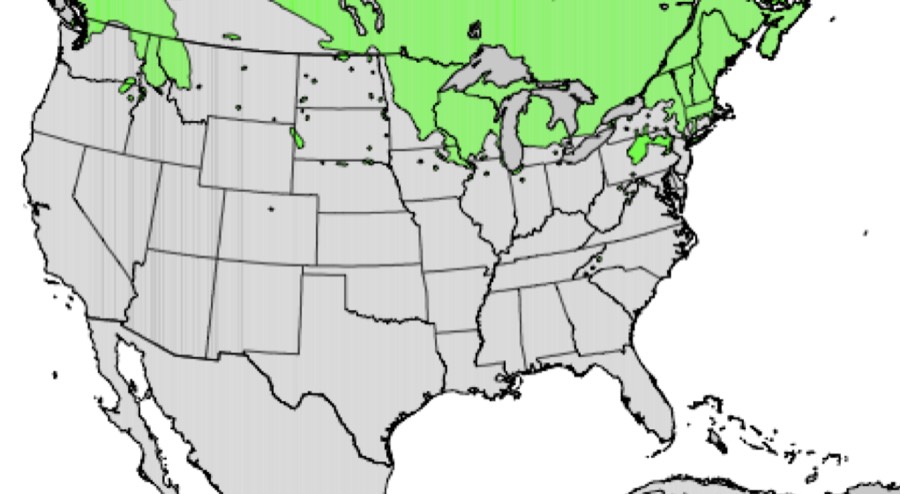
Where it grows. Right across northern North America, from Newfoundland and Labrador to Alaska, south through the Lake States to New England, with outlying stands in the Appalachians as far as western North Carolina.
Size. Mature trees are usually 70 to 80 feet tall with trunks 10 to 12 inches across, now and then up to 30 inches. In Alaska they are smaller, commonly 20 to 60 feet. Short-lived: it stops growing taller at about 60 to 70 years, and few trees live past 140.
In New England. Coloring from about Oct 13–19; most color Oct 20–26 (41% of observations half or more colored).
Leaves. Simple, thick, leathery leaves, 2 to 6 inches long.
Where it grows. Eastern North America, from western Minnesota to Nova Scotia and south to eastern Texas and central Florida.
Size. In the East up to 125 feet tall and 4 feet or more across; the southwestern varieties are much smaller.
In New England. Coloring from about Oct 13–19; most color Oct 20–26 (47% of observations half or more colored). This fall, Sep 15–21: 2%, against a typical 0%.
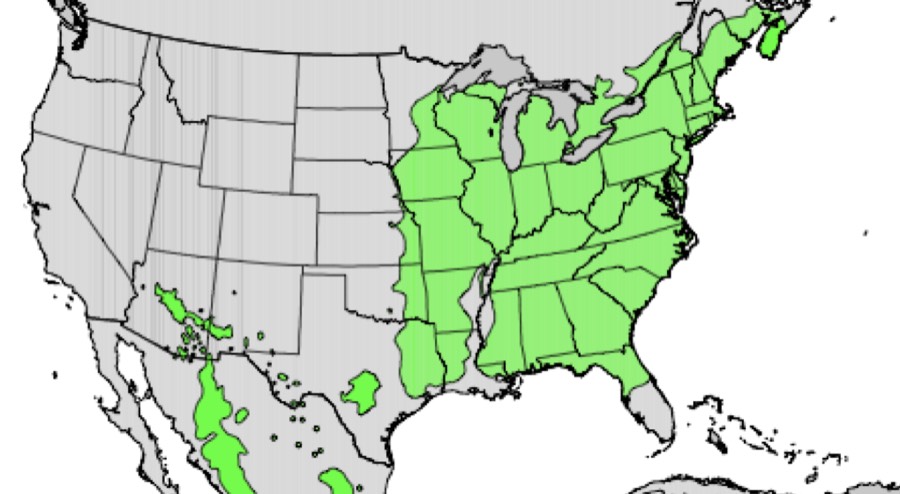
Where it grows. Much of the eastern United States and southeastern Canada: from Quebec and Nova Scotia south to Georgia and Alabama, and west through Minnesota and Iowa to eastern Oklahoma.
Size. The tallest and fastest-growing oak: commonly 65 to 98 feet tall with a trunk 2 to 3 feet across, and on the best sites up to 160 feet and 8 feet across. Usually first bears acorns at about 25, but most trees don't produce them in quantity until about 50.
In New England. Coloring from about Oct 20–26; most color Oct 27–Nov 2 (61% of observations half or more colored).
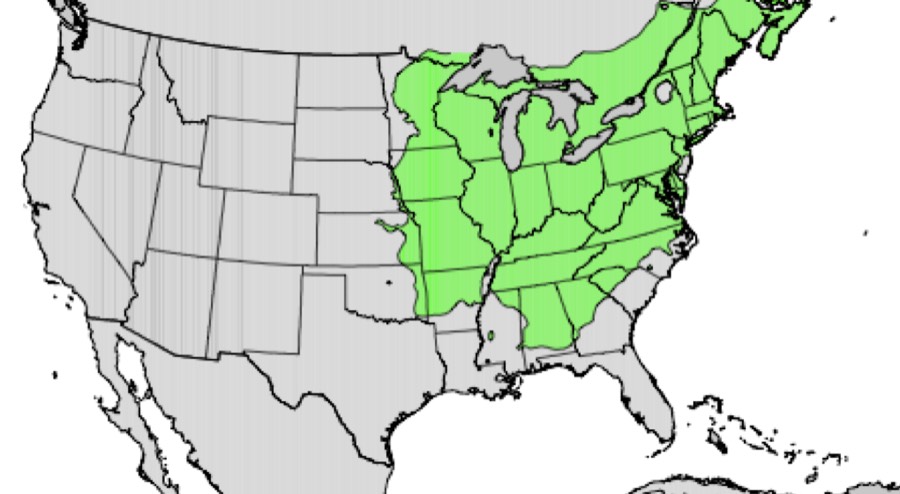
Where it grows. From southwest Maine to northern Florida, west into Michigan, Wisconsin and Minnesota, and south to eastern Texas.
Size. Commonly 60 to 80 feet tall, spreading; on good sites more than 100 feet tall and over 5 feet across. Slow-growing and long-lived, up to 600 years.
In New England. Coloring from about Oct 20–26; most color Oct 27–Nov 2 (57% of observations half or more colored).
Leaf drawings are ours, simplified. Colors, leaves, ranges and sizes from the Forest Service pages above, in our own words; range maps from Little's Atlas of United States Trees (Forest Service FEIS). Where a source says nothing, the card shows only our observations.