San Luis Refugespring migration
Wildlife refugeShorebirds peak in April at San Luis, per the Fish and Wildlife Service's calendar for the refuge. Its usual window for this year has passed.
Updated
Sources for this timing ↓About San Luis Refuge
- What it is
- A wildlife refuge in California
- What you'll see
- Shorebirds · usual peak April
Right now at San Luis Refuge
Right now in San Luis Refuge · October
- Sandhill cranes: back from mid-September, large numbers still visible in February (San Luis NWR Complex calendar) · Sep–Feb
Next 7 days at San Luis Refuge
- TodayMostly Sunny93° / 61°–
- SatSunny98° / 65°–
- SunSunny98° / 66°–
- MonSunny98° / 66°–
- TueSunny98° / 66°–
- WedSunny98° / 66°–
- ThuSunny98° / ––
Today: sunrise 7:01 a.m., sunset 6:47 p.m., light until 7:13 p.m. · moon last quarter, 54% lit (our calculation)
Your guide to the area
- San Luis RefugeLocal timing: AprilThis page
Where to watch
- Waterfowl auto tour routeThrough the refuge's upland and wetland heart, where thousands of ducks winter in fall, winter and spring
- West Bear Creek auto tour routeAround the West Bear Creek Unit's wetlands; falling water in spring draws shorebirds, and yellow-headed blackbirds often nest in the old tules and cattails
Worth the drive
- Pahranagat RefugeWildlife refuge317 miApril and MaySatSunny
- Malheur RefugeWildlife refuge426 milate winter through the end of MaySatSunny
- Bill Williams River RefugeWildlife refuge433 milate April to early MaySatSunny
- Bear River RefugeWildlife refuge554 miearly April through mid-MaySatMostly Sunny
- Camas RefugeWildlife refuge645 miMarch through mid-MaySatSunny
- Nisqually RefugeWildlife refuge682 miLate April and early MaySatPatchy Fog then Partly Sunny
The year at San Luis Refuge
- Jan: Goose and duck numbers peak (January, across the San Luis NWR Complex)Jan
- Kesterson Unit open (on foot)Feb–Sep
- Feb: Tule elk bulls shed their antlers (February, San Luis NWR Complex calendar)Feb
- Mar: Waterfowl head north, most gone after late MarchMar
- Apr: Wildflowers around the vernal poolsApr
- Aug: Tule elk rut and bugling peakAug
- Sep: Monarch butterfly fall migration peakSep
- Sandhill cranes: back from mid-September, large numbers still visible in February (San Luis NWR Complex calendar)NowSep–Feb
- Winter raptors: eagles, falcons and ferruginous hawks (December–January)Dec–Jan
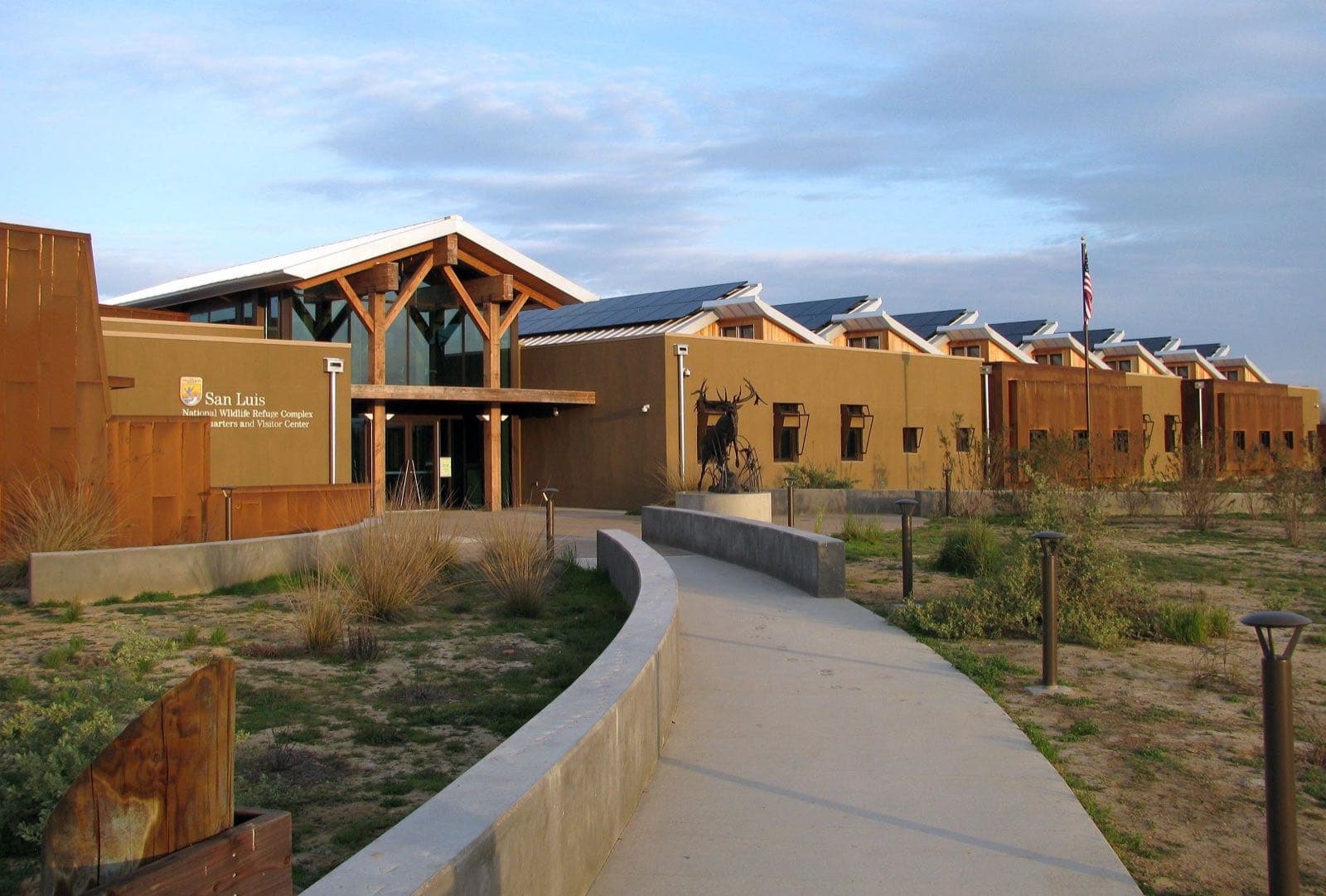
San Luis Refuge in pictures
Questions people ask
When is the best time to see spring migration at San Luis National Wildlife Refuge?
Shorebirds peak in April at San Luis, per the Fish and Wildlife Service's calendar for the refuge: April. That's general timing for this place, not a peak date or a forecast.
Is spring migration under way at San Luis National Wildlife Refuge right now?
Not now: its usual spring migration window for this year has passed. Next time: April, local timing.
What happens at San Luis in April?
Shorebirds reach their peak numbers, tule elk calves start to be born, wildflowers bloom around the vernal pools, and seasonal wetlands are drained so waterbird food plants can grow.Source: U.S. Fish and Wildlife Service, San Luis National Wildlife Refuge: Species (Nature's Calendar) ↗ (opens in a new tab)
And in May?
Shorebirds pass through in breeding plumage, songbirds sing loudly to defend their nesting territories, and tiger salamanders go back to their burrows as the vernal pools dry.Source: U.S. Fish and Wildlife Service, San Luis National Wildlife Refuge: Species (Nature's Calendar) ↗ (opens in a new tab)
Where can I walk among the spring birds?
On the nature trails: the Wetland nature trail starts outside the visitor center (about 15 minutes), or try the Sousa Marsh trail. Walking isn't allowed on the auto tour routes.Source: U.S. Fish and Wildlife Service, San Luis National Wildlife Refuge: Visit Us ↗ (opens in a new tab)
Where are the best spots in San Luis National Wildlife Refuge?
Waterfowl auto tour route: through the refuge's upland and wetland heart, where thousands of ducks winter in fall, winter and spring; West Bear Creek auto tour route: around the West Bear Creek Unit's wetlands; falling water in spring draws shorebirds, and yellow-headed blackbirds often nest in the old tules and cattails.
What is San Luis National Wildlife Refuge like through the year?
Wildflowers around the vernal pools (Apr), Kesterson Unit open (on foot) (Feb–Sep), Tule elk rut and bugling peak (Aug), Monarch butterfly fall migration peak (Sep), Goose and duck numbers peak (January, across the San Luis NWR Complex) (Jan), Sandhill cranes: back from mid-September, large numbers still visible in February (San Luis NWR Complex calendar) (Sep–Feb), Winter raptors: eagles, falcons and ferruginous hawks (December–January) (Dec–Jan), Tule elk bulls shed their antlers (February, San Luis NWR Complex calendar) (Feb) and Waterfowl head north, most gone after late March (Mar).
How we know · Sources (5)
How we know
National Weather Service forecast and alerts (opens in a new tab) (Oct 2) · U.S. Fish and Wildlife Service, San Luis National Wildlife Refuge: Species (Nature's Calendar) (opens in a new tab) (Sep 28) · U.S. Fish and Wildlife Service, San Luis National Wildlife Refuge: Visit Us (opens in a new tab) (Sep 28) · U.S. Fish and Wildlife Service, San Luis National Wildlife Refuge: Auto Tour (opens in a new tab) (Sep 28) · U.S. Fish and Wildlife Service, San Luis National Wildlife Refuge: Hunting (opens in a new tab) (Sep 28)