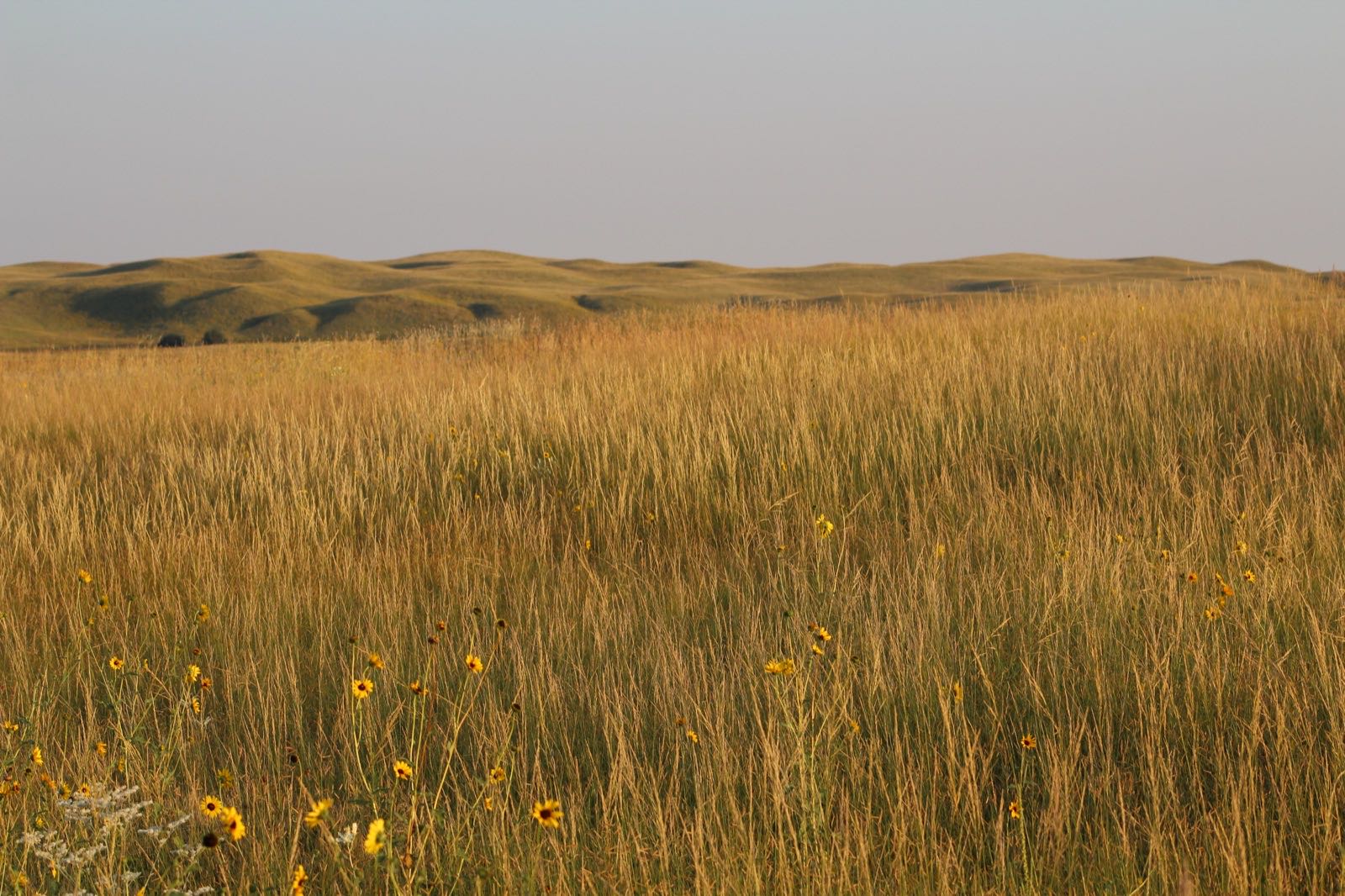
Photo: USFWS · Public Domain, cropped; resized
Crescent Lake Refugespring migration
Wildlife refugeAt Crescent Lake National Wildlife Refuge, waterfowl migration begins in March and peaks in early April, with about 20,000 birds using the refuge each day, per the Fish and Wildlife Service. Its usual window for this year has passed.
Updated
Sources for this timing ↓About Crescent Lake Refuge
- What it is
- A wildlife refuge in Nebraska
- A little history
- In 1931. It lies 28 miles north of Oshkosh, Nebraska, in Garden County.
- What you'll see
- Spring waterfowl · Mar–Apr
- Before you go
- Can I bring my dog? Yes, on a leash: dogs off leash are prohibited except during legitimate hunting seasons.
Next 7 days at Crescent Lake Refuge
- TodaySunny74° / 44°1% rain
- SatSunny80° / 45°–
- SunSunny72° / 52°–
- MonSunny83° / 57°–
- TueMostly Sunny85° / 55°1% rain
- WedSunny80° / 51°–
- ThuSunny80° / ––
Heads up: Windy (winds up to 25 mph): Friday, Friday Night.
Today: sunrise 6:48 a.m., sunset 6:31 p.m., light until 6:59 p.m. · moon last quarter, 55% lit (our calculation)
Your guide to the area
- Crescent Lake RefugeLocal timing: from March, peaking in early AprilThis page
- Boat Launch3.1 mi
Where to watch
Self-guided auto tour route
Best spot
The refuge's suggested first stop. Roads here are gravel and one-lane pavement with a 35 mph limit, and the refuge is open sunrise to sunset
Nature Trail
Best spot
The 2.07-mile trail on the refuge's trails page; hiking is allowed in all areas open to the public, and two-track mowed trails lead through the refuge
Worth the drive
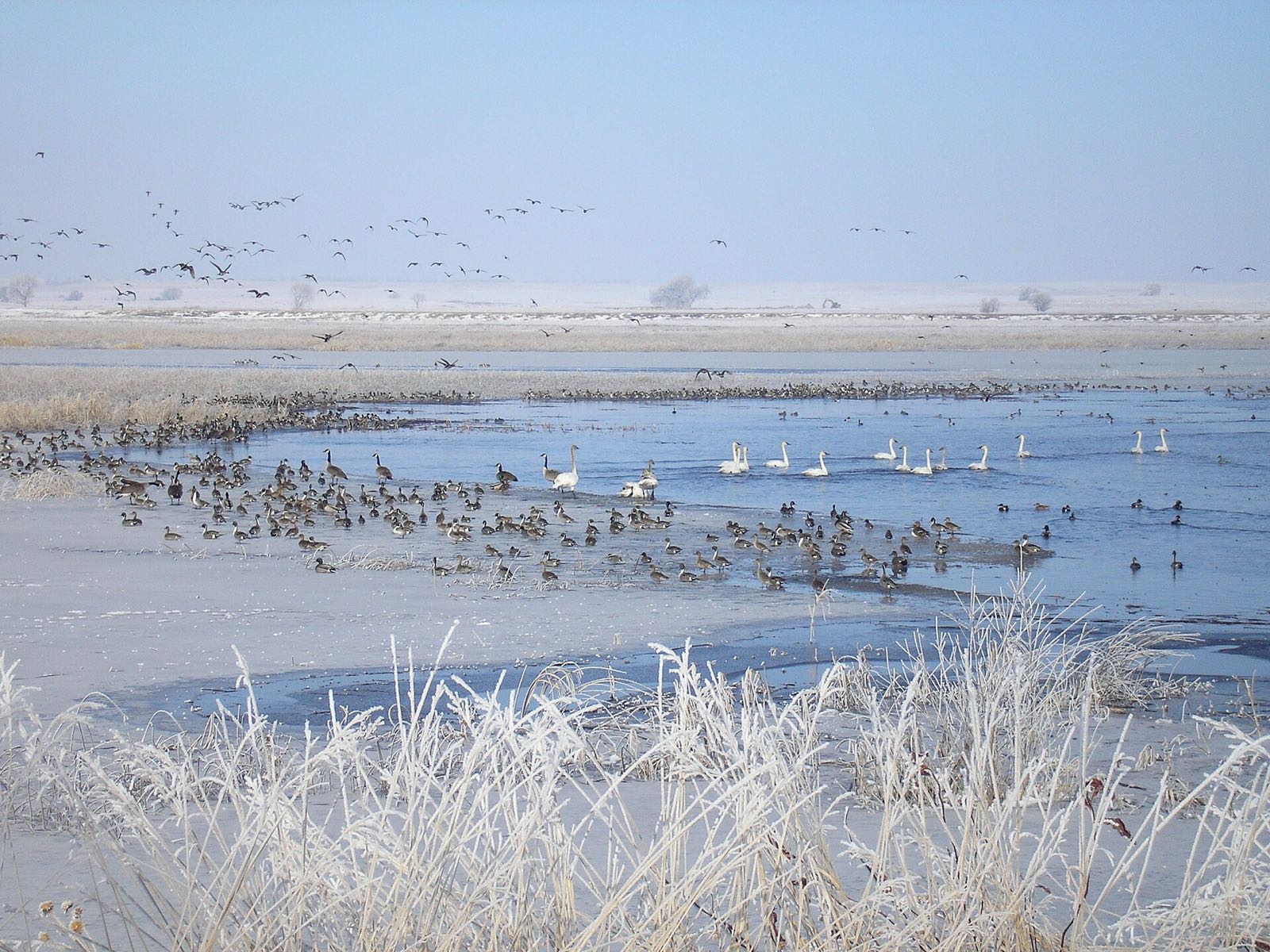
Spring migrant birds in South DakotaWildlife refuge
103 mi · Sat: Sunny
Season: Spring (March-May)U.S. Fish and Wildlife Service ↗
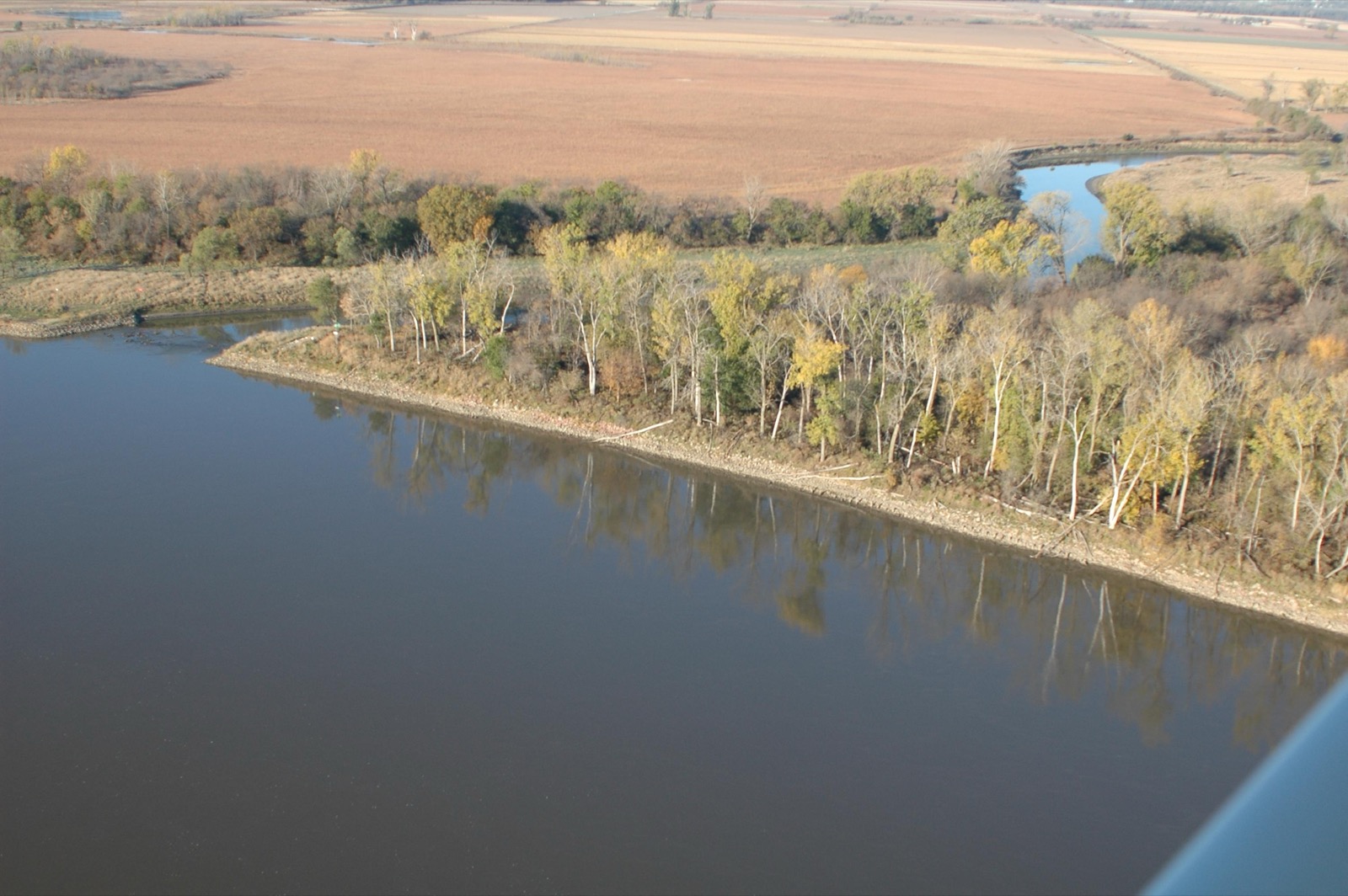
Spring waterfowl in NebraskaWildlife refuge
335 mi · Sat: Sunny
Season: Early MarchU.S. Fish and Wildlife Service ↗
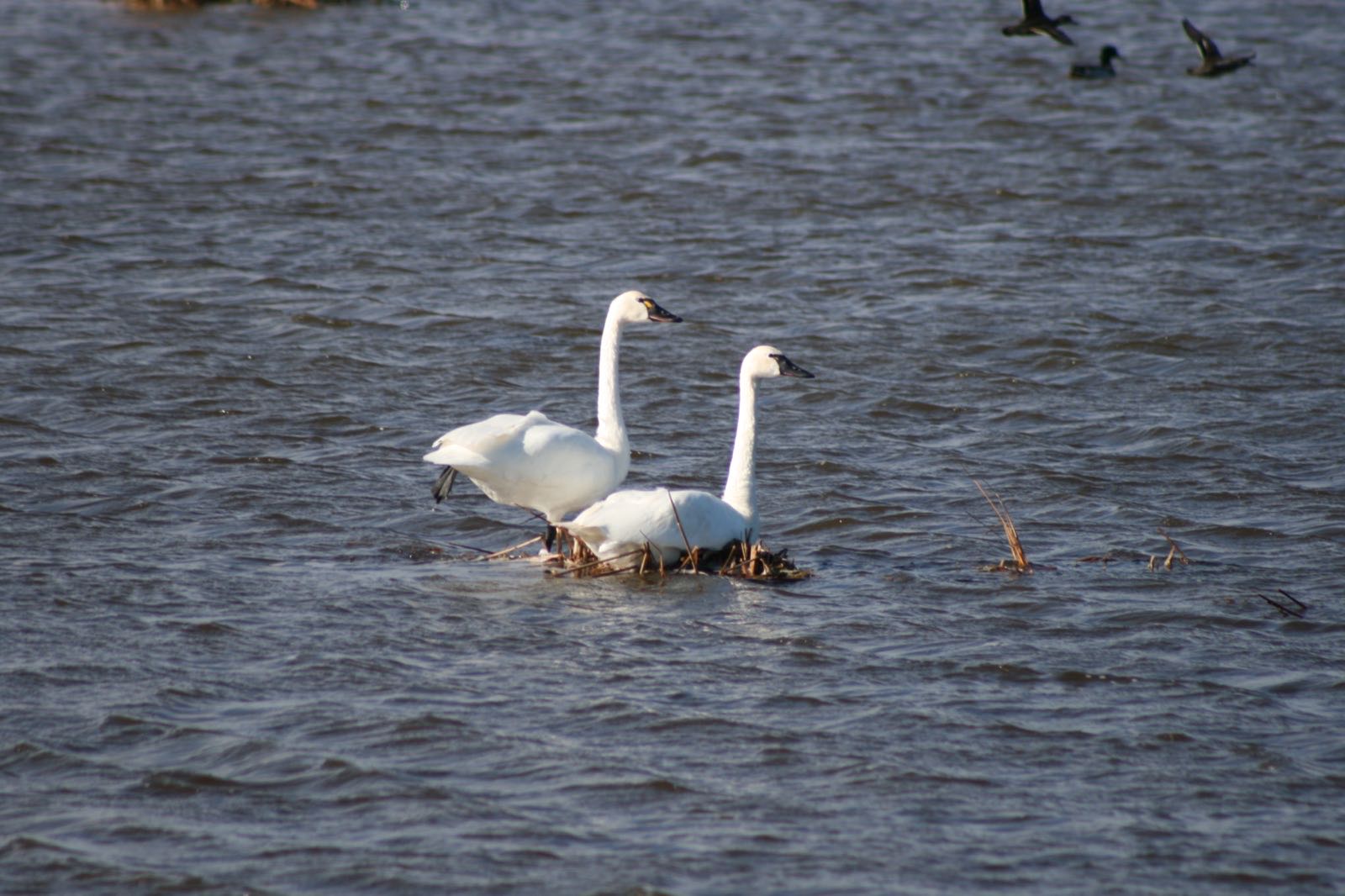
Spring waterfowl and shorebirds in North DakotaWildlife refuge
362 mi · Sat: Slight Chance Rain Showers
Best viewing: April through MayU.S. Fish and Wildlife Service ↗
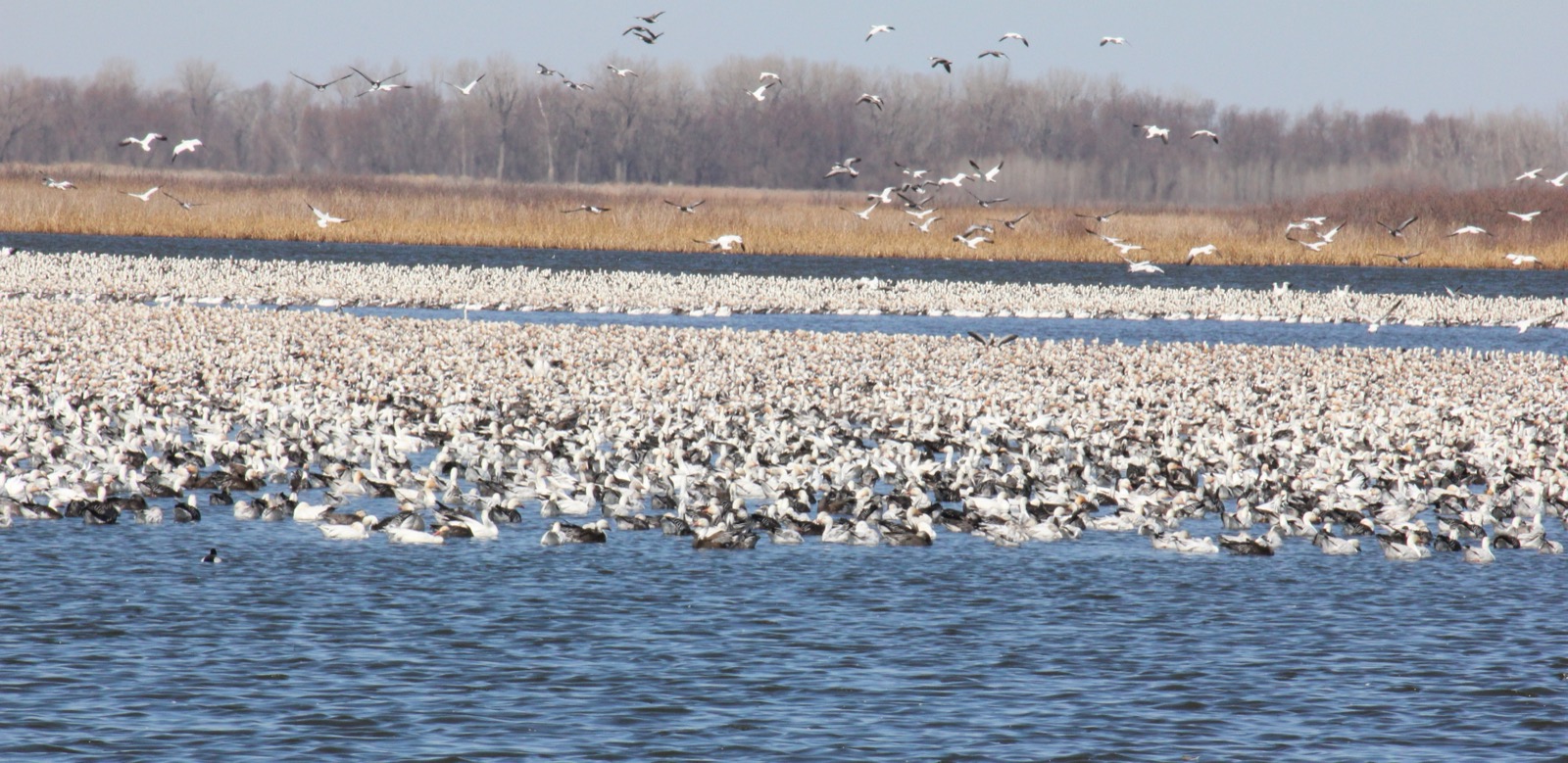
Spring snow geese in MissouriWildlife refuge
394 mi · Sat: Sunny
Season: Feb–MarU.S. Fish and Wildlife Service ↗
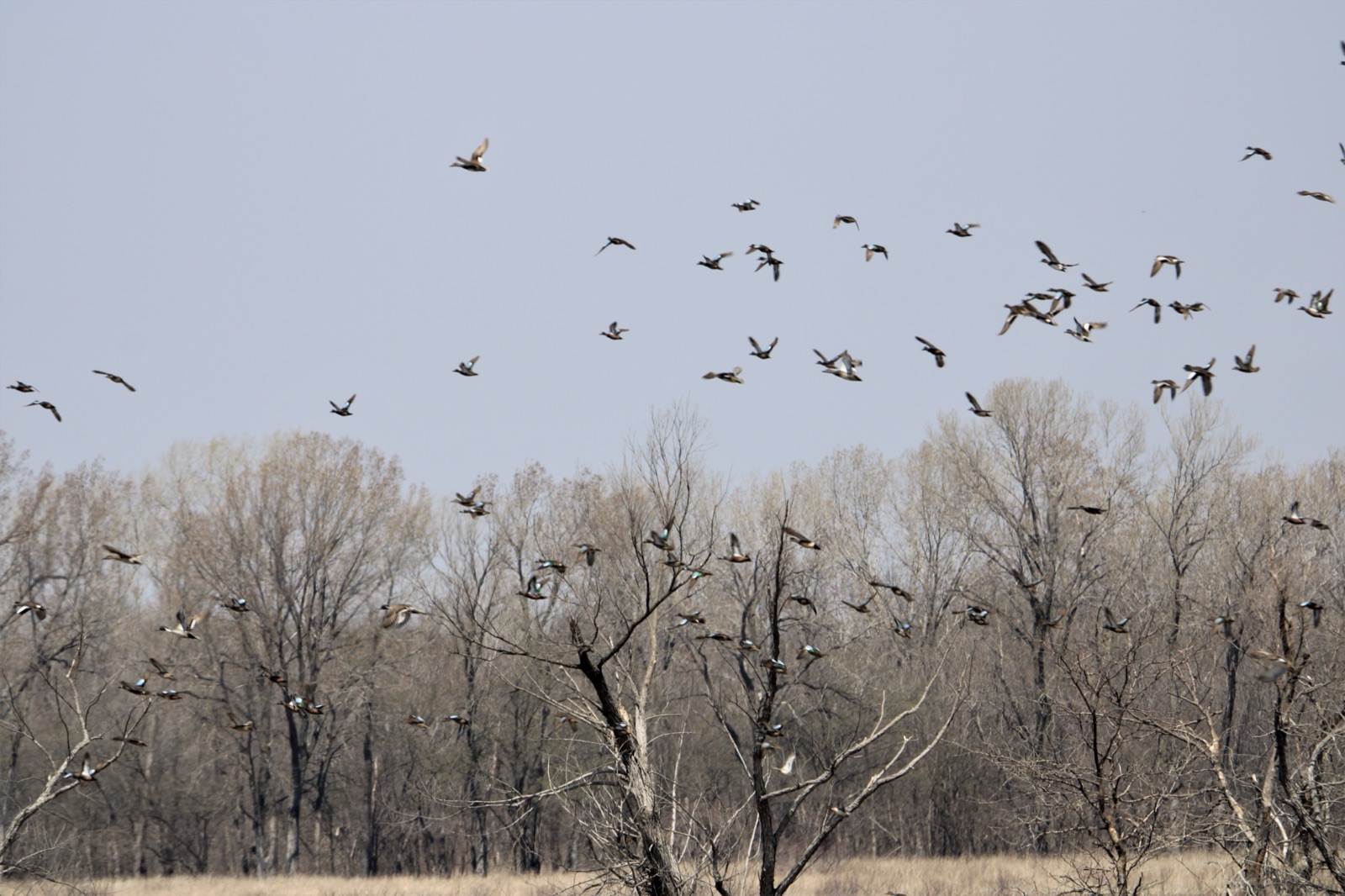
Songbirds in KansasWildlife refuge
417 mi · Sat: Sunny
Best viewing: April and MayU.S. Fish and Wildlife Service ↗
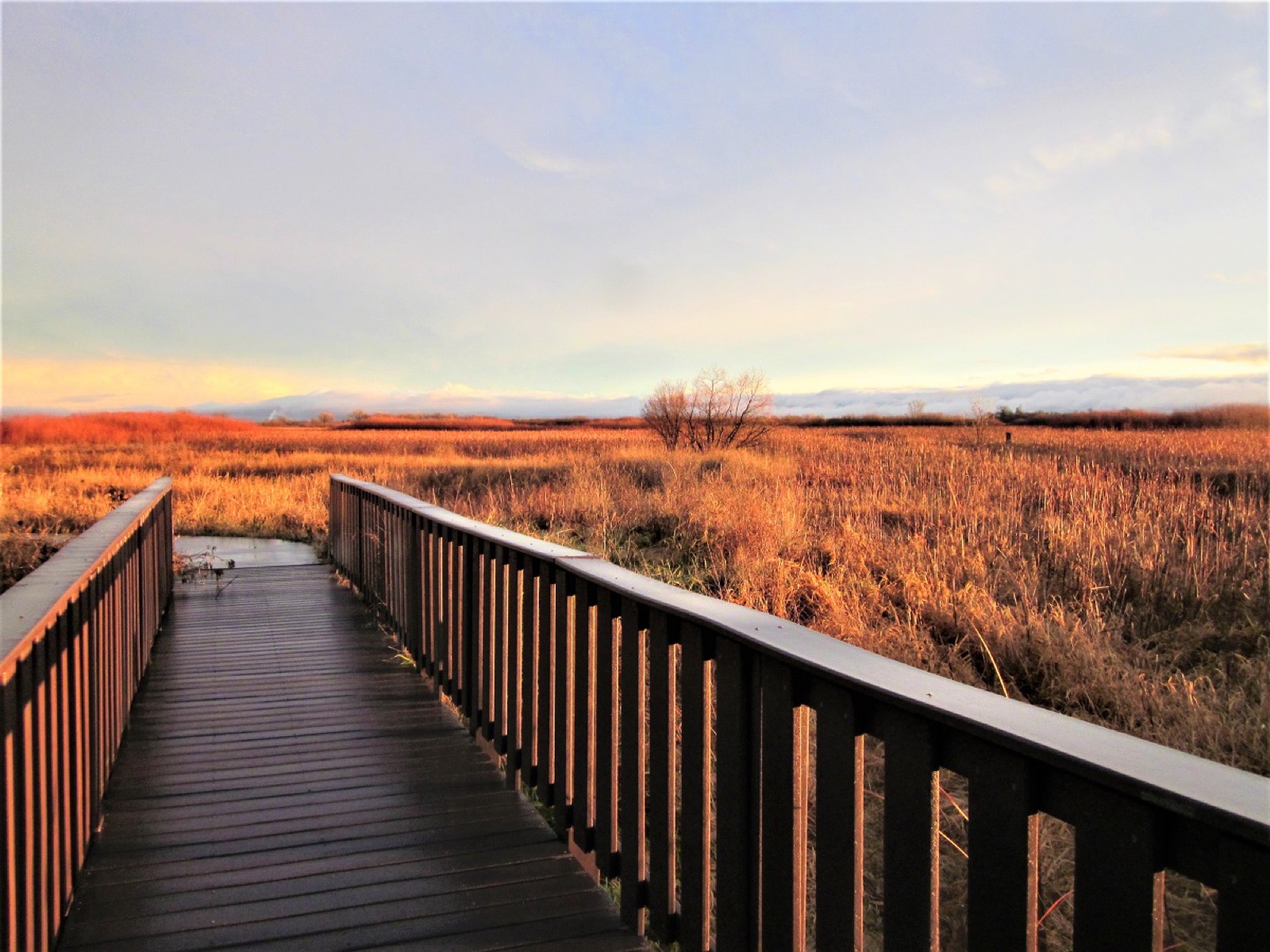
Spring mallards in MinnesotaWildlife refuge
458 mi · Sat: Mostly Sunny then Chance Rain Showers
Season: Spring (March-May)U.S. Fish and Wildlife Service ↗
The year at Crescent Lake Refuge
- Waterfowl migration begins in March, peaking in early AprilMar–Apr
- Apr: Grouse dance in mid-AprilApr
- Apr: Giant Canada geese nest, and goslings appear in late AprilApr
- Jun: Spiderwort, yucca, prickly pear and the endangered blowout penstemon bloom in JuneJun
- Aug: Migrating blue-winged teal begin arriving in AugustAug
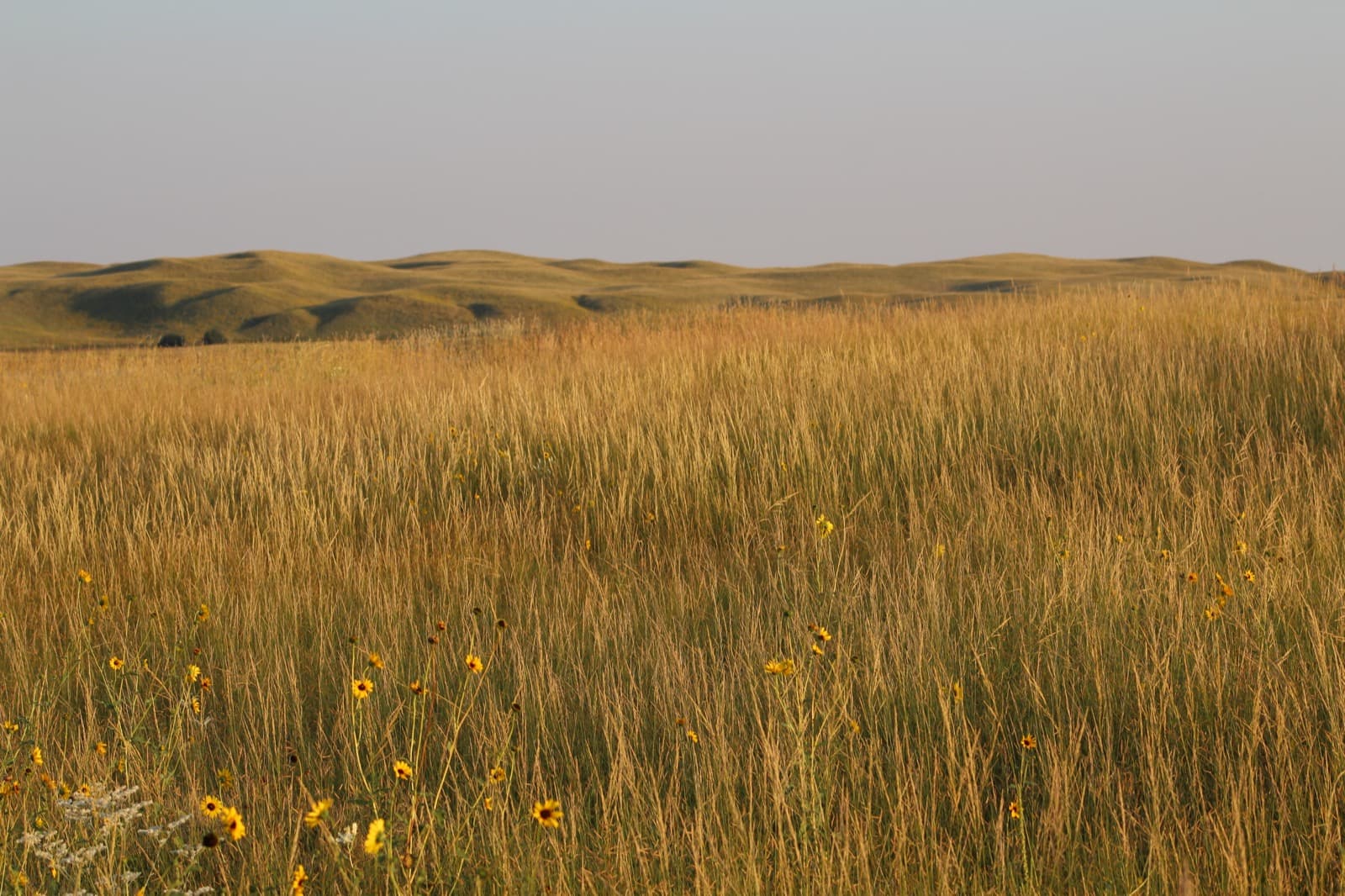
Crescent Lake Refuge in pictures
Questions people ask
When is the best time to see spring migration at Crescent Lake National Wildlife Refuge?
Waterfowl migration begins in March and peaks in early April, with about 20,000 birds using the refuge each day, per the Fish and Wildlife Service: from March, peaking in early April. That's general timing for this place, not a peak date or a forecast.
Is spring migration under way at Crescent Lake National Wildlife Refuge right now?
Not now: its usual spring migration window for this year has passed. Next time: from March, peaking in early April, local timing.
Can I drive the refuge roads right now?
Take care: as of September 2026 the refuge warns that after a recent wildfire and extreme dry conditions, its trails and roads may be impassable even with four-wheel drive. Use extreme caution if you leave the county roads.Source: U.S. Fish and Wildlife Service, Crescent Lake NWR: Visit Us ↗ (opens in a new tab)
Where can I stay?
Not on the refuge: overnight parking isn't allowed. Oshkosh and Alliance have campgrounds and hotels, and there's camping at Smith Lake Wildlife Management Area, 50 miles north.Sources: U.S. Fish and Wildlife Service, Crescent Lake NWR: Rules and Policies ↗ (opens in a new tab), U.S. Fish and Wildlife Service, Crescent Lake NWR: Visit Us ↗ (opens in a new tab)
Can I bring my dog?
Yes, on a leash: dogs off leash are prohibited except during legitimate hunting seasons.Source: U.S. Fish and Wildlife Service, Crescent Lake NWR: Rules and Policies ↗ (opens in a new tab)
Does the refuge give a spring peak or just a season?
Both: movement starts in March and peaks in early April. Its figure of about 20,000 birds a day describes the refuge in general, not a live count.Source: U.S. Fish and Wildlife Service, Crescent Lake NWR: Species ↗ (opens in a new tab)
Do any of the spring waterfowl stay to nest?
Yes. Of the 31 waterfowl species the refuge lists, 15 nest there; blue-winged teal and mallards are the main nesters.Source: U.S. Fish and Wildlife Service, Crescent Lake NWR: Species ↗ (opens in a new tab)
How does the refuge help Canada geese nest?
It provides nesting tubs for them. Watch from a distance and never approach a nest.Source: U.S. Fish and Wildlife Service, Crescent Lake NWR: Species ↗ (opens in a new tab)
When was Crescent Lake Refuge established?
In 1931. It lies 28 miles north of Oshkosh, Nebraska, in Garden County.Source: U.S. Fish and Wildlife Service, Crescent Lake National Wildlife Refuge ↗ (opens in a new tab)
Why are there so many lakes in the dunes here?
The refuge has 21 lakes and many ponds, fed by the Ogallala Aquifer under the Sandhills.Source: U.S. Fish and Wildlife Service, Crescent Lake NWR: Species ↗ (opens in a new tab)
Which ducks stay to nest after the migration?
The most common nesters are Canada geese, mallards, blue-winged teal, northern shovelers, gadwall, northern pintails, redheads and ruddy ducks; trumpeter swans have nested on several lakes, currently at Gimlet Lake.Source: U.S. Fish and Wildlife Service, Crescent Lake NWR: Species ↗ (opens in a new tab)
Where are the best spots in Crescent Lake National Wildlife Refuge?
Self-guided auto tour route: the refuge's suggested first stop. Roads here are gravel and one-lane pavement with a 35 mph limit, and the refuge is open sunrise to sunset; Nature Trail: the 2.07-mile trail on the refuge's trails page; hiking is allowed in all areas open to the public, and two-track mowed trails lead through the refuge.
What is Crescent Lake National Wildlife Refuge like through the year?
Waterfowl migration begins in March, peaking in early April (Mar–Apr), Grouse dance in mid-April (Apr), Giant Canada geese nest, and goslings appear in late April (Apr), Spiderwort, yucca, prickly pear and the endangered blowout penstemon bloom in June (Jun) and Migrating blue-winged teal begin arriving in August (Aug).
How we know · Sources (7)
How we know
National Weather Service forecast and alerts (opens in a new tab) (Oct 2) · U.S. Fish and Wildlife Service, Crescent Lake National Wildlife Refuge (opens in a new tab) (Oct 1) · U.S. Fish and Wildlife Service, Crescent Lake NWR: Species (opens in a new tab) (Sep 29) · U.S. Fish and Wildlife Service, Crescent Lake NWR: Visit Us (opens in a new tab) (Sep 29) · U.S. Fish and Wildlife Service, Crescent Lake NWR: Rules and Policies (opens in a new tab) (Sep 29) · U.S. Fish and Wildlife Service, Crescent Lake NWR: Activities (opens in a new tab) (Sep 29) · U.S. Fish and Wildlife Service, Crescent Lake NWR: Trails (opens in a new tab) (Sep 29)