Sherburne Refugewinter wildlife
At Sherburne National Wildlife Refuge, the timing for winter wildlife comes in 3 separate phases, each its own display, none of them a peak: Fall migratory birds, September and October are the best months for fall migratory birds; Staging sandhill cranes, The last two weeks of October are usually the best weeks to view the largest number of staging sandhill cranes; and Winter courtship: drumming woodpeckers, courting great horned owls and bald eagles, January (woodpeckers drumming) and February (great horned owls calling, bald eagles courting). No official report yet this season.
- September–OctoberFall migratory birdsSeptember and October are the best months for fall migratory birds
- OctoberStaging sandhill cranesThe last two weeks of October are usually the best weeks to view the largest number of staging sandhill cranes
- January–FebruaryWinter courtship: drumming woodpeckers, courting great horned owls and bald eaglesJanuary (woodpeckers drumming) and February (great horned owls calling, bald eagles courting)
Next 7 days at Sherburne Refuge
- TodayWidespread Fog then Partly Sunny76° / 54°1% rain
- ThuPartly Sunny64° / 43°–
- FriMostly Sunny63° / 44°3% rain
- SatChance Rain Showers63° / 46°28% rain
- SunSunny61° / 40°8% rain
- MonSunny61° / 46°1% rain
Today: sunrise 7:12 a.m., sunset 6:59 p.m., light until 7:28 p.m. · moon waning gibbous, 78% lit (our calculation)
Your guide to the area
Where to watch
- Prairie’s Edge Wildlife DriveSeven miles through oak savanna, prairie and wetland to bike or drive; open to cars April 1 to November 30 as weather allows (not during the November firearm deer season), and to hiking, biking, snowshoeing and skiing every day
- Blue Hill TrailAbout five miles in three loops through prairie, oak savanna and conifers, up to the overlook on Blue Hill, the highest point in Sherburne County; open all year for walking and, in winter, snowshoeing and cross-country skiing (no bikes). Trailhead off County Road 9, 1.2 miles west of refuge headquarters
Nearby
- Litchfield Wetland District50 mi2 separate phases, from fall (July-November)
- Minnesota Valley Refuge51 miDecember - MarchSatMostly Sunny
- Rice Lake Refuge75 mi2 separate phases, from September and October are the best months for fall migratory birds
- Rydell Refuge188 mi2 separate phases, from September and October
- Necedah Refuge199 mi2 separate phases, from September through November; the last few cranes, ducks and swans depart by mid-NovemberSatMostly Sunny
- DeSoto Refuge297 miearly December, and again in late February and early MarchSatSunny
The year at Sherburne Refuge
- Woodpeckers drumming (January); great horned owls and bald eagles courting (February)Jan–Feb
- Wildlife sanctuary: only the Wildlife Drive, trails, canoe route and fishing access points openMar–Aug
- Mar: Red-winged blackbirds back in the wetlands; returning sandhill cranes bugleMar
- Eagle's Nest Nature Store open Thursdays and Saturdays, 10 a.m.–2 p.m. (closed January to March)NowApr–Dec
- Wildlife Drive open to cars (not during the November firearm deer season)NowApr–Nov
- Apr: Loons and wood ducks arrive as the ice leaves; returning songbirds in full songApr
- May: Best month for spring migratory birdsMay
- May: First Canada goose goslings hatchMay
- Biting insects: bug spray and long sleeves, June through mid-AugustJun–Aug
- Jun: Wild lupine at peak bloom, early to mid-June, on the Prairie TrailJun
- Jun: Loon chicks ride their parents' backs, fawns hide in the woods, and turtles lay eggs on the Wildlife Drive's sandy edgesJun
- Jul: Black-eyed Susan, coneflower and prairie clover in the prairie openings; water lilies in the wetlandsJul
- Jul: Monarch caterpillars feed on common milkweedJul
- Aug: First blazing star and goldenrodAug
- Aug: Grasses and leaves start drying as the fall color change subtly beginsAug
- Sep: Asters along the Wildlife Drive and the Blue Hill TrailNowSep
- Sep: Migrant monarchs sip nectar at flowers on their way to MexicoNowSep
- Sep: Flocks of migrating white pelicans spiral overheadNowSep
- Service roads and off-trail hiking open, September 1 to February 28NowSep–Feb
- Oct: Staging sandhill cranes, usually best in the last two weeks of OctoberOct
- Oct: Fall colors at their peak: maples, sumac, oaks and aspenOct
- Oct: Bald eagles and hawks migrating southOct
- Wildlife Drive closed to cars (still open to hiking, biking, snowshoeing and skiing), December 1 to March 31Dec–Mar
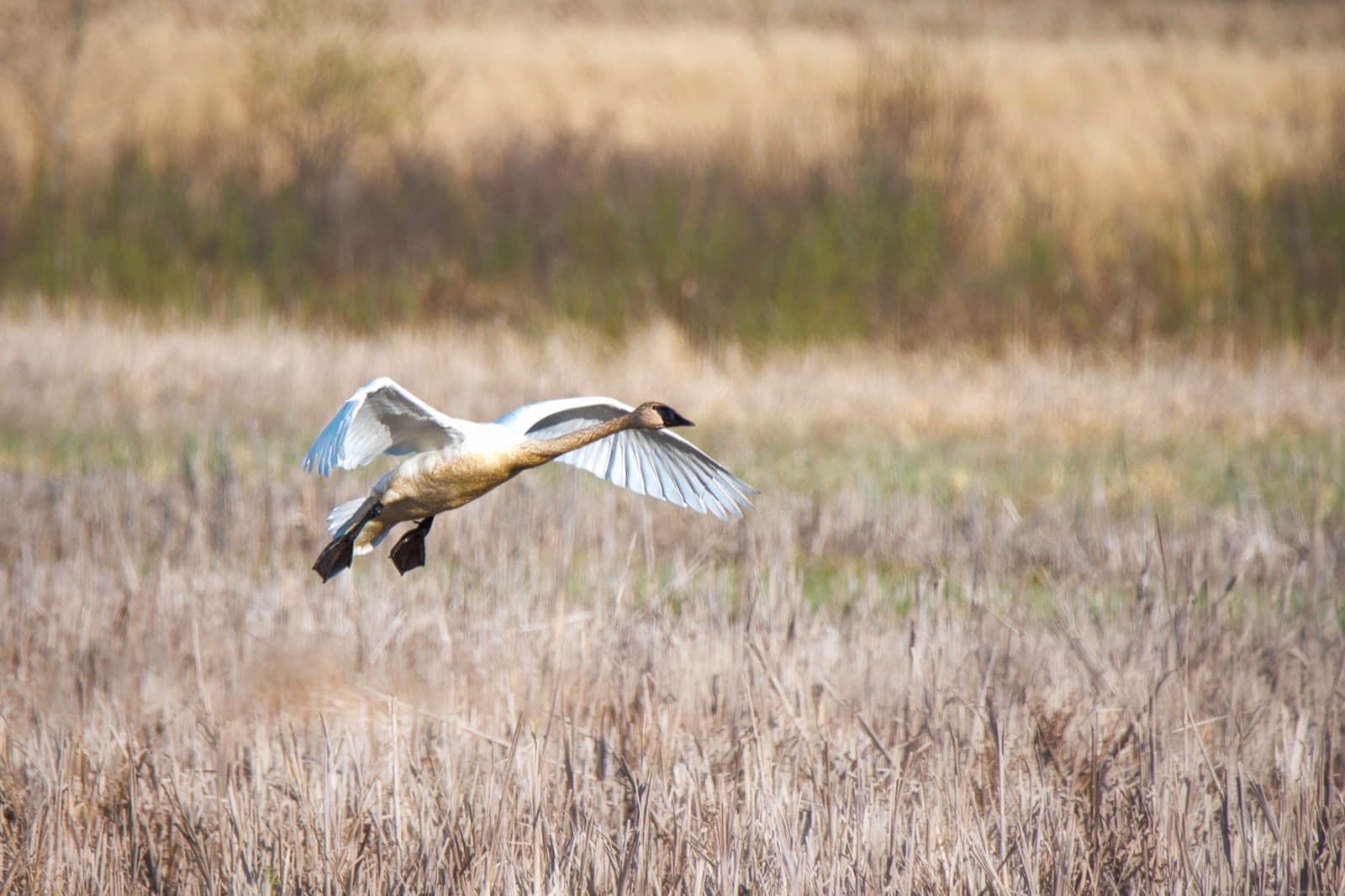
Sherburne Refuge in pictures
Questions people ask
When is the best time to see winter wildlife at Sherburne National Wildlife Refuge?
In 3 separate phases: Fall migratory birds, September and October are the best months for fall migratory birds, Staging sandhill cranes, The last two weeks of October are usually the best weeks to view the largest number of staging sandhill cranes and Winter courtship: drumming woodpeckers, courting great horned owls and bald eagles, January (woodpeckers drumming) and February (great horned owls calling, bald eagles courting). They're separate displays, not one long season, and none of them is a peak.
Is it wildlife season at Sherburne National Wildlife Refuge right now?
There's no official report yet this season.
Where are the cranes roosting this fall?
As of September 2026, low water in St. Francis Pool means it probably won't suit roosting cranes this fall unless there's a lot of rain. The refuge expects several hundred to several thousand cranes to roost in other refuge impoundments west of County Highway 5 and fly to nearby harvested cornfields each morning; watch the refuge website and the Friends of Sherburne NWR Facebook page for crane viewing updates.Source: U.S. Fish and Wildlife Service, Sherburne NWR: Visit Us ↗ (opens in a new tab)
Can I leave the trails in fall and winter?
Yes. From September 1 to February 28, when the wildlife sanctuary season is over, you can hike and bike the service roads or hike off-trail.Source: U.S. Fish and Wildlife Service, Sherburne NWR: Visit Us ↗ (opens in a new tab)
Is there hunting in fall?
Yes. Hunting happens in fall and winter, including rifle hunting for deer. Wear blaze orange or other bright clothing on the service roads and Mahnomen Trail (it's open to hunting during the November firearm deer season); neon vests can be borrowed when headquarters is open.Source: U.S. Fish and Wildlife Service, Sherburne NWR: Visit Us ↗ (opens in a new tab)
Can I come after dark to hear the cranes or see the northern lights?
No. The refuge, parking lots included, is open from half an hour before sunrise to half an hour after sunset, and it isn't open at night, including for stargazing and northern lights viewing.Source: U.S. Fish and Wildlife Service, Sherburne NWR: Visit Us ↗ (opens in a new tab)
Where can I ski in winter?
Mahnomen Trail is groomed for classic cross-country skiing when there's enough snow, and the Oak Savanna Learning Center trails (1.6 miles) are open all year on foot, skis or snowshoes.Sources: U.S. Fish and Wildlife Service, Sherburne NWR: Trails ↗ (opens in a new tab), U.S. Fish and Wildlife Service, Sherburne NWR: Visit Us ↗ (opens in a new tab)
Where are the best spots in Sherburne National Wildlife Refuge?
Prairie’s Edge Wildlife Drive: seven miles through oak savanna, prairie and wetland to bike or drive; open to cars April 1 to November 30 as weather allows (not during the November firearm deer season), and to hiking, biking, snowshoeing and skiing every day; Blue Hill Trail: about five miles in three loops through prairie, oak savanna and conifers, up to the overlook on Blue Hill, the highest point in Sherburne County; open all year for walking and, in winter, snowshoeing and cross-country skiing (no bikes). Trailhead off County Road 9, 1.2 miles west of refuge headquarters.
Are there closures or permits to know about in Sherburne National Wildlife Refuge?
Wildlife sanctuary: only the Wildlife Drive, trails, canoe route and fishing access points open (Mar–Aug); Wildlife Drive closed to cars (still open to hiking, biking, snowshoeing and skiing), December 1 to March 31 (Dec–Mar).
What is Sherburne National Wildlife Refuge like through the year?
Wild lupine at peak bloom, early to mid-June, on the Prairie Trail (Jun), Black-eyed Susan, coneflower and prairie clover in the prairie openings; water lilies in the wetlands (Jul), First blazing star and goldenrod (Aug), Asters along the Wildlife Drive and the Blue Hill Trail (Sep), Wildlife sanctuary: only the Wildlife Drive, trails, canoe route and fishing access points open (Mar–Aug), Wildlife Drive open to cars (not during the November firearm deer season) (Apr–Nov), Best month for spring migratory birds (May), Biting insects: bug spray and long sleeves, June through mid-August (Jun–Aug), Staging sandhill cranes, usually best in the last two weeks of October (Oct), Fall colors at their peak: maples, sumac, oaks and aspen (Oct), Grasses and leaves start drying as the fall color change subtly begins (Aug), Red-winged blackbirds back in the wetlands; returning sandhill cranes bugle (Mar), Loons and wood ducks arrive as the ice leaves; returning songbirds in full song (Apr), Eagle's Nest Nature Store open Thursdays and Saturdays, 10 a.m.–2 p.m. (closed January to March) (Apr–Dec), First Canada goose goslings hatch (May), Loon chicks ride their parents' backs, fawns hide in the woods, and turtles lay eggs on the Wildlife Drive's sandy edges (Jun), Monarch caterpillars feed on common milkweed (Jul), Migrant monarchs sip nectar at flowers on their way to Mexico (Sep), Flocks of migrating white pelicans spiral overhead (Sep), Bald eagles and hawks migrating south (Oct), Woodpeckers drumming (January); great horned owls and bald eagles courting (February) (Jan–Feb), Wildlife Drive closed to cars (still open to hiking, biking, snowshoeing and skiing), December 1 to March 31 (Dec–Mar) and Service roads and off-trail hiking open, September 1 to February 28 (Sep–Feb).
How we know · Sources (4)
How we know
National Weather Service forecast and alerts (opens in a new tab) (Sep 29) · U.S. Fish and Wildlife Service, Sherburne NWR: Visit Us (opens in a new tab) (Sep 28) · U.S. Fish and Wildlife Service, Sherburne NWR: Species (Seasons of Wildlife) (opens in a new tab) (Sep 28) · U.S. Fish and Wildlife Service, Sherburne NWR: Trails (opens in a new tab) (Sep 28)